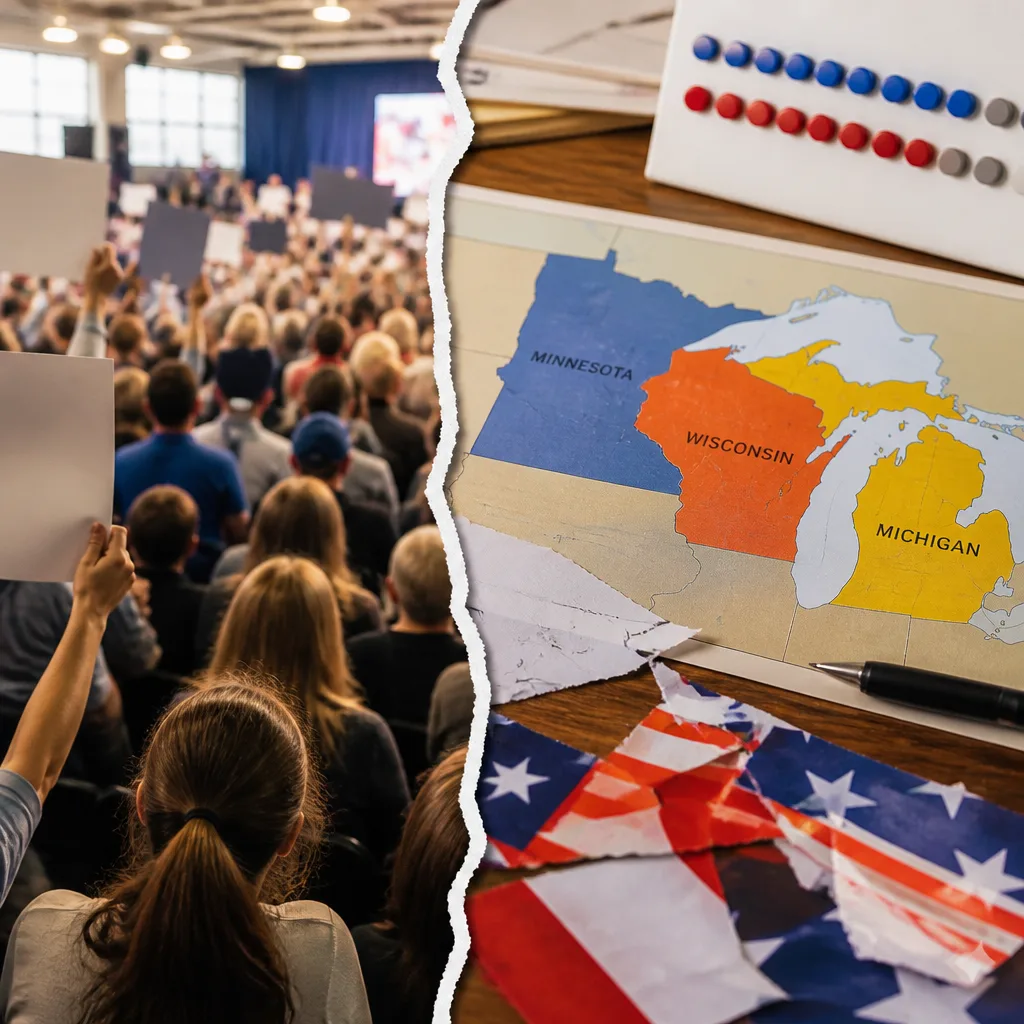
Recent Democratic primary contests have both energised the party’s progressive wing and exposed limits to its reach, leaving leaders with difficult choices ahead of November and, should they regain control, for the start of the next congressional term in 2027.
Progressive gains, narrow margins
Progressives secured important wins in primary contests that matter for November’s general elections. In Michigan, Abdul El‑Sayed emerged as the party nominee in a tightly fought contest that supporters say injects energy into a must‑win Senate race. In Minnesota, Lt Governor Peggy Flanagan claimed victory and is now widely regarded as the front‑runner to become the state’s next senator.
That momentum, however, is tempered by how close some of these races were and by setbacks elsewhere. The wins did not amount to an unambiguous mandate for a single ideological direction. Contest outcomes suggest that while the left is resurgent in places, it cannot yet assume unified backing across the broader Democratic electorate.
Mixed signals from the heartland
Primary defeats and narrow escapes in swing states underline the fragility of progressive ascendancy. The source material highlights a near‑miss in Wisconsin: Francesca Hong lost a gubernatorial primary despite previously commanding significant polling leads. That loss, and the tight margins elsewhere, prompted some progressive figures to moderate their messaging to appeal to swing voters.
At the same time, other Democrats emphasise inclusivity as the route to victory. Wisconsin’s new gubernatorial nominee, David Crowley, for example, has argued for a “
big tent” approach that aims to knit together diverse factions to maximise chances in November.
Governing questions for a returned majority
If Democrats succeed in retaking either chamber of Congress, the internal debates exposed in the primaries will move from rhetoric to practical choices about legislative priorities and leadership. Minority Leader Hakeem Jeffries is positioned to become a central figure in that scenario, with responsibility for reconciling the demands of an energised progressive base and the political realities of narrow majorities.
Key areas of disagreement outlined in recent coverage include immigration, the economy, healthcare, Israel policy and technology‑sector investments such as data centres. How party leaders navigate those disputes will shape the early legislative agenda and the degree to which ambitious progressive proposals can be advanced.
What the primaries reveal about strategy
Campaign strategy appears to be shifting for some progressives who, recognising the limits of primary victories, are adopting more centrist tones ahead of the general election. The pragmatic repositioning is aimed at persuading undecided and moderate voters while retaining the enthusiasm that propelled primary turnout.
- Momentum: Progressive candidates captured notable nominations in key states, energising activists and donors.
- Limits: Narrow margins and losses show the movement lacks a blanket mandate across all electorates.
- Leadership tests: If Democrats regain control of the House or Senate, leaders will face early tests on which priorities to pursue.
| State | Candidate | Primary outcome |
|---|---|---|
| Michigan | Abdul El‑Sayed | Nominee (narrow victory) |
| Minnesota | Peggy Flanagan | Nominee (front‑runner for Senate) |
| Wisconsin | Francesca Hong | Lost gubernatorial primary |
| Wisconsin | David Crowley | Gubernatorial nominee |
These outcomes illustrate the balancing act the party faces: harnessing progressive energy while building the broad coalitions necessary to win competitive general election contests.
Implications for November and beyond
Primary season has reshaped the terrain for November’s elections, but it has not settled the fundamental question of direction for the Democratic Party. The choices made now by candidates and by the party machinery will determine both electoral prospects in the immediate term and the legislative possibilities of a returned majority in 2027.
For leaders such as Mr Jeffries, the immediate task will be to manage expectations within the caucus and to translate internal energy into an achievable agenda that can garner sufficient votes. The path from primary victories to effective governing requires compromise — on messaging, policy and priorities — across a party that remains ideologically diverse.
How those tensions are resolved will be decisive for policy outcomes on immigration, healthcare, economic strategy and foreign‑policy stances that have already sparked vigorous debate inside the Democratic coalition.