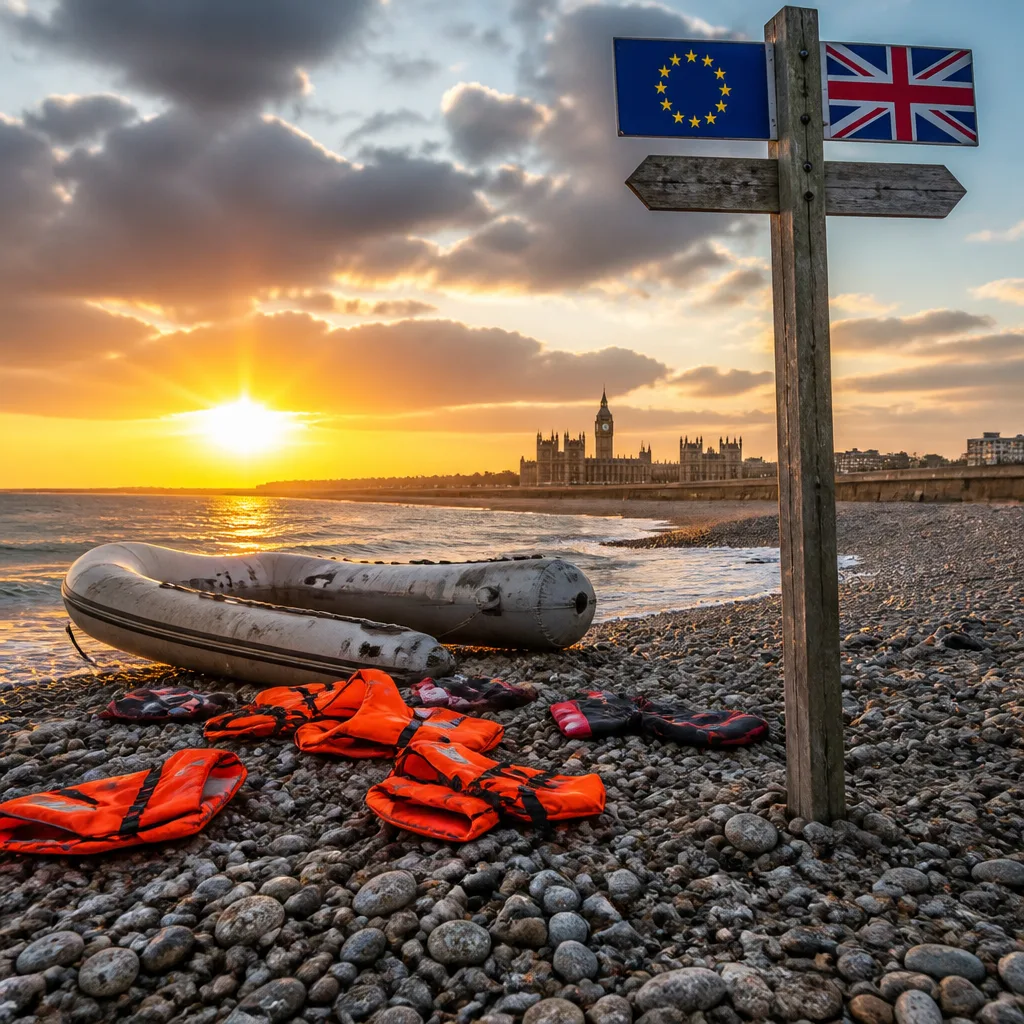
The UK should join the European Union’s new Migration and Asylum Pact to reduce Channel small‑boat crossings, Liberal Democrat leader Sir Ed Davey has said, arguing the move would allow Britain to return some asylum seekers to the first EU country they entered and undercut criminal smuggling networks.
Proposal and party case
Sir Ed set out his party’s position after the pact, agreed by EU states and brought into force in June, introduced measures designed to speed up asylum processing, increase returns of irregular migrants and allocate responsibility among member states. The Liberal Democrats say signing up would let the UK send asylum seekers back to the first EU country of entry, which they contend would “destroy the business model” of the gangs facilitating Channel crossings.
“We have a plan that would finally end the small boats crisis: a pact with every EU country that will allow us to return people who come over the Channel, taking away the major pull factor that [Reform UK leader Nigel] Farage and co created and destroying the business model of the criminal gangs,” Sir Ed Davey said.
The party acknowledges that joining the pact would require the UK to accept some asylum seekers from EU states, but argues that numbers would be lower than current small‑boat arrivals and that arrivals would undergo screening before entry. The Liberal Democrats estimate participation would cost around £100m a year, which they say compares favourably with current spending on the asylum system.
Government and opposition responses
A Labour spokesperson said the government’s work with European partners to curb small‑boat crossings was already “bearing fruit”. The spokesperson cited figures claiming more than 47,000 crossings had been prevented in two years and that 70,000 people with no right to be in the UK had been removed. They added: “There’s more to do and that will only happen by working in collaboration with the EU.”
The Liberal Democrats note that so far this year more than 14,000 people have arrived in the UK by small boat, a decline of 43% compared with the previous year, figures the party used to argue that the pact could reduce pressures on the UK system.
What the EU pact does
The new pact — nearly a decade in development — introduces mandatory screening for arrivals and an updated database to track people entering the bloc. It also creates mechanisms for relocation: member states must either accept a share of asylum seekers who arrive in states with very high numbers of arrivals, such as Italy and Greece, or provide alternative support such as funding or resources.
The Liberal Democrats say the UK’s participation would be conditional on a reciprocal arrangement and on screening safeguards. They portray the scheme as offering both operational benefits and potential cost savings compared with current UK expenditure, which they characterise as a “failing asylum system” costing around £5bn.
Practical and political hurdles
Joining the pact would present both legal and political challenges. It would require agreement on the terms of participation and likely negotiation over which asylum seekers the UK would accept from EU countries. Ministers will also have to weigh whether participation aligns with existing domestic law and with the government’s stated aim of reducing small‑boat crossings through bilateral agreements and measures such as returns to safe third countries.
There is also an obvious political dimension. Any suggestion of accepting asylum seekers from EU states may attract criticism from parties that argue for stricter border controls. The Liberal Democrats frame their proposal as a pragmatic alternative to current arrangements and a way to “destroy the business model” of criminal gangs operating across the Channel.
Snapshot of figures
| Item | Figure |
|---|---|
| Arrivals by small boat so far this year | 14,000+ (down 43% year‑on‑year) |
| Crossings prevented in two years (claimed by Labour) | 47,000+ |
| People removed with no right to be in UK (claimed by Labour) | 70,000 |
| Estimated UK annual cost to join pact (Liberal Democrats) | £100m |
| Reported cost of current asylum system (party claim) | £5bn |
- Sir Ed Davey advocates accession to the EU Migration and Asylum Pact as a route to return migrants to first EU arrival states.
- Labour says co‑operation with European partners is already reducing crossings and stresses further collaboration is needed.
- Participation would carry a financial cost but, the Liberal Democrats argue, could lower overall spending and disrupt smuggling networks.
Any move towards accession would involve detailed negotiation and public scrutiny. Ministers will need to consider operational implications, legal compatibility and the political consequences of closer co‑operation with the EU on asylum, at a time when migration remains one of the most contested issues in British politics.