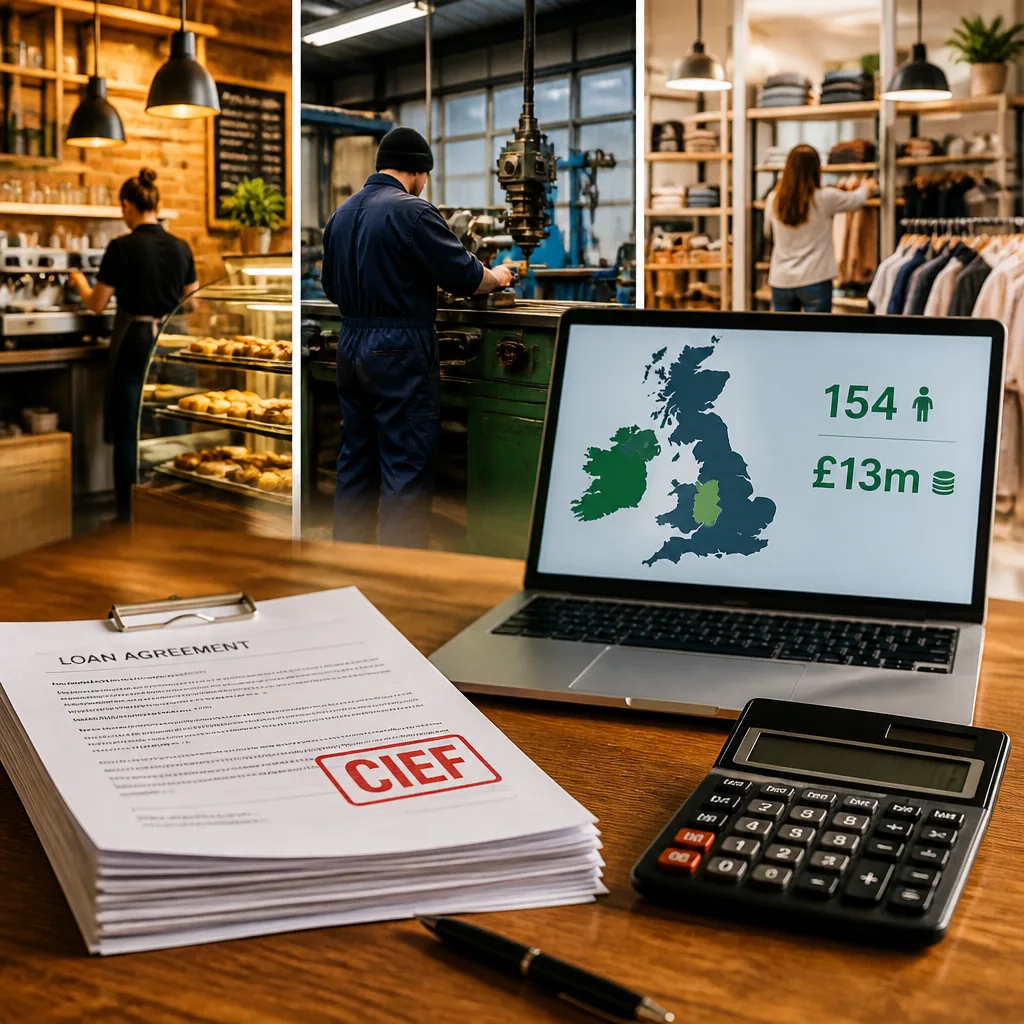
BCRS Business Loans has finished distributing its share of the Community Investment Enterprise Fund (CIEF), providing £13m of lending to 154 small and medium-sized enterprises (SMEs) across the West Midlands and Wales, the lender announced on Thursday.
What the money delivered
The community lender says the loans – ranging from £25,000 to £250,000 and made since March 2024 – have supported growth and recovery plans for firms unable to secure conventional finance. BCRS estimates the funding generated a total economic impact of £67m across the two regions.
| Region | Amount lent | Number of businesses | Jobs created | Jobs safeguarded |
|---|---|---|---|---|
| West Midlands | £11.1m | 131 | 330 | 1,206 |
| Wales | £1.9m | 23 | 117 | 264 |
Across the supported businesses, BCRS reports that 25% of lending went to female-led firms and 28% to businesses led by people from ethnic minority backgrounds.
How the funding was structured
The £62m CIEF was funded by Lloyds Banking Group and Better Society Capital with contributions from participating community development finance institutions (CDFIs) and is managed by Social Investment Scotland. The fund’s objective was to reach SMEs who struggle to obtain mainstream finance.
“We are delighted that, in a relatively short period of time, this fund has positively impacted so many businesses across the West Midlands and Wales,” said Stephen Deakin, chief executive at BCRS Business Loans.
Real impact versus the wider financing gap
The headline figures are tangible: hundreds of jobs created and more than 1,400 roles reported as safeguarded. For local communities, the difference between hiring and redundancies matters for household incomes and spending, and by extension to local demand for goods and services. That said, the total quantum – £13m across two sizable regions – is modest relative to the broader scale of unmet SME finance needs in the UK.
Community lenders and CDFIs frequently fill gaps left by high-street banks, particularly for firms with short trading histories, unusual collateral profiles or rapid growth plans. The CIEF’s targeted support for businesses that cannot access traditional sources is therefore important. But one-off or time-limited pots of capital can leave firms exposed when they need follow-on finance for continued expansion, placing a question mark over the sustainability of growth trajectories unlocked by initial loans.
- Positive: loans enabled firms to fulfil contracts, expand and protect employment — for example a Birmingham-based food manufacturer secured capital to meet a major supermarket order.
- Concern: limited scale compared with total SME credit demand; ongoing access to larger or subsequent financing remains uncertain.
- Distribution: a notable share went to female and ethnic minority-led businesses, addressing inclusion gaps in SME finance.
One beneficiary, Birmingham seasoning business Lumberjaxe, received £100,000 to fulfil a contract to supply 80,000 units to 1,050 Aldi stores. Its co-founder said the funding enabled a pivotal step in their growth.
“BCRS Business Loans gave us the opportunity we needed to take our business to the next level,” said Jaydon Manders, co-founder and director of Lumberjaxe.
What to watch next
For policy-makers and bankers, the case study underlines the role of bridge finance and niche lenders in job retention and regional growth. For businesses, the immediacy of support is welcome but highlights the need for better pathways to long-term capital that can sustain pay growth and investment, rather than temporary fixes that merely delay future funding pressure.
Ultimately, while the CIEF’s delivery by BCRS will be welcomed by the firms supported, questions about scale and follow-on finance remain. If the UK is to meaningfully raise business investment, a more comprehensive pipeline from start-up credit to growth capital will be necessary — otherwise many firms risk falling back into the financing gap once initial loans run their course.