
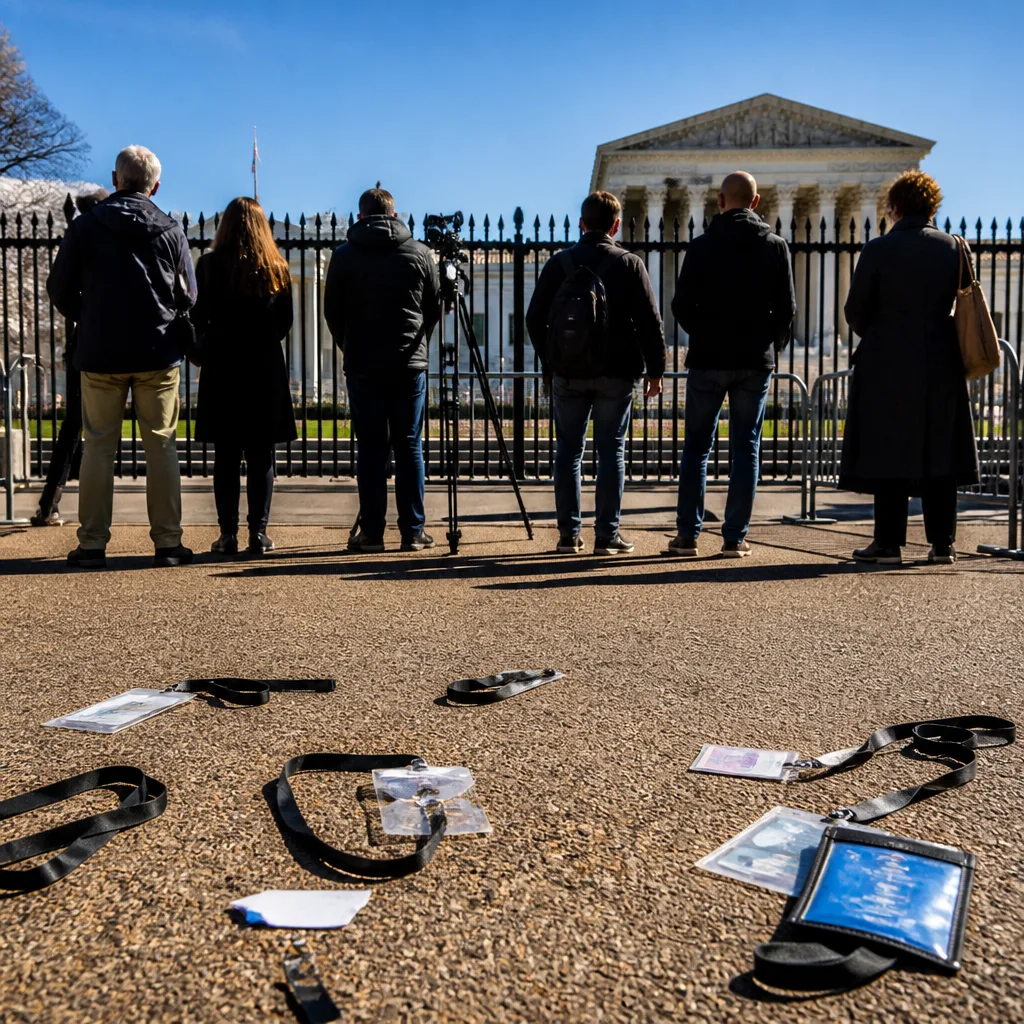
Three prominent news organisations — CNN, MS NOW and Politico — have notified the US government that they will file a lawsuit in the US District Court for the District of Columbia after the White House withdrew their journalists’ credentials, their representatives said.
Fighting for access
The outlets said they were pursuing legal remedies to protect their First Amendment rights and that emergency hearings could be scheduled as soon as this week. They argued the revocation occurred "without notice or process" and was taken because the White House objected to their reporting.
"Without notice or process, the White House revoked our journalists’ credentials because it objected to our reporting," the outlets said in a joint statement posted on X.
The media organisations warned that, if left unchallenged, the action would pose a threat to press freedom and the public’s access to independent journalism free from government interference, according to their statement.
Government response and context
Representatives of the White House did not immediately respond to a request for comment from Reuters outside normal business hours, the outlets said. The legal move comes amid wider contention over the administration's approach to the press and public messaging.
The notice of suit was filed against the backdrop of separate legal and political controversy surrounding a proposed architectural project described by the president as a triumphal arch near Washington. The president has said the structure will double as a "military complex" housing drones and snipers. That claim was criticised by litigants challenging the project as an attempt to manufacture a national security justification.
One of the attorneys representing opponents of the arch, Nicolas Sansone, said the president’s efforts to rely on national security reasoning did not address what he described as the project's fundamental illegality. Mr Sansone said Congress had not authorised the arch and therefore the project should not proceed unless and until it does.
Immediate implications
The case promises a rapid test of questions that go to the core of US constitutional protections for the press. Emergency hearings, if granted, could move the dispute into the courts before broader political processes have time to respond. The plaintiffs are likely to ask a judge to restore credentials while the litigation proceeds, asserting that the revocation lacks due process.
- Who has sued: CNN, MS NOW and Politico.
- Where filed: US District Court for the District of Columbia.
- Possible timetable: Emergency hearings could be sought this week.
Legal filings in the District of Columbia federal court frequently move quickly on matters framed as urgent threats to constitutional rights. Restoring access to the White House grounds would be the primary immediate relief sought by the media organisations, while the longer dispute will turn on constitutional doctrine relating to the First Amendment and administrative due process.
What this means politically
The dispute is likely to intensify scrutiny of the administration’s relationship with the press. Media denial of access has consequences beyond a single organisation: it affects the public’s ability to receive independent reporting from the seat of executive power. The plaintiffs’ public statement framed the issue as one of principle — not merely disadvantage to particular outlets — by emphasising broader threats to independent journalism.
| Outlet | Action |
|---|---|
| CNN | Notified of lawsuit; seeking emergency hearings |
| MS NOW | Notified of lawsuit; seeking emergency hearings |
| Politico | Notified of lawsuit; seeking emergency hearings |
How the court responds will set an immediate legal precedent on process for credential revocations. If the judge permits emergency relief, the White House may be ordered to reinstate access while the case proceeds; if not, the litigation could extend over months with broader hearings on the merits.
The litigation also intersects with other pending legal challenges to the administration’s proposals, including the controversy over the proposed arch and related construction plans, which opponents contend lack congressional authorisation and rely improperly on claims of national security.
The coming days are likely to see rapid court filings and responses from both sides. The case will be closely watched by media organisations and constitutional scholars, and will be taken as an indicator of how disputes between a modern administration and the press are resolved in practice.












