
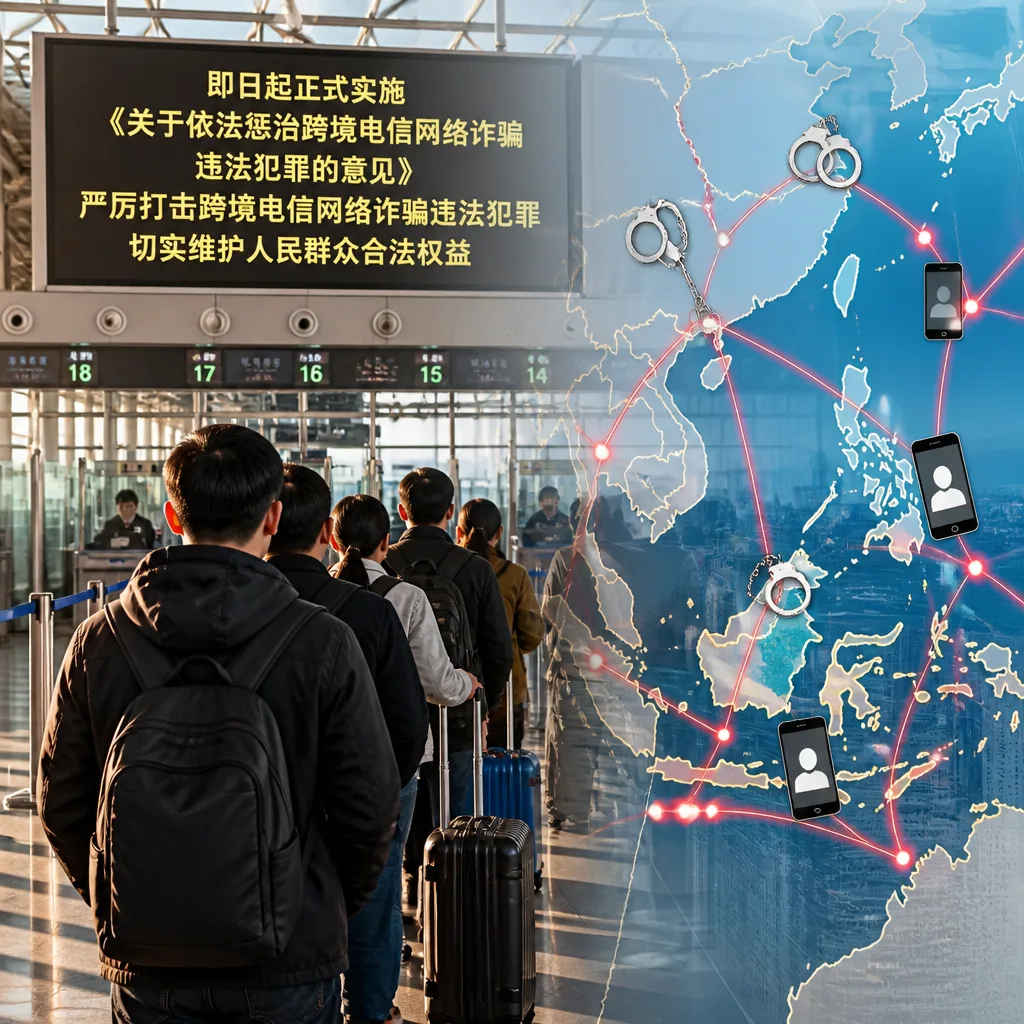
China has introduced an enhanced legal framework governing travel and border control and intensified international police cooperation as part of a concerted campaign against cross‑border telecom and cyber fraud, authorities have said. The measures, framed by the State Council, create specific powers to restrict travel and bolster intelligence sharing, extraditions and joint policing with partners across Southeast Asia and beyond.
New rules on exit and entry
The State Council’s revised Regulations on the Management of Entry and Exit were finalised in late June and are due to come into force on 15 September 2026. The document, signed by Premier Li Qiang, runs to 19 articles and places an explicit emphasis on controlling movements into and out of the Chinese mainland by both nationals and foreigners.
While the Regulations set out a range of administrative aims, their stated objectives include the protection of the legal rights of travellers and the safeguarding of state sovereignty, security and developmental interests. One provision makes clear that the rules are intended to reduce risks to Chinese citizens travelling to areas affected by armed conflict, social disorder, natural disaster or infectious disease.
| Key dates | Action |
|---|---|
| 29 June 2026 | State Council enhanced the Regulations |
| 15 September 2026 | Regulations scheduled to come into force |
| 19 | Number of Articles in the Regulations |
Targeting transnational scam networks
The policy changes come amid a sustained campaign by Beijing to suppress complex cross‑border fraud operations that have been linked to the abduction and forced labour of Chinese nationals in so‑called scam compounds, and to large financial losses among victims. Authorities have cited a need to protect citizens who travel to or are lured into jurisdictions where organised fraud is prevalent.
Alongside domestic regulatory changes, the government has been expanding diplomatic and policing activity intended to disrupt syndicates that operate across borders. Measures described by officials and analysts include:
- enhanced intelligence sharing with regional partners;
- co‑ordinated policing and joint operations in Southeast Asia and elsewhere;
- use of extradition and other legal mechanisms to return suspects.
Chinese commentary on the initiative stresses a multi‑pronged approach combining prevention, consular protection and law enforcement cooperation. The changes to exit and entry management are designed both to reduce immediate risks to citizens and to remove safe havens for criminal networks involved in telecom and cyber fraud.
Implications and enforcement
The Regulations broaden the circumstances in which travel may be restricted, notably by allowing authorities to bar visits to areas deemed dangerous because of conflict, disorder or other hazards. This scope could be invoked for locations where organised fraud is concentrated, although the text applies generally to a range of risky environments.
For international partners, the measures signal a willingness by Beijing to press other states for greater co‑operation on investigative and judicial matters. Joint policing operations and extradition requests are likely to be important components of any sustained reduction in transnational scam activity, but such steps depend on diplomatic relationships and legal frameworks with host countries.
Experts who have followed China’s recent anti‑fraud drive note that coercive criminal networks often operate across multiple jurisdictions, using sophisticated telecommunications and online platforms to recruit, coerce and defraud victims. Measures that combine travel controls with cross‑border law enforcement could complicate the networks’ ability to recruit and operate with impunity, but the success of the strategy will depend on sustained international co‑operation and effective implementation at home.
As the Regulations come into force, officials will face a practical task: balancing the stated aim of protecting citizens against the logistical and legal challenges of enforcing travel restrictions and coordinating multinational investigations without undermining legitimate cross‑border movement.














