
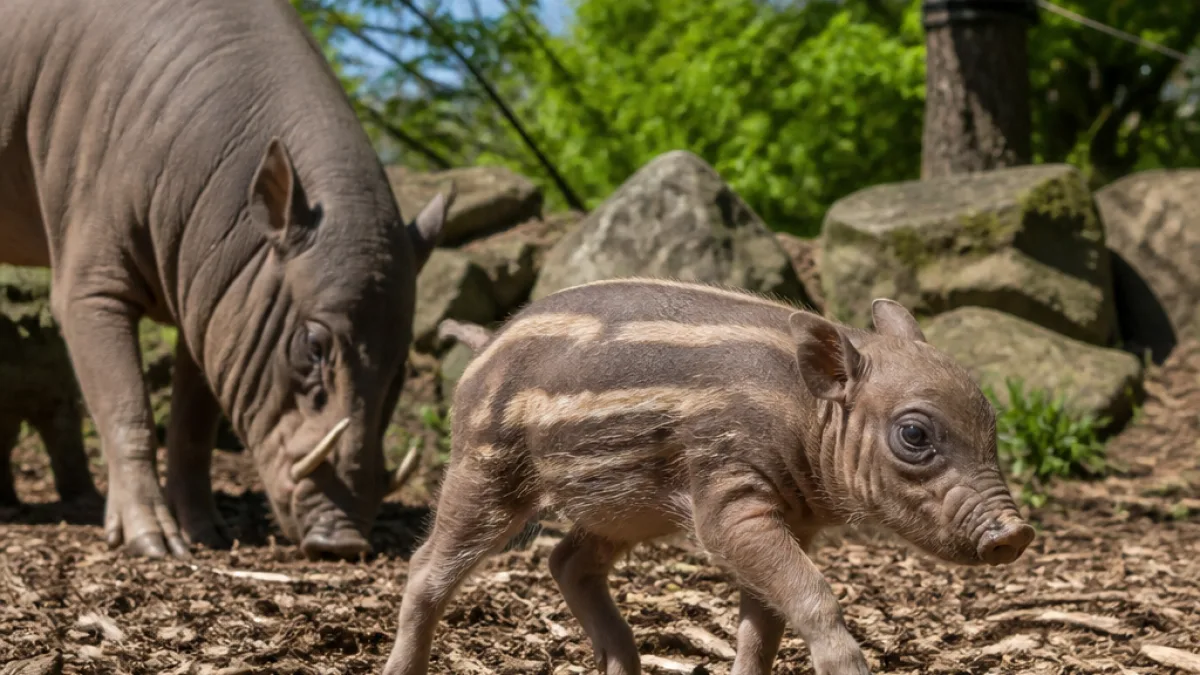
Rare arrival at Chester Zoo offers hope for threatened Indonesian species
Chester Zoo has welcomed a tiny, rare babirusa piglet this summer that conservationists say could play an important part in safeguarding the species’ future. The youngster, named Rana, was born to Matano, a female that herself was born at Chester Zoo more than a decade ago.
The babirusa is native to just four small Indonesian islands and is now under severe pressure in the wild. According to the International Union for the Conservation of Nature, the species faces a real risk of extinction; one of the factors driving the decline is the arrival of African Swine Fever on those islands about half a decade ago.
Rana’s birth is therefore not simply a feel-good story for visitors: it forms part of a wider, co‑ordinated effort by Chester Zoo and partners to bolster both captive and wild populations. Zoo staff are working with Action Indonesia on a Global Species Management Plan that combines managed breeding with field projects to track and protect remaining animals in their native habitat.
- Rana is a babirusa (sometimes called the 'pig-deer'), a species found on four Indonesian islands.
- Conservation actions include camera-trapping on Sulawesi and collaborative breeding programmes across Europe.
- Chester Zoo reports that at least 17 babirusas have been bred towards national cooperative targets so far.
"only ever birthing one or two kids at a time"
Babirusas do not produce large litters like many pig species; they tend to have one or two offspring at a time. That slow reproductive rate, coupled with disease threats and low visibility in the wild, makes each successful birth in captivity significantly valuable to future recovery attempts.
The zoo says Matano has produced descendants now living in collections across Europe, but this is the first birth of its kind at Chester in some time. Field monitoring indicates how precarious wild numbers have become: babirusas were recorded on camera in the wild on only two occasions during 2023–24, underlining the urgency of intensified protection and monitoring measures.
| Fact | Detail |
|---|---|
| Species | Babirusa (sometimes called pig-deer) |
| Native range | Four small Indonesian islands |
| Threats | African Swine Fever arrival; low wild sightings |
| Captive breeding progress | At least 17 bred towards national targets |
Chester Zoo’s work spans practical support in the field and the sharing of breeding expertise across zoos. On the ground in Indonesia, partners are using camera traps and other monitoring to locate surviving babirusas and to inform protection efforts. In parallel, European zoos that hold babirusas are coordinating to maintain genetically healthy, managed populations that can support conservation goals.
For Chester residents and visitors, Rana’s arrival offers a close-up reminder of how local institutions can play a global role. The zoo’s enclosures and keeper teams provide the conditions for successful births, while its conservation staff help translate captive success into action that benefits wild animals thousands of miles away.
As the zoo continues to monitor Rana’s development, the birth will be watched by conservationists working on the Global Species Management Plan and by other zoos contributing to cooperative breeding schemes. With wild sightings so rare, each captive-born animal can make a measurable contribution to long-term plans to keep the species from slipping further towards extinction.
Chester’s connection to these efforts is tangible: Matano, the colt’s mother, is part of a lineage started at the city’s zoo, and Rana now carries that lineage into a new generation at a time when every calf matters.









