
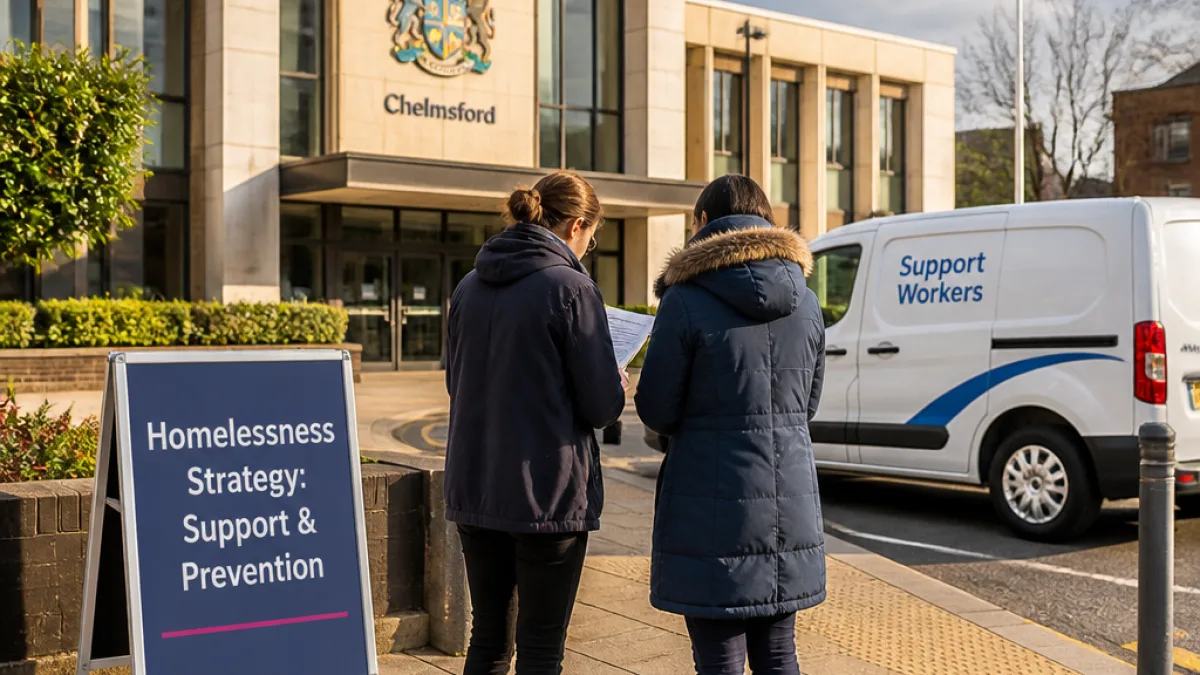
Council sets renewed targets as demand for help rises
Chelmsford City Council’s Cabinet approved a refreshed strategy on 13 October to tackle homelessness and rough sleeping across the city over the next four years. The plan reconfirms a focus on prevention and support for people who have already lost their homes, while aligning local priorities with the Government’s National Plan to End Homelessness.
The updated strategy follows a five‑year framework published by the council last year and reflects new national expectations, which ask councils to reframe their approaches around five shared themes and six performance measures. The local aims remain concentrated on preventing homelessness where possible and providing sustained help for those in need.
Progress in the first year: housing and targeted support
Council leaders say the first year under the strategy delivered a number of tangible outcomes in partnership with local organisations. Among the achievements recorded are:
- 54 new supported homes created for long‑term rough sleepers and people with mental health needs, developed with CHESS and Sanctuary Housing;
- Relaunch of a Housing First project with Delta Housing to provide intensive support enabling rough sleepers to move off the streets;
- Introduction of measures to reduce homelessness caused by domestic abuse, including a scheme that relocates the perpetrator rather than the victim, which the council says contributed to about a 20% fall in such homelessness locally;
- Progress on a new foyer for young people in partnership with YMCA Essex, alongside other ongoing projects.
Those involved say the emphasis has been on creating housing with wraparound support and preventing people from losing their homes in the first place.
Prevention targets and changing patterns
Currently, the council reports that 41% of people who seek help while they are judged to be “at risk” of homelessness are able to retain their homes or move to safe, stable accommodation with support from the authority. The strategy sets a target to increase that figure to more than 50% by 2027/28.
To achieve this, the council plans to expand its homelessness team and to increase efforts to help households access the private rented sector. Officials point to a shrinking supply of social housing, meaning greater reliance on private-sector lettings; the strategy aims to help 20% more people into private rental tenures as part of the prevention work.
The document also highlights an emerging local concern: an increasing number of people in their 60s and 70s are presenting as homeless in Chelmsford. The strategy commits the council to investigate the causes of this trend so it can be addressed through targeted interventions.
"The strategy continues to prioritise prevention while ensuring there is support for people who have lost their homes," the council said following the Cabinet decision.
What this means for residents and services
The strategy will shape how council services and partner agencies allocate resources over the coming years. Expansion of the homelessness team and a push to secure more private‑sector options respond to immediate pressures, while capital projects and support services target entrenched rough sleeping and specific groups, such as young people and those with mental health needs.
For Chelmsford residents, the most immediate changes may be more visible outreach, greater use of supported tenancies created with partners, and preventative interventions aimed at keeping people in their homes. The council’s pledge to probe the rise in homelessness among older residents could also lead to tailored support schemes for that age group.
| Measure | Current | Target (2027/28) |
|---|---|---|
| Helped at‑risk people retain or find stable housing | 41% | >50% |
| Increase in people helped into private rented sector | Baseline | +20% |
While the council points to early successes, the strategy will be judged on whether it can scale prevention work, secure sufficient housing options and respond to shifting patterns of need across the city in the face of broader housing supply constraints.