
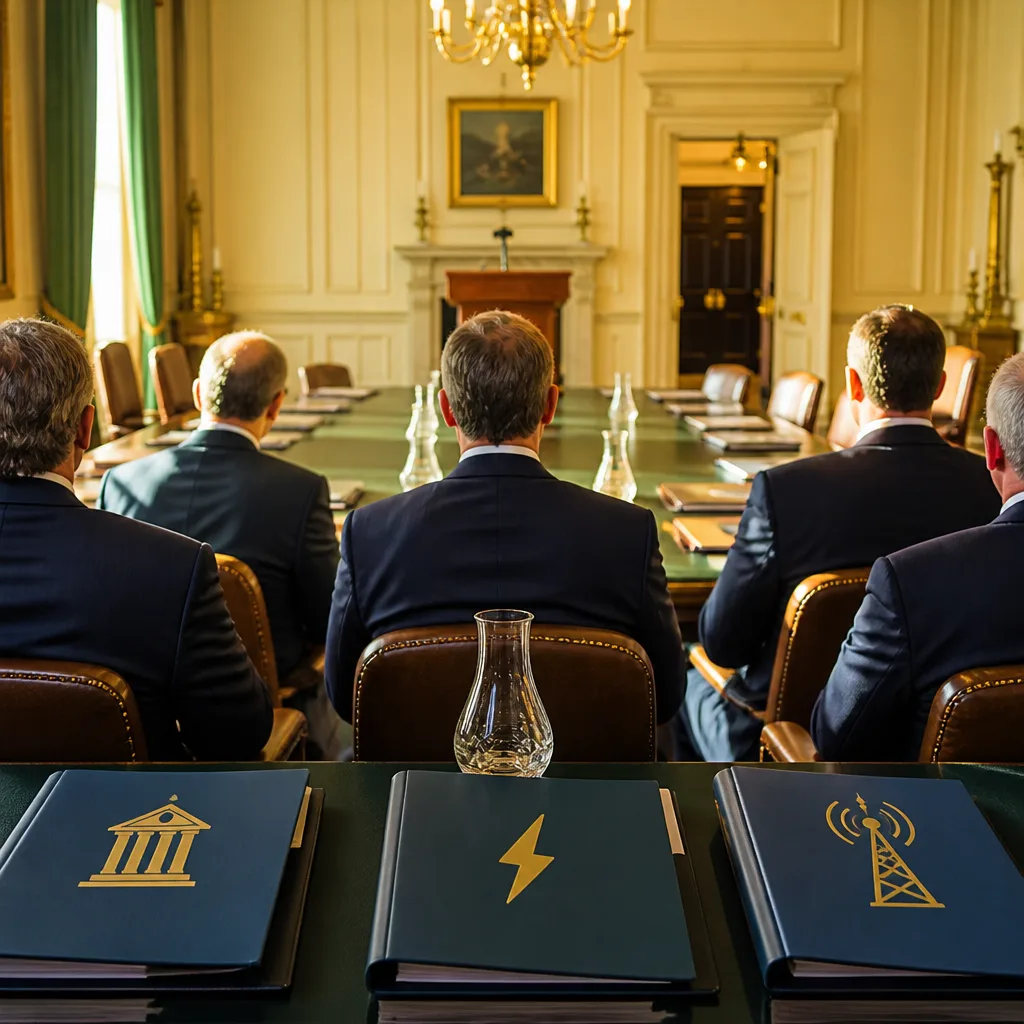
Prime Minister Andy Burnham will host senior executives from some of Britain’s biggest companies at Downing Street on Monday as he seeks business backing for a push on economic growth centred on devolution and a shift towards innovation-friendly government.
Who is attending and why it matters
The reception will bring together chief executives from a cross-section of influential sectors, including banking, energy and telecoms. Attendees named by the Prime Minister’s office include HSBC and Standard Chartered from finance, oil majors BP and Shell, and telecom operators BT and Vodafone. Ahead of the reception Mr Burnham will chair a roundtable with entrepreneurs working in fintech, artificial intelligence, clean energy and advanced manufacturing.
The meetings come as the Government seeks to present itself as a partner for private-sector investment while preparing for fiscal choices at an upcoming budget. Officials say devolution of powers and resources away from Westminster is a central plank of the message to firms: that local decision-making can accelerate infrastructure projects and commercial innovation.
Energy decision and political timing
The Downing Street engagement follows reporting that the Prime Minister is set to delay a decision on whether to bring the Shell-backed Jackdaw gas field onstream until after a parliamentary by-election next month. That pause highlights the political sensitivities that can surround large energy investments and the difficulty of balancing climate commitments, energy security and regional economic concerns.
For business leaders, the meeting offers an opportunity to press for clarity on investment conditions: predictable regulation, accessible financing and infrastructure commitments. For government it is a chance to signal an ambition to support a culture that rewards risk-taking and supports scale-ups — without yet committing to policy specifics.
- Seats at the table: HSBC, Standard Chartered, BP, Shell, BT, Vodafone.
- Entrepreneur roundtable: fintech, AI, clean energy, advanced manufacturing.
- Political overlay: reported delay to Jackdaw decision until after a by-election.
What this means for wages, prices and jobs
High-profile engagement between government and large corporates can be important in shaping investment flows that underpin jobs and wage prospects, but the outcomes are rarely immediate. If devolution succeeds in unlocking local infrastructure projects and supporting scale-up finance, the likely beneficiaries would be regional labour markets and firms in construction, technology and energy supply chains. That can lift local wages over time, but it depends on sustained public and private capital commitments.
Energy decisions such as Jackdaw have more direct short-term price and supply implications. Bringing a gas field onstream would affect domestic supply and could temper wholesale prices; delaying such a decision keeps those potential effects uncertain and can feed volatility into business planning. For households and firms, uncertainty over energy provision complicates budgeting and investment choices.
Context and credibility
Chancellor John Healey has recently used a major speech to outline a more optimistic economic vision, but ministers still face difficult choices on taxes and spending. Meetings with chief executives are a long-standing fixture of government engagement, yet they also invite scrutiny: business leaders want policy stability and workable regulation, while the public expects companies to translate meetings and warm words into real investment and jobs.
The success of Mr Burnham’s pitch will be judged not on the reception itself but on whether it leads to concrete, measurable commitments — from both government and industry — that improve productivity, reduce regional inequality and give businesses the confidence to hire and invest.
| Sector | Representative firms |
|---|---|
| Banking | HSBC, Standard Chartered |
| Energy | BP, Shell (Jackdaw referenced) |
| Telecoms | BT, Vodafone |
There is a realistic prospect that this round of engagement produces useful collaboration on skills, investment and infrastructure. But policymakers must translate rhetoric into durable frameworks that reduce uncertainty for firms, otherwise pledges at No. 10 risk becoming another round of high-profile meetings with limited economic follow-through.














