
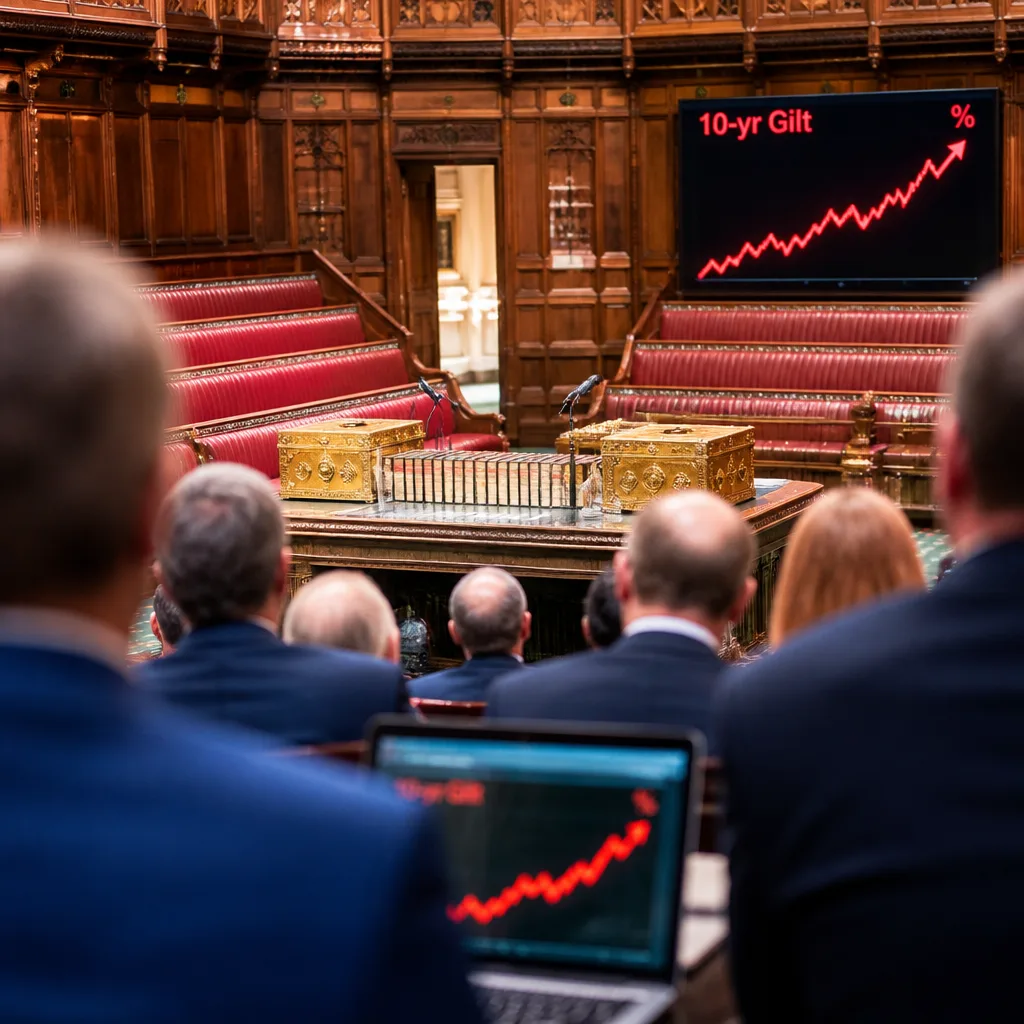
Prime Minister Andy Burnham stood in the Commons on Wednesday under mounting scrutiny as the cost of UK government borrowing rose amid market nervousness following his early decisions in office. The increase in yields on government bonds came as the Conservative leader, Kemi Badenoch, pressed the prime minister over the risks facing public finances and whether tax rises are planned for October’s budget.
Markets react as PM defends policy choices
Ten-year gilt yields rose by around 4 basis points in early trading on Wednesday, reaching levels not seen since June 2008. The move has been linked by some commentators to a combination of factors, including an uptick in oil prices and concerns about policy direction after Burnham’s first significant Commons statement, which restated his intention to extend public control of utilities.
Opposition figures argued the statement unsettled investors. The Conservative leader accused the prime minister of failing to provide clarity about the fiscal consequences of his plans, and of not ruling out tax increases. Burnham pushed back, saying his first action in office had been to cut VAT on energy bills — a move he cited as evidence of fiscal responsibility — but he stopped short of permanently ruling out future tax measures.
“He did not rule out tax rises. Instead, what he did was lots of point scoring,”
That remark from Ms Badenoch underlined the central parliamentary exchange. It followed criticism from some market voices that the government’s early signals had increased uncertainty at a sensitive moment for global and domestic markets.
Warnings from within the prime minister’s circle
Not all commentary attributed the market move to policy rhetoric. Several economists pointed to external pressures — notably higher oil prices — as a major driver. Nonetheless, a close ally of the prime minister, the economist Jim O’Neill, told colleagues and associates that the tone and content of the Commons statement were ill-timed for investors.
“The last thing that investors want to hear on a day where all of this is going on in the background,”
said Mr O’Neill, according to people familiar with his comments. He asked rhetorically whether the government would face awkward questions about getting debt down and containing spending.
Implications for the autumn budget
Rising gilt yields reduce the fiscal headroom available to the chancellor, John Healey, in setting the autumn budget. Higher government borrowing costs increase the interest bill over time and can constrain discretionary spending choices, particularly if yields remain elevated.
Ministers must now weigh the political advantages of pursuing pledges such as public control of utilities against the market and fiscal consequences. That calculation is likely to feature heavily in Treasury discussions ahead of the budget timetable.
- 10-year gilt yields: rose by about 4 basis points in early trading on Wednesday.
- Market context: rise linked by some economists to higher oil prices and policy uncertainty.
- Political exchange: Badenoch accused Burnham of failing to rule out tax rises; Burnham noted a VAT cut on energy as an initial tax easing.
The debate in Westminster also highlighted the broader political dynamic. Ms Badenoch sought to draw a contrast between Conservative warnings about fiscal prudence and what she described as Labour’s unwillingness to be candid about future tax or spending decisions. Labour dismissed the characterisation as partisan posturing and pointed to the government’s early tax cut on energy bills as evidence of immediate consumer relief.
| Indicator | Recent move |
|---|---|
| 10-year gilt yield | +4 basis points (highest since June 2008) |
As ministers prepare for the autumn fiscal statement, the key question remains how much short-term market sensitivity will constrain policy ambition. The chancellor will have to assess whether to prioritise market confidence or proceed with political pledges that could be perceived as increasing fiscal risk.
For now, parliamentary exchanges and market movements have put financing costs and the prime minister’s early policy signals at the centre of the political debate. The forthcoming weeks will test the government’s ability to balance those competing pressures while framing a credible fiscal strategy ahead of the budget.












