Belfast’s hosting of the Fleadh Cheoil na hÉireann attracted an estimated 1.6 million people to the city last week, producing a mixed commercial picture: significant short‑term staffing demand and footfall for many, but disruption and capacity shortfalls for others.
Immediate business effects: staffing, footfall and operational strain
Operators of event facilities reported substantial recruitment to cope with the surge in visitors. The firm running services at North Street car park employed almost 70 staff for the event, reflecting the intense labour needs that accompany such large gatherings.
That organiser said the number of people passing through the city was “almost double” what had been anticipated, a surge that translated into brisk takings for some businesses but also underlined shortcomings in planning for the scale of demand.
“It was fantastic. It exceeded all our expectations, and I think everybody we've spoken to was exactly the same.”
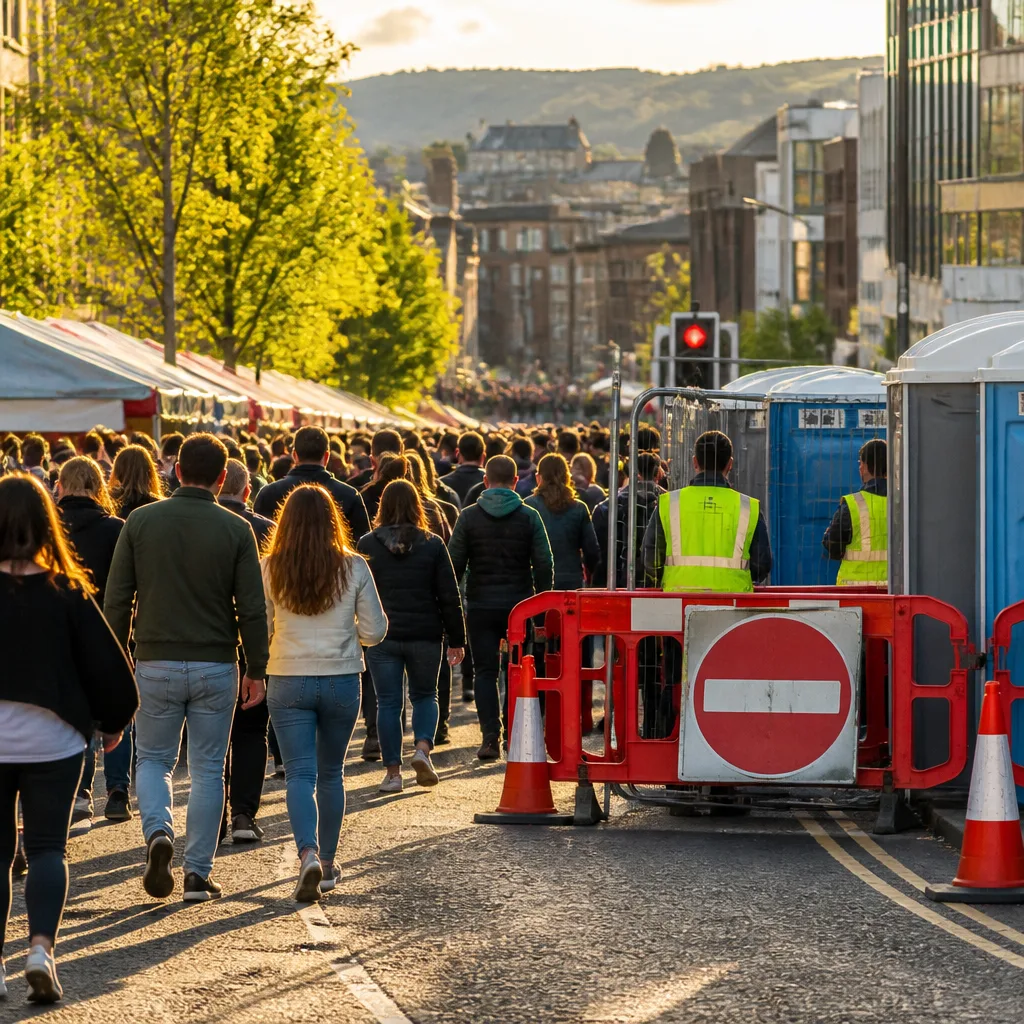
The benefits were uneven. Cafés and hospitality venues close to main events reported strong trade in many cases, but some businesses on the periphery experienced reduced custom because of road closures and temporary outdoor bars that altered usual customer flows.
What firms want changed
- More provision of basic infrastructure — notably additional temporary toilets — to match unexpected surges in attendance.
- Improved traffic and access management so businesses not immediately adjacent to event clusters do not suffer reduced footfall.
- Better forecasting and coordination between organisers, councils and local traders so staffing and supplies can be scaled correctly.
Those points came from conversations with multiple city‑centre operators reflecting on the record event, which attracted national and international attention. The consensus among interviewed firms was that the festival's scale presented both a commercial opportunity and a test of local logistical capacity.
Wider implications for jobs, prices and local economies
Large cultural events commonly produce a short‑term lift in employment through seasonal or temporary hires. The recruitment of nearly 70 people for a single car‑park operation is illustrative: such roles can offer immediate income and hours for local workers, but they are typically transient and may not provide sustained earnings or benefits.
For retailers and hospitality operators, higher visitor numbers can translate into increased sales of food‑to‑go, beverages and tourist goods, which can temporarily boost takings and help firms recover during quieter periods. However, the disruption observed — from altered pedestrian flows to temporary trading structures — can suppress revenues for businesses outside the event epicentre, producing an uneven distribution of gains.
Price effects are ambiguous. Businesses benefiting from large crowds can raise prices to capture higher demand, but they also face higher costs: extra staffing, temporary infrastructure and waste management. Without careful coordination, those costs can erode margins rather than deliver net gains.
Organisers and authorities preparing for the next time the Fleadh comes to Belfast in 2027 will need to weigh these trade‑offs. Improving basic service capacity and access planning could amplify positive economic impacts while reducing the negative knock‑on effects felt by some traders.
| Experience | Examples from businesses |
|---|---|
| Positive | High footfall, strong atmosphere, increased takings for central operators |
| Negative | Disruption from road closures, quieter trade for some peripheral cafes, need for more toilets |
For policy‑makers and event planners, the lesson is straightforward: mass cultural gatherings can deliver material benefits to employment and turnover, but those benefits are maximised only when infrastructure, access and support for a wide range of local businesses are part of the operational plan. The scale of attendance in Belfast shows the upside potential — and the logistical challenge — of staging events of this size.