
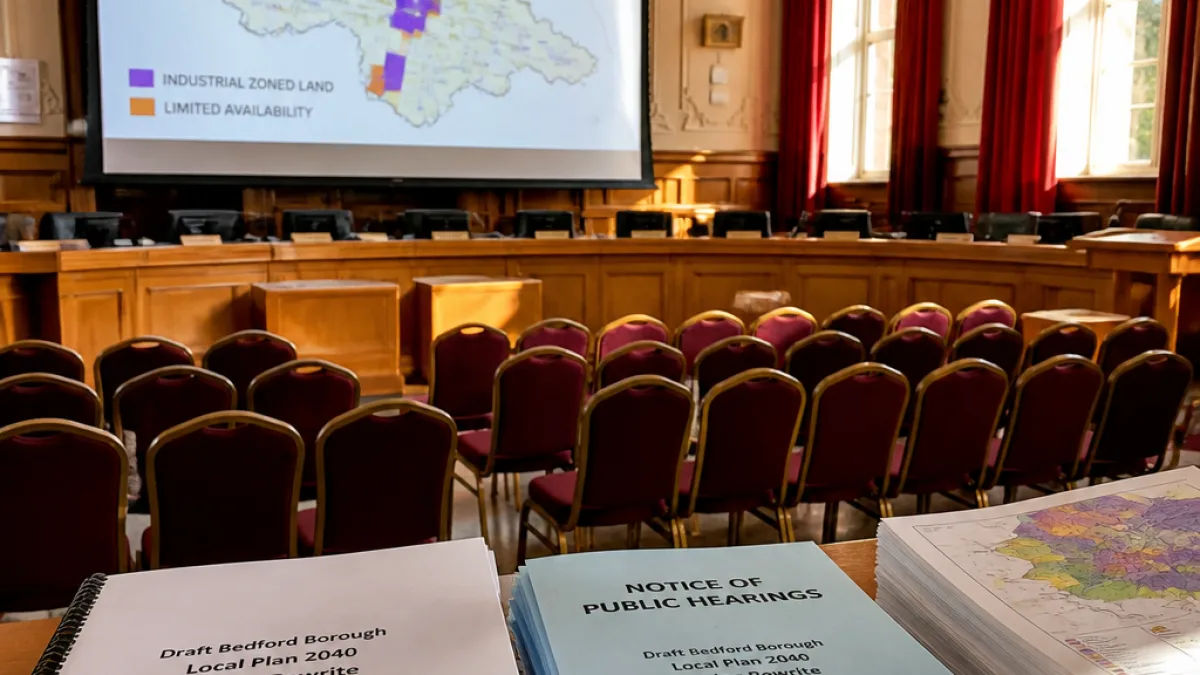
Bedford city officials have moved to clarify how future large-scale technology facilities such as data centres would be handled, even though no proposals are currently on the table.
Why the city is acting now
At its meeting on 11 August council members and staff outlined why the issue is being addressed during a long-running update of the city's zoning code. The current ordinance, written decades ago, does not explicitly define modern uses such as data centres or crypto-mining operations. The draft zoning rewrite seeks to capture those newer land uses and set out where they would — and would not — be allowed.
City Manager Andrea Roy told local reporters that the aim of the exercise is to bring the ordinance up to date: the existing rules were drafted around 30 years ago and lack language for contemporary industrial and technological developments. The proposed approach would confine data centres to areas already designated for industry.
Limited space and what it means for Bedford
Officials stressed the practical constraints facing any large data facility. Bedford is described as largely developed, with the city being about 98% built out. The pockets of industrial land suitable for a data centre are, by the manager's account, "extraordinarily limited" — amounting to roughly four acres.
That matters because many commercial data centres occupy far larger footprints. As one city official put it when considering the scale usually required for such projects: "When you think about a data center going on 100 acres, we're not lining up." The point was not to rule out such uses entirely, but to acknowledge that the physical and zoning realities make them unlikely in Bedford without significant changes.
Regulation rather than prohibition
The mayor urged caution about blanket bans. He said residents have raised concerns — particularly given high-profile projects in neighbouring cities — but warned that an outright prohibition can expose a municipality to legal challenges. Instead, Bedford is proposing controls that regulate where and how these operations could be established.
"When it comes to usage of certain things, as a city, you don't want to outright ban things. It sets you up for litigation in the future," the mayor said. "Instead, you regulate them."
As part of the draft zoning ordinance, the city plans to create a pathway by which a proposed facility might proceed through a special use permit (SUP) process. That process, as described by officials, would include public notice and a hearing, allowing the council and residents to consider an individual application on its merits.
- No active proposals: Officials said there are currently no plans to build a data centre in Bedford.
- Zoning update: The rewrite will add definitions for modern uses including data centres and crypto-mining.
- Industrial land scarcity: Suitable industrial land is about four acres in total; the city is roughly 98% built out.
- SUP option: A special use permit will allow case-by-case consideration with public hearings.
Local consequences and next steps
The proposed approach balances two objectives: protecting residents' interests and preserving regulatory flexibility. For most Bedford households the immediate effect will be limited, since officials say the kind of large plot typically sought by major data-centre operators is not available within the city's boundaries. But the changes are likely to matter for any smaller-scale technology infrastructure proposals and for businesses looking to expand industrial activity where limited land exists.
The zoning rewrite is described as the closing stage of a multi-year modernisation effort. Residents and stakeholders should expect opportunities to comment during the SUP process and as the revised ordinance is finalised. How strictly the rules are applied and what conditions are attached to any permit will shape whether Bedford sees any technological facilities locate within its borders in future.
The city's next formal steps will be to finalise the draft ordinance language and integrate the SUP mechanism into the regulatory framework. That process will establish the substantive standards — for example noise, energy use, transport and siting — that applicants would need to meet if they seek approval.
For now, Bedford's stance is precautionary: not a ban, but deliberate limits driven by geography, existing land use and a desire to retain public oversight.