
Housing association says Barrhead missing key care tier for older residents
Barrhead and District Social Housing Association (BDSHA) has told town councillors the town is missing a level‑3 supportive living facility, leaving a gap between independent senior housing and higher-dependency care that local providers are struggling to bridge.
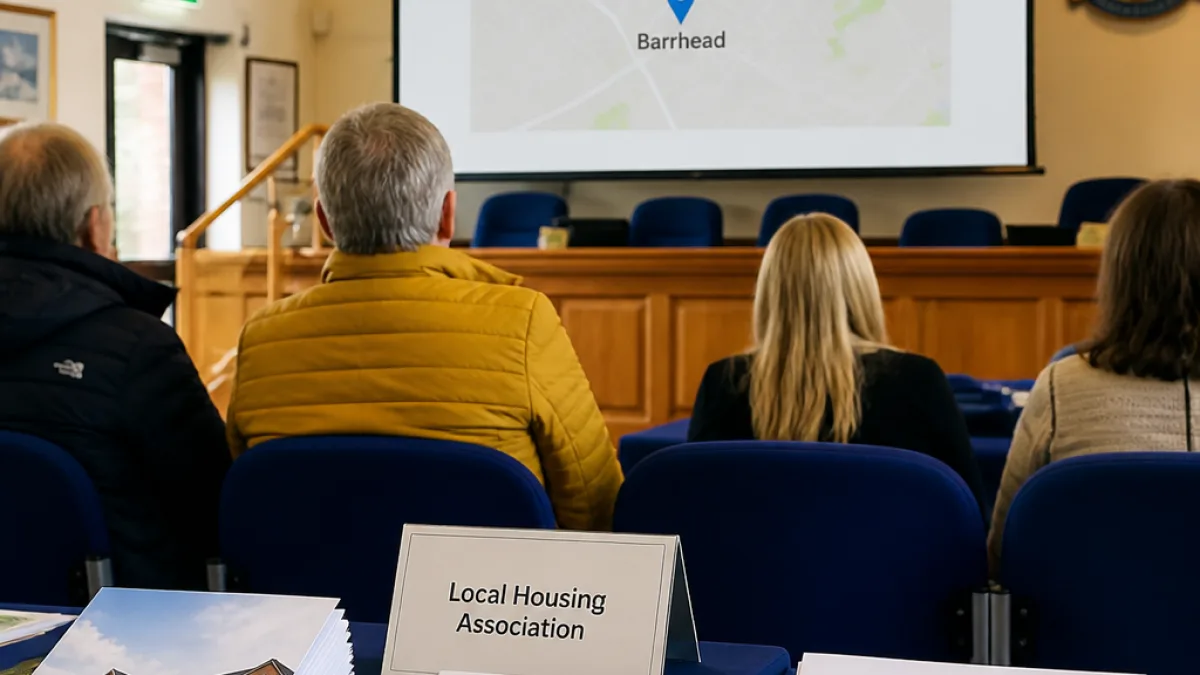
The concern was raised during a presentation to Barrhead town councillors on 8 September by chief executive officer Tyler Batdorf and deputy chief executive Su Macdonald, in response to a question from Coun. Dave Sawatzky. Batdorf said he had heard that Alberta Health Services (AHS) had identified Barrhead as a community in need of such a facility.
Representatives of the BDSHA — a not‑for‑profit body which operates several senior housing schemes locally, plus a six‑unit complex in Fort Assiniboine and two affordable housing blocks in Barrhead and Swan Hills — said the association had been surprised AHS had flagged the shortfall because the provincial department does not normally inform them directly. Nevertheless, Batdorf and Macdonald agreed with the assessment.
Batdorf warned that the association is currently acting beyond the intended remit of its accommodation, saying many residents are staying in units that provide a lower level of care than they require. "We have a lot of people (in our facilities) that are beyond our level of care," he told councillors, adding staff and home‑care services were doing their best but the situation had become a burden.
"It used to be called an SL3 (Supportive Living). Essentially, we are a (Supportive Living Level 2) that has been acting as a transition to (Supportive Living Level 4)," Batdorf said.
What the levels mean
Supportive living levels define the intensity of assistance and access to health‑care aides. The BDSHA outlined the distinctions in its presentation to councillors:
- Supportive Living 2 (SL2) — semi‑independent housing where residents remain largely independent but receive services such as light house cleaning, laundry and meal preparation.
- Supportive Living 3 (SL3) — continuing care with the above services plus 24‑hour access to health‑care aides for scheduled and unscheduled personal care.
- Supportive Living 4 (SL4) — higher‑dependency accommodation for people with greater medical or personal care needs.
| Level | Typical support |
|---|---|
| SL2 | Light housework, laundry, meals; largely independent |
| SL3 | As SL2 plus 24‑hour access to health‑care aides for personal care |
| SL4 | Higher dependency residential care |
Local consequences and pressures
Batdorf said the association has been effectively providing transition care between SL2 and SL4, but that is not sustainable. Without a formal SL3 facility, residents who become medically stable yet still require round‑the‑clock assistance cannot be accommodated in the right setting, forcing current housing and home‑care teams to stretch resources.
The situation carries practical implications for families, staff and the wider health‑care system. Residents living in units that fall short of the care they now need may experience diminished support for daily personal care, while staff are required to provide assistance beyond the design of their roles. The BDSHA said it works with home‑care services but that continuing to hold residents beyond the intended level of care represents a burden on both parties.
Coun. Sawatzky highlighted the AHS assessment during the exchange with BDSHA leaders, prompting the organisation to acknowledge the gap. The association did not, in the presentation, set out a specific plan or timeline for development of a level‑3 facility or indicate what capital or operational support would be required from provincial bodies.
For Barrhead, the identification of a missing SL3 reflects broader tensions in housing and health provision for an ageing population: the need to align available property types with changing care needs and to ensure capacity for safe, appropriate transition when residents’ requirements increase.
Local residents, families of older people and town councillors will be watching for any proposals from the BDSHA, health authorities or the council to address the shortfall and to clarify how a new facility might be funded, sited and staffed.














