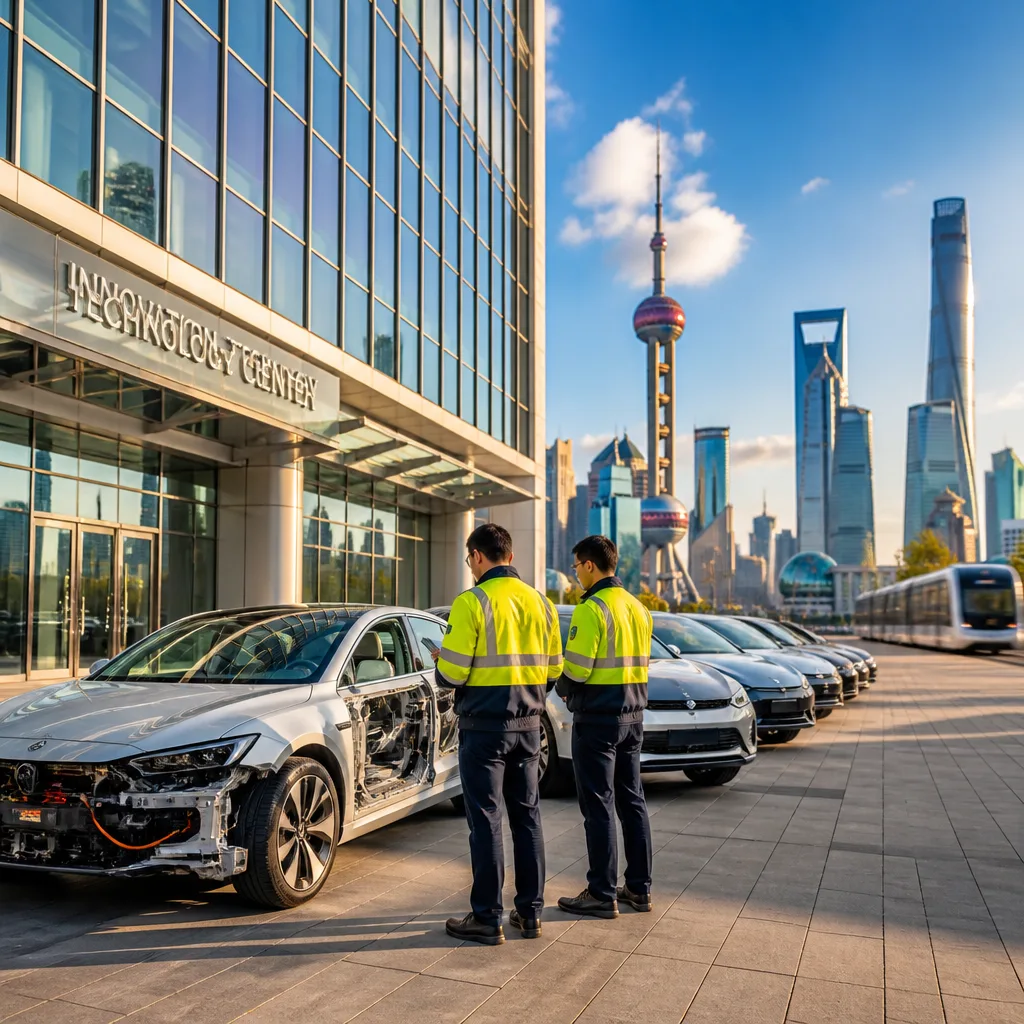
The Audi Innovation Technology Center (AITC), a joint venture between Audi AG and SAIC Motor, was officially opened in Shanghai on 3 September, the companies announced. The centre is described as a dedicated research and development entity for the Audi brand with end‑to‑end vehicle development and delivery capabilities, making it a core element of Audi’s dual‑brand strategy in China.
What the centre will do
The AITC is headquartered in Shanghai and positioned as a full‑service R&D organisation for Audi in the Chinese market. According to the announcement, the centre will undertake complete vehicle development and manage the delivery pipeline, signalling a deeper on‑shore commitment by a major European OEM to localised engineering and programme management.
Why it matters
The inauguration underlines a broader shift in the automotive sector: global manufacturers are locating more advanced engineering functions inside China rather than simply selling vehicles there. For Audi, embedding full vehicle development capability within a joint venture suggests the company intends to tailor product and technology decisions closely to the Chinese market while retaining close collaboration with SAIC on engineering and production.
- Local R&D: The AITC adds on‑the‑ground design and engineering capacity for Audi in China.
- Dual‑brand strategy: The centre acts as a pillar for executing Audi’s localised approach.
- End‑to‑end delivery: From development through delivery, the hub will manage whole vehicle programmes.
Industry backdrop: compliance, sales momentum and manufacturing advances
The AITC opening arrives alongside several other industry updates that illustrate the Chinese auto sector’s rapid evolution and regulatory attention.
Seres Group issued a public statement in response to newly issued “Guidelines on Overseas Competitive Behaviour and Compliance Construction in the Auto Industry”, which were jointly released by the Ministry of Commerce, the Ministry of Industry and Information Technology, and the State Administration for Market Regulation. Seres said that legal compliance is an "unbreakable bottom line" and pledged to adhere to principles of lawful compliance, fair competition and mutual benefit in its overseas operations. The group also announced plans to strengthen its compliance framework and standardise operations across its value chain.
Market momentum for domestic models remains strong. Leapmotor reported that cumulative sales of its C11 mid‑size SUV have surpassed 350,000 units, up from 300,000 in November 2025 — a rise of 50,000 in roughly nine months, according to the company. That pace highlights sustained demand for competitive electric and hybrid models from local brands.
On the manufacturing front, Xiaomi’s Smart Manufacturing Industrial Base Phase II reached a significant construction milestone: Beijing’s online investment project approval platform approved the acceptance opinion for the construction engineering archives on 2 September. And Zotye Auto, after resuming work and production in March, has moved into batch production verification for new models following completion of mould deliveries and resumed operations at its mould factory.
| Item | Detail |
|---|---|
| Audi Innovation Technology Center | Joint R&D hub in Shanghai with full vehicle development and delivery capabilities (inaugurated 3 September) |
| Seres Group | Stated commitment to compliance following guidance from three Chinese ministries |
| Leapmotor C11 | Cumulative sales exceed 350,000 units; 50,000 added since Nov 2025 |
| Xiaomi | Phase II smart manufacturing base archives accepted (2 September) |
| Zotye Auto | Mould delivery complete; batch production verification under way |
Implications and risks
The establishment of the AITC demonstrates how international carmakers are shifting investment from sales and assembly towards localised product development, particularly for electrified and software‑defined vehicles. For consumers, the likely outcome is a faster introduction of models and features tuned to domestic preferences. For competitors, it raises the bar for local and foreign rivals that must now match the speed and scale of joint venture engineering teams.
However, the same strategic push creates regulatory and reputational considerations. The publication of government guidelines on overseas conduct and the immediate response from Seres show that Beijing is tightening expectations around how Chinese companies act abroad. Firms expanding overseas will need robust compliance programmes while also balancing technology transfer, intellectual property and partnership arrangements with foreign collaborators.
Overall, the AITC is a clear signal that the centre of gravity for automotive technology decisions in China is moving closer to local engineering hubs — an outcome that will shape product roadmaps, supply chains and international competition in the years ahead.