
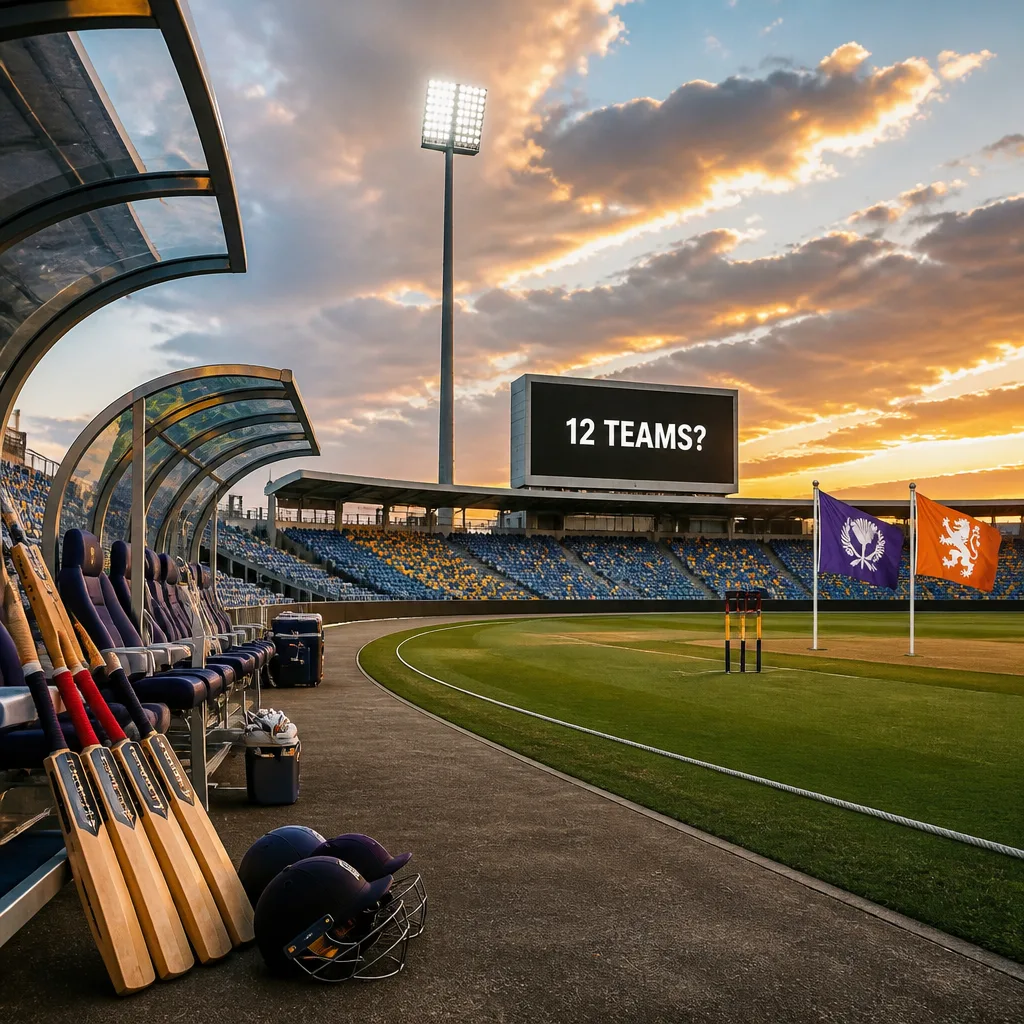
The International Cricket Council's proposal to stage a 12-team men's Cricket World Cup in 2027 has drawn swift criticism from associate nations, with Scotland and the Netherlands warning the change would sharply restrict chances for smaller countries to reach cricket's flagship 50-over tournament.
Senior figures from associate sides say shrinking the event will reduce the number of direct qualification routes and increase the pressure on a small handful of places, effectively raising the barriers for teams outside the full-member ranks. The concern follows renewed debate over how to balance elite competition with the sport's global growth.
Associates fear lost opportunity
Members of the associate community argue that a larger World Cup gives developing teams essential exposure — both competitive and commercial — which in turn supports player development, domestic investment and fan engagement. Removing those opportunities, they warn, risks entrenching the status quo and limiting the international game to a narrower group of nations.
Images from previous World Cups underline the argument. Players from Scotland and the Netherlands have on occasion produced memorable performances on the big stage that raised the profile of cricket in their countries and across Europe. Supporters of enlargement say such moments justify keeping more teams in the tournament.
Context amid ongoing international fixtures
The debate over tournament size comes as several high-profile Test series are under way, offering a reminder of cricket's crowded international calendar. This week:
- Bangladesh tour Australia — a series that some commentators believe provides opportunities for the Tigers to test themselves against top opposition.
- India tour Sri Lanka — conditions in the sub-continent are expected to favour spin bowlers if seasonal rains stay away.
- England host Pakistan — a closely watched home series with no clear favourite, analysts say.
Those fixtures add immediacy to discussions about international scheduling and how best to fit a revamped World Cup into an already busy calendar without disadvantaging emerging nations.
Implications for sport and qualification
Reducing the tournament field would likely mean fewer guaranteed slots for associates and more reliance on multi-stage qualifying tournaments or limited invitational places. Critics say that approach increases uncertainty for smaller boards and complicates long-term planning for domestic development programmes.
Supporters of a smaller event point to streamlined formats, potentially higher-quality group-stage contests and commercial arguments aimed at maximising revenues and broadcast appeal. Opponents counter that such benefits come at the cost of global inclusivity and the opportunity for eye-catching upsets that galvanise newer markets.
For teams such as Scotland and the Netherlands, the debate is existential. Their administrators stress that consistent access to top-level events is not merely symbolic: it is a vital part of building sustainable professional structures, attracting sponsors and giving players the experience needed to close the gap with full members.
Broader questions for the ICC
The controversy raises several questions the ICC will need to address publicly: how qualification will be reworked, what protections — if any — will exist for associate participation, and how financial distributions might be altered to support a narrower elite. Any final decision is likely to be scrutinised for its impact on the game's expansion, particularly in non-traditional markets.
As discussions continue, the views of associate nations will be central to the narrative. Their warnings underline a fundamental tension between preserving a high-profile showpiece and nurturing the wider international game on which cricket's long-term health depends.
| Item | Detail |
|---|---|
| Proposed tournament size | 12 teams |
| Notable opposing nations | Scotland, Netherlands |
| Concurrent Test series | Bangladesh in Australia; India in Sri Lanka; England v Pakistan |









