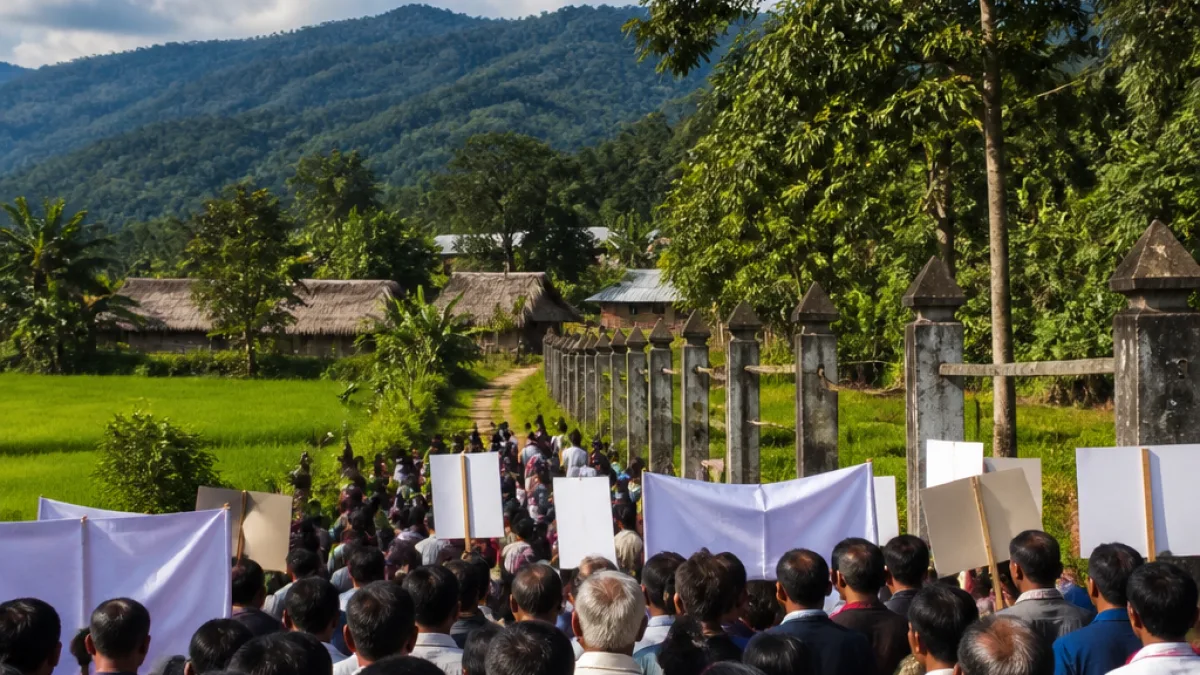
Imphal, August 11: A large mobilisation of Kuki chiefs and residents in Chandel district escalated a simmering dispute over the Indo‑Myanmar frontier on Tuesday, as protesters opposed a proposed demarcation and realignment of boundary pillars in the Khengjoi sector.
Protest and demands
Thousands of people, assembled under the banner of affected border‑area Kuki chiefs at Khengjang and Molcham villages, voiced strong objection to an exercise they said would alter the existing boundary position that communities have traditionally recognised and followed on the ground.
Carrying placards and chanting the slogan “Not an inch of our land will be parted”, the protesters described the proposed alignment as undemocratic and warned that any alteration would impinge on livelihoods, identity and customary rights.
“This is not merely a question of boundary pillars. These are our ancestral homesteads, cultivation fields, burial grounds and customary commons,” the chiefs said.
Points of contention
The mobilisation followed claims by affected communities that the Ministry of Home Affairs (MHA) had directed a demarcation exercise to be completed within three months after a meeting chaired by the Union Home Minister on May 11. The proposed realignment centres on four boundary pillars in the Khengjoi sector:
- Boundary Pillar 65 — Molcham
- Boundary Pillar 66 — Jangngoulen
- Boundary Pillar 67 — Khumkot
- Boundary Pillar 68 — Joldam
According to the protesting chiefs, areas surrounding these pillars include ancestral homes, agricultural land, burial grounds and customary community commons that have been used and occupied for generations. They alleged that the government was attempting a major territorial exercise without adequately addressing local concerns.
Local impact and concerns
Protest leaders stressed that the dispute is not limited to technical survey coordinates but involves everyday rights and heritage. They warned that any unilateral adjustment of the existing boundary position would be unacceptable and could affect the socio‑economic fabric of border communities.
The chiefs argued that the alignment being considered does not correspond with the boundary position traditionally recognised on the ground, and urged authorities to consult affected communities before any change.
Official context
The mobilisation was reported after claims that the MHA had set a three‑month timeline for completing the demarcation exercise, following a meeting chaired by the Union Home Minister on May 11. The specific directive and its terms have been cited by locals as the administrative trigger for the proposed work on the ground.
The source content does not provide an official statement from the state government, the union ministry or survey authorities on the proposed realignment. No timeline for action by survey teams or security arrangements for the area was specified in the available report.
Why the dispute matters
The Indo‑Myanmar boundary runs through remote and inhabited frontier tracts where traditional land use, village boundaries and international demarcation do not always match neatly. Changes to pillar positions can have practical consequences for access to fields, ownership claims, burial grounds and community commons — issues the protesting chiefs highlighted.
| Boundary Pillar | Village / Locality |
|---|---|
| 65 | Molcham |
| 66 | Jangngoulen |
| 67 | Khumkot |
| 68 | Joldam |
What stakeholders want
Based on the reported statements of the affected chiefs and communities, their principal demands are:
- That the existing boundary position, as recognised locally, be retained;
- That any demarcation or realignment be preceded by meaningful consultation with affected communities and customary authorities;
- That ancestral homesteads, cultivation fields, burial grounds and customary commons not be compromised by administrative action.
The protest underlines the sensitivity of border demarcation work in inhabited frontier zones and the importance of transparent consultation. The available report does not indicate whether state administration, the MHA or survey teams responded on Tuesday to the mobilisation in Chandel.
Further developments will depend on whether authorities engage with local leaders to resolve differences over the proposed alignment, and on any official clarification of the demarcation exercise ordered after the May 11 meeting chaired by the Union Home Minister.