Delay in start, procedural gaps and dried saplings raise questions over bridge beautification
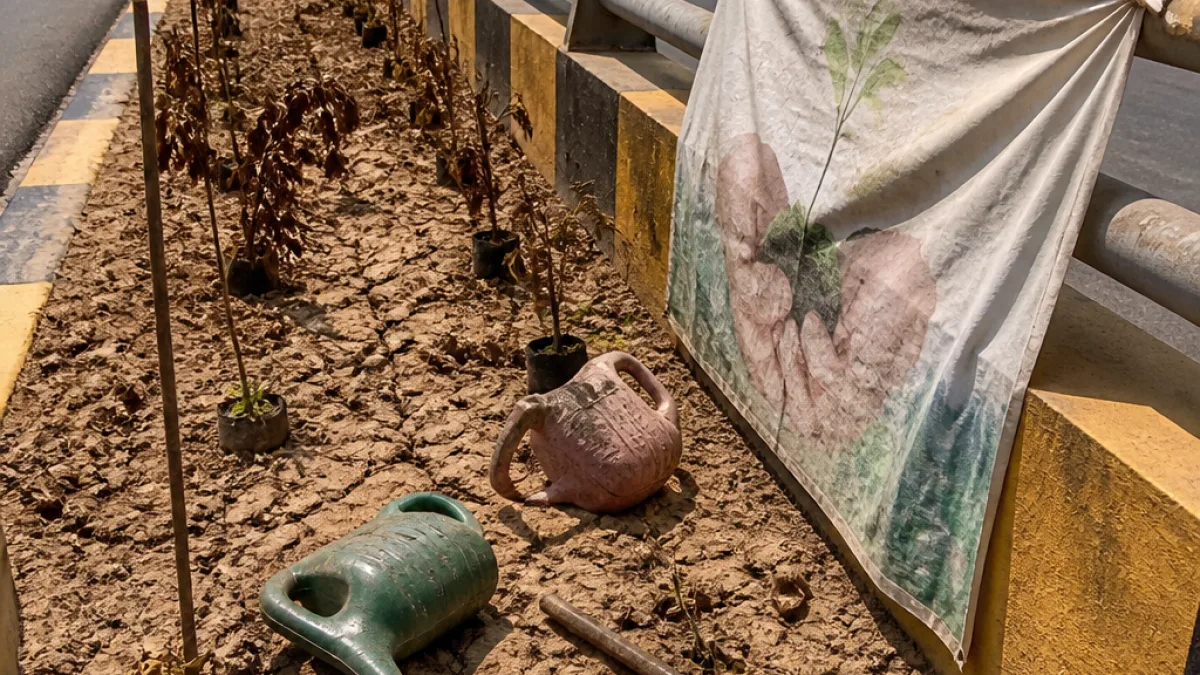
Ludhiana: Saplings planted on the divider of the Jagraon Bridge have dried up within three days of plantation, drawing criticism from residents and exposing procedural gaps in a civic beautification project carried out under a Corporate Social Responsibility (CSR) initiative.
The work on the bridge was undertaken under a memorandum of understanding (MoU) signed on 22 January between the Municipal Corporation (MC) and a private developer, Palm Heights. According to the MoU, the company was to carry out painting, plant saplings and maintain certain installations on the site under a seven-year contract. However, actual work began only three days ago — almost seven months after the agreement was signed.
- MoU signed on 22 January.
- Work commenced only recently, nearly seven months later.
- Saplings dried within three days of plantation.
An MC official, who requested anonymity, said the Horticulture Department was unaware of the MoU and came to know about the plantation only two days ago after the work started. The official noted that such contracts generally pass through the horticulture desk and several other offices — including the Sub-Divisional Officer, Executive Engineer, Mayor, MC Commissioner and the Finance and Contracts Committee — but in this case that did not happen.
“The dry and damaged trees give a dirty look to the area.”
The remark was made by a local resident, Surinderpal Singh, who passes through the stretch daily and said the spot is a prominent entry point to the city and needs proper maintenance. The Tribune has a copy of the MoU that details the scope of work agreed between the developer and the civic body.
As per the MoU, responsibilities included:
- Painting graffiti on designated spaces;
- Displaying the company and its sister organisation’s names in the area;
- Maintaining the national flag at the bridge;
- Taking care of three statues of Bhagat Singh, Rajguru and Sukhdev located on the bridge.
A worker involved in the plantation told reporters that the saplings would initially appear dry but were expected to grow well later. Attempts to contact the Zonal Commissioner who signed the MoU, Jasdev Singh Sekhon, were not successful despite multiple calls, according to reporting on the matter.
| Event | Detail |
|---|---|
| MoU signed | 22 January |
| Scheduled start in MoU | Within a month of signing |
| Actual start | Three days ago (about seven months later) |
| Condition of saplings | Dried within three days of plantation |
The episode highlights two core concerns for Ludhiana residents: effective stewardship of public spaces and compliance with municipal procedures. The horticulture wing’s apparent exclusion from the loop is significant because it is usually responsible for species selection, planting schedules compatible with local climate, and aftercare arrangements — all crucial to the survival of newly planted saplings.
Urban greening in Punjab cities faces seasonal stresses, including high summer temperatures and erratic water availability. Properly executed plantation drives typically include initial irrigation plans, soil preparation and monitoring — elements that are usually overseen by the horticulture department or specified in contracts. Where such oversight is missing, newly planted trees are at higher risk of drying out, undermining both environmental goals and public confidence in CSR projects.
Residents and passersby said the dried and damaged saplings harm the appearance of a busy city approach and urged the municipal authorities to ensure better coordination. The MoU also assigns upkeep of symbolic installations on the bridge, such as the national flag and the three statues, adding public-interest dimensions to the contractual obligations.
With the horticulture wing reportedly taken by surprise and the zonal official unavailable for comment, the municipal corporation is expected to clarify the procedural lapses and confirm responsibility for aftercare in the coming days. For now, the sight of withered saplings on a prominent Ludhiana junction has revived questions about how CSR projects are managed and monitored when they involve public infrastructure and green cover.