
PUDUCHERRY: Exports from the Union Territory have reached approximately ₹4,900 crore, surpassing the target of ₹4,000 crore set under the territory’s Export Policy of 2021, official data reviewed at a high-level meeting showed on Monday.
Targets outstripped as manufacturing-led shipments rise
The Trade Intelligence and Analytics (TIA) Portal figures presented to the State Level Export Promotion Committee (SEPC) indicate that Puducherry’s outward shipments exceeded the policy goal by about ₹900 crore. The Export Policy, notified in September 2021, had envisaged scaling up exports from an earlier baseline of ₹2,500 crore to ₹4,000 crore by the 2025–26 fiscal year through infrastructure improvements, market diversification and support to exporters.
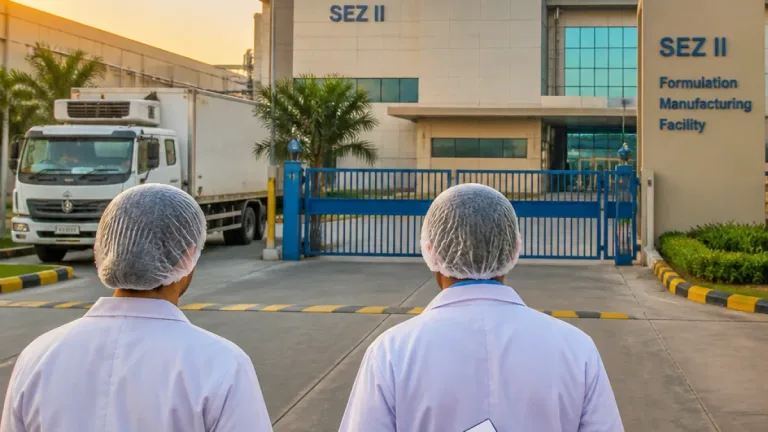
Officials at the SEPC meeting attributed the stronger-than-expected outcome to concentrated efforts on implementation across departments and robust contributions from local manufacturing units. Key sectors cited as primary drivers of the export growth include pharmaceuticals, inorganic chemicals and electrical machinery and equipment.
Review meeting and participants
The third SEPC meeting, held at the Chief Secretariat, was chaired by Chief Secretary Sharat Chauhan. The session was convened by A. Vikranth Raja, Secretary-cum-Director of Industries and Commerce. Other senior officials present included Finance Secretary Krishna Mohan Uppu, Secretaries for Tourism & Fisheries D. Manikandan and Agriculture Mohammed Ahsan Abid, Puducherry District Collector Kulothungan A., Karaikal District Collector Ishita Rathi, District Industries Centre General Manager G. Jayaraman and Chennai Regional Additional Director General of Foreign Trade R. Lakshmi Devaraj.
- SEPC chair: Chief Secretary Sharat Chauhan
- Convener: A. Vikranth Raja, Industries & Commerce
- Sectoral secretaries: Finance, Tourism & Fisheries, Agriculture
- District representation: Puducherry and Karaikal collectors
Officials point to coordinated implementation and next steps
At the meeting, officials said the coordinated execution of the Export Policy and close inter-departmental cooperation were crucial to reaching the milestone. They underlined the need to maintain momentum to support industrial growth, create jobs and broaden the territory’s economic base.
Going forward, administration plans include strengthening District Export Action Plans, backing high-potential emerging sectors, addressing market-access bottlenecks and tackling infrastructure constraints to facilitate further expansion of export volumes and destinations.
What the numbers mean
From a numbers perspective, the outcome represents substantial progress in a short span following the 2021 policy notification. Meeting and exceeding the ₹4,000 crore mark ahead of or by the 2025–26 horizon reduces the gap between current capacity and the administration’s stated ambitions for Puducherry as an export hub.
| Metric | Target (2025–26) | Actual (latest) |
|---|---|---|
| Total exports | ₹4,000 crore | ₹4,900 crore (approx.) |
| Outperformance | ≈₹900 crore | |
Sectoral outlook and practical implications
Pharmaceuticals, inorganic chemicals and electrical machinery and equipment were highlighted as the main contributors to export growth. Continued support to these sectors — through logistics upgrades, land and power facilitation and quicker clearances — will be important to sustain upward momentum, officials said.
For local manufacturers and exporters, the administration’s stated measures to sharpen district-level export planning and resolve infrastructure and market-access issues could reduce costs and improve lead times for global shipments. This will also be significant for employment generation in manufacturing and allied services.
Officials indicated that greater diversification of export products and destinations is on the agenda, which could make the local export basket less vulnerable to demand fluctuations in any single market or commodity.
While the TIA Portal numbers provide the latest performance snapshot, officials stressed that maintaining export growth will depend on continued policy attention, private-sector investment and timely problem-solving at the district and state levels.