
JAMMU: Jammu and Kashmir has made measurable progress in formalising disaster management arrangements since the reorganisation of the erstwhile State, but significant gaps persist in last‑mile response, land‑use enforcement and inter‑departmental coordination, a Parliamentary Panel has observed in a report submitted during the current Monsoon Session of Parliament.
Institutional gains after reorganisation
The committee noted that the Union Territory has developed a structured disaster management framework, initially notified in 2017 and subsequently revised in 2023 to align with the National Disaster Management Plan after the State’s reorganisation. District Disaster Management Plans have now been prepared for all 20 districts, the report recorded, providing what the Panel described as "complete institutional coverage" across the UT.
Following reorganisation, the report said, the institutional mechanism has been strengthened through reconstitution of the Disaster Management Authority and improved coordination among UT, divisional and district administrations. These steps, the committee concluded, constitute concrete progress in preparedness architecture.
Persistent vulnerabilities and regional risk patterns
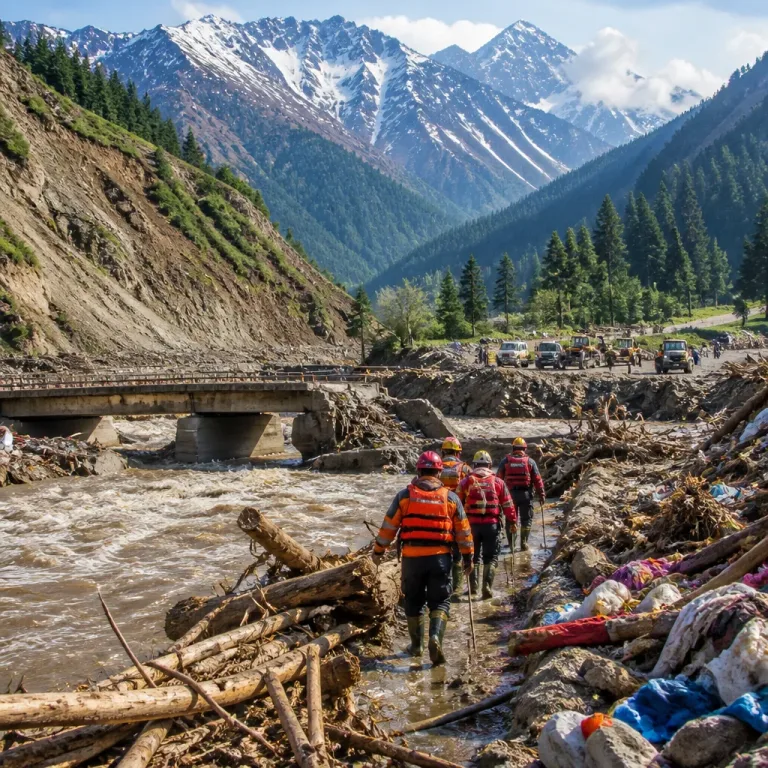
The Panel cautioned that the region’s fragile Himalayan ecology, complex terrain and climatic variability make Jammu and Kashmir particularly vulnerable to a range of hazards, including:
- floods — especially in the Kashmir Valley;
- landslides — with the Chenab Valley identified as a high‑risk area;
- earthquakes — the Jammu region falls in high seismic zones;
- avalanches and Glacial Lake Outburst Floods (GLOFs).
The Panel highlighted that these distinct regional vulnerability patterns require tailored preparedness and response measures rather than a one‑size‑fits‑all approach.
Gaps: last‑mile connectivity, land‑use and technical capacity
Despite the formal plans and institutional structures in place, the committee identified a series of continuing challenges. Key among these were the need for stronger emphasis on last‑mile connectivity — ensuring warnings, supplies and rescue reach remote mountain communities — and stricter enforcement of land use regulations to reduce exposure in hazard‑prone areas.
Other shortfalls noted include inadequate integration of disaster risk reduction into sectoral development planning, and the requirement to bolster both technological and institutional capacities to improve response, relief and rehabilitation outcomes.
Operational challenges during transition
The Panel pointed to difficulties encountered during the administrative transition following reorganisation, specifically initial and ongoing problems around clarity of roles, inter‑departmental coordination and data sharing. These issues, it said, affect the effectiveness of multi‑agency response when disasters occur.
To address these, the committee recommended clearer delineation of responsibilities across the UT, divisional and district level bodies and enhanced mechanisms for timely information exchange among departments and with local communities.
Way forward — integration and enforcement
On the basis of its review, the Parliamentary Panel urged mainstreaming disaster risk reduction across all sectors of planning and development. This includes incorporating risk assessments into infrastructure projects, agriculture and urban planning, and improving community‑level resilience through awareness and preparedness drives.
| Area | Current status (as per report) | Panel recommendation |
|---|---|---|
| Planning | UT and district plans in place; DPR updated 2023 | Integrate DRR into sectoral plans |
| Institutions | Disaster Management Authority reconstituted | Clarify roles; improve coordination |
| Operational reach | Coverage exists but last‑mile gaps remain | Strengthen response networks in mountainous areas |
The Panel also underlined the need to leverage technology for early warning systems and mapping of vulnerable zones, alongside capacity building of local response teams and first responders.
Officials and planners in the UT now face the task of converting the framework and district plans into resilient outcomes on the ground, particularly in remote high‑altitude habitations where access, terrain and climate compound response challenges.
As monsoon rains continue to test infrastructure and communities in Jammu and Kashmir, the recommendations from the Parliamentary review set out actions that, if implemented, could reduce exposure and improve the speed and effectiveness of relief and rehabilitation operations across the Union Territory.
— Irfan Bhat
Jammu correspondent