Stagnant pools persist after rains, residents warn of mosquito and contamination risk
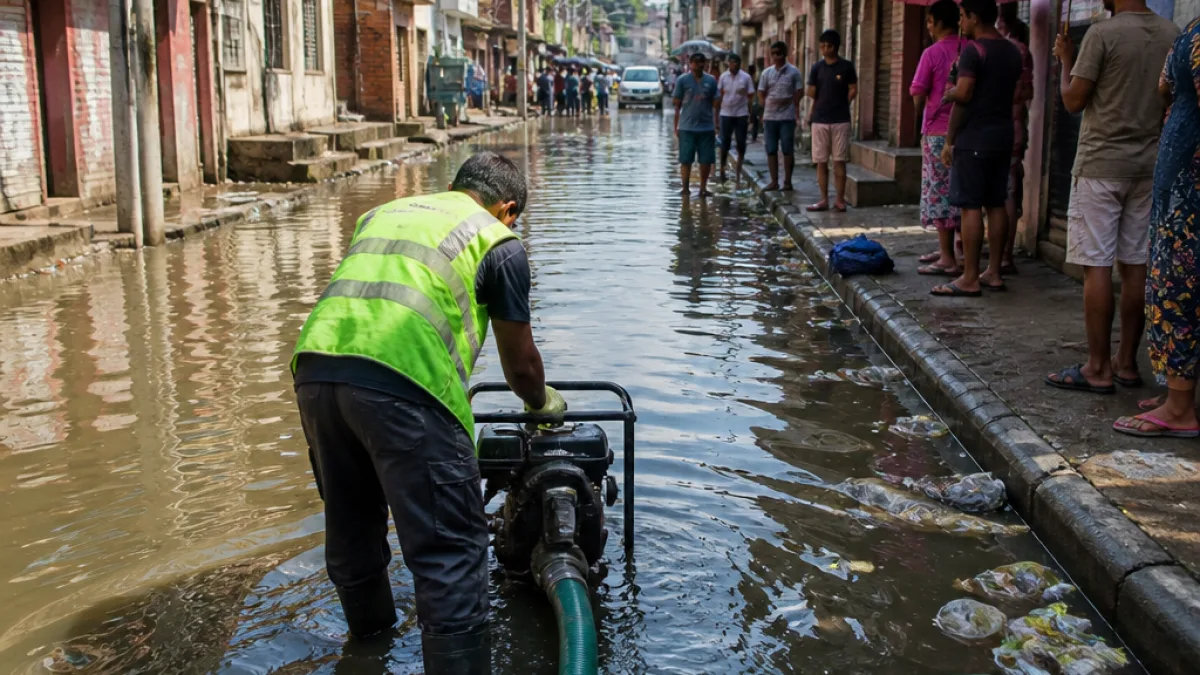
AMRITSAR: Intermittent monsoon showers over the past few days have left several roads and low-lying localities in Amritsar waterlogged, creating stagnant pools that residents and health professionals say pose a serious public health risk. While pumping and natural drainage clear some stretches, many areas continue to retain standing water for several days, increasing the likelihood of mosquito breeding and contamination from overflowing sewage.
Health practitioners described the situation as troubling because stagnant rainwater provides an ideal environment for vector proliferation. Dr Harkirat, who runs a private clinic, said stagnant water can accelerate the spread of diseases such as dengue and malaria and also cause skin infections where people come into contact with contaminated water. The doctor’s observations were reported in local coverage of the issue.
"People often focus only on traffic disruption and damage to roads during waterlogging, ignoring the health part. Stagnant water can become a breeding ground for mosquitoes, while contact with contaminated water may also lead to skin infections," said Dr Harkirat.
Residents described recurring difficulty in walking and commuting when water collects outside homes and along markets and roads. Balkaran Singh of the Khandwala area told reporters that water remains pooled for days in some places after every spell of rain. Another resident, Harkanwal Singh Batth, noted that civic advisories asking citizens to change water in coolers and containers weekly are not enough, and urged the administration to step up measures against dengue and malaria.
- Breeding risk: Stagnant water fosters mosquito breeding, raising dengue and malaria concerns.
- Sewage mixing: Overflowing sewage mixing with rainwater increases the risk of gastrointestinal and other water-borne illnesses.
- Infrastructure gaps: Residents called for regular desilting of drains and removal of blockages to improve stormwater discharge.
Localised impact and civic measures demanded
Reports indicate that low-lying residential colonies, markets and roads are the most affected. When drains are clogged or not desilted, rainwater cannot flow away quickly, leading to prolonged stagnation. The presence of sewage in some of these pools further raises health alarms, particularly for children and elderly people who are more vulnerable to infections.
Residents have urged civic authorities to intensify routine maintenance, especially before and during the monsoon. They want stricter monitoring of drains, timely desilting operations and clearing of obstructions that impede stormwater flow. Repeated calls for such action suggest that the problem has a recurring dimension tied to drainage capacity and upkeep.
| Issue | Reported impact |
|---|---|
| Stagnant rainwater | Mosquito breeding; dengue and malaria risk |
| Overflowing sewage mixing with rainwater | Possible gastrointestinal and skin infections |
| Clogged/open drains | Delayed drainage; water remaining for days |
Public-health experts and community members noted that preventive actions can be taken at both household and civic levels. While citizens are advised to regularly empty and clean water containers and use larvicidal measures where appropriate, long-term mitigation requires improved urban drainage management and timely intervention by municipal agencies.
The recurring nature of waterlogging during the monsoon suggests a need for a coordinated response that combines short-term remedies with longer-term infrastructure upgrades. Residents said they expect visible action from civic authorities to desilt drains, clear blockages and ensure that stormwater systems function effectively throughout the season.
As the monsoon continues, the persistence of standing water in parts of Amritsar remains not only an inconvenience but an avoidable public-health challenge that demands sustained attention from both residents and civic bodies.