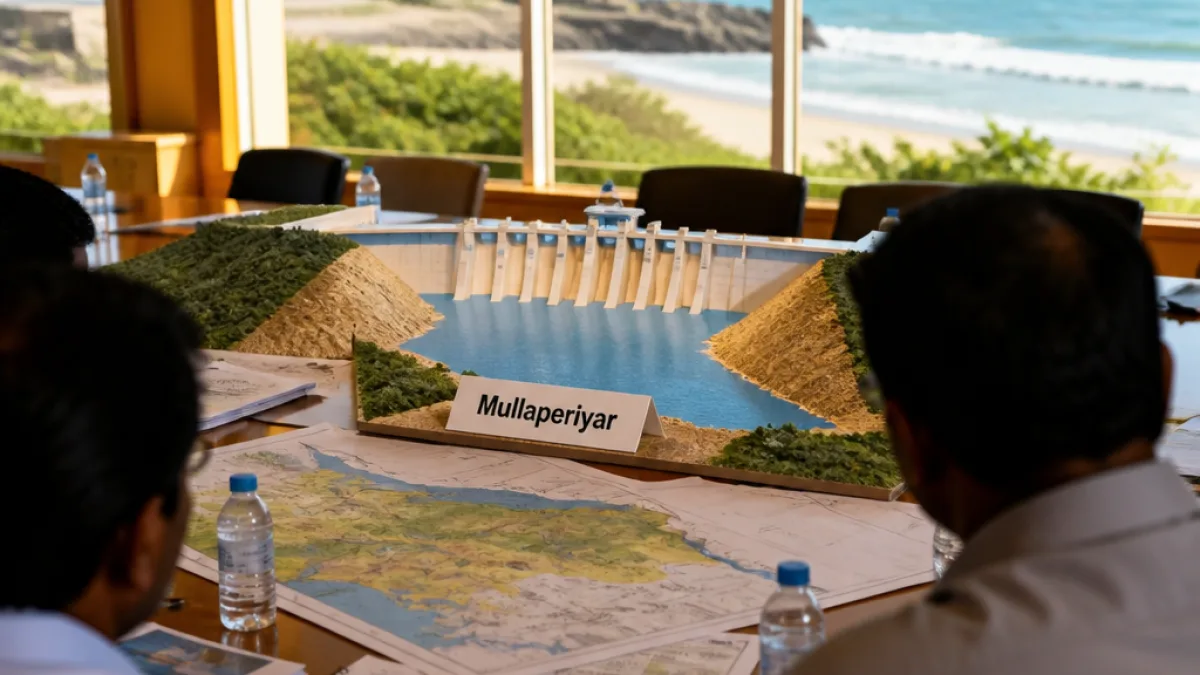
Kerala on Thursday offered Tamil Nadu the entirety of water from a proposed new Mullaperiyar dam and said it would meet the full cost of constructing the replacement structure, while leaving decisions on the dam’s location, design and execution to the neighbouring State. The assurance was given by Chief Minister V.D. Satheesan at the 31st Southern Zonal Council meeting held in Mahabalipuram on August 20.
Proposal framed as solution to long-running dispute
The offer comes against the backdrop of a protracted dispute between Kerala and Tamil Nadu over the safety of the 130-year-old Mullaperiyar dam in Idukki and Tamil Nadu’s long-standing use of its waters. Kerala has repeatedly argued that the existing masonry dam is ageing and requires replacement, and the Chief Minister reiterated the State’s readiness to proceed with construction of a new structure.
According to the statement made at the zonal council, Kerala’s proposal is conditional on Tamil Nadu agreeing to the project. If Tamil Nadu accepts, Kerala will provide the State with the full quantity of water from the proposed new dam and will meet the entire cost of construction, the Chief Minister said. Details of the new dam’s placement, engineering design and construction would be left to Tamil Nadu.
Regional cooperation and wider demands raised
Mr Satheesan used the forum to press a number of issues affecting Kerala and the southern region. He sought enhanced cooperation for Kerala’s Mission Samudra, an initiative aimed at strengthening the State’s development as a port-oriented region, and urged the Union government to reconsider amendments to the Mines and Minerals (Development and Regulation) Act.
On offshore mining, the Chief Minister cautioned against auctioning mineral blocks off Kerala’s coast until a thorough scientific assessment is completed and standard operating procedures are in place. He flagged potential environmental and social consequences for coastal ecosystems and fishing communities, while saying Kerala was working with the Geological Survey of India and the Union Ministry of Mines on auctioning certain mineral blocks.
Mr Satheesan also called for greater representation of women in Parliament, suggesting that one-third reservation could be provided without increasing the overall strength of the House. He pressed for increased central financial support for the Ayushman Bharat and related health initiatives for the State.
Practical implications and uncertainties
The assurance to supply all water from a new dam and to finance construction is significant because it seeks to remove two major sticking points in the dispute—water availability and funding. But the conditional nature of the offer—leaving location, design and construction to Tamil Nadu—means that technical, legal and administrative negotiations would still be necessary before any replacement dam project can progress.
Kerala has consistently maintained that the existing Mullaperiyar dam, completed in the late 19th century, poses safety risks. Any move to build a new structure will require inter-State agreements on technical criteria, environmental clearances, rehabilitation measures if required, and adherence to court or tribunal directions where applicable.
- Meeting: 31st Southern Zonal Council, Mahabalipuram, August 20.
- Offer by Kerala: Provide entire water from proposed new dam to Tamil Nadu; bear full construction cost.
- Scope left to Tamil Nadu: Location, design and construction of the new dam.
| Item | Detail |
|---|---|
| Existing dam | Approximately 130 years old (Mullaperiyar, Idukki) |
| Offer date | 20 August (31st Southern Zonal Council, Mahabalipuram) |
| Kerala’s commitments | Supply all water from new dam; bear full construction cost |
The Chief Minister’s remarks did not specify timelines, technical standards or the volume of water envisaged under the arrangement. These details will be central to any subsequent discussions between the two State governments as well as with Union authorities and expert agencies.
Kerala’s stance aims to defuse a long-standing inter-State contention by removing financial objections and offering water security to Tamil Nadu. Whether Tamil Nadu will accept the terms—particularly ceding decisions on site and design to itself while allowing full water allocation to Tamil Nadu—remains to be seen. The proposal shifts the focus to technical negotiations, environmental safeguards and procedural clearances.
Beyond the Mullaperiyar offer, Mr Satheesan’s interventions at the zonal council underline Kerala’s broader concerns about coastal resource management, environmental safeguards and gender representation in public life. The State’s demand for careful assessment and protocols before offshore mineral auctions signals an insistence on balancing economic opportunity with ecological and social protection for coastal communities.
Further developments will depend on follow-up talks between Kerala and Tamil Nadu officials, expert assessments and any involvement of central agencies or courts tasked with resolving inter-State water and infrastructure disputes.