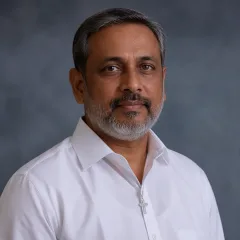
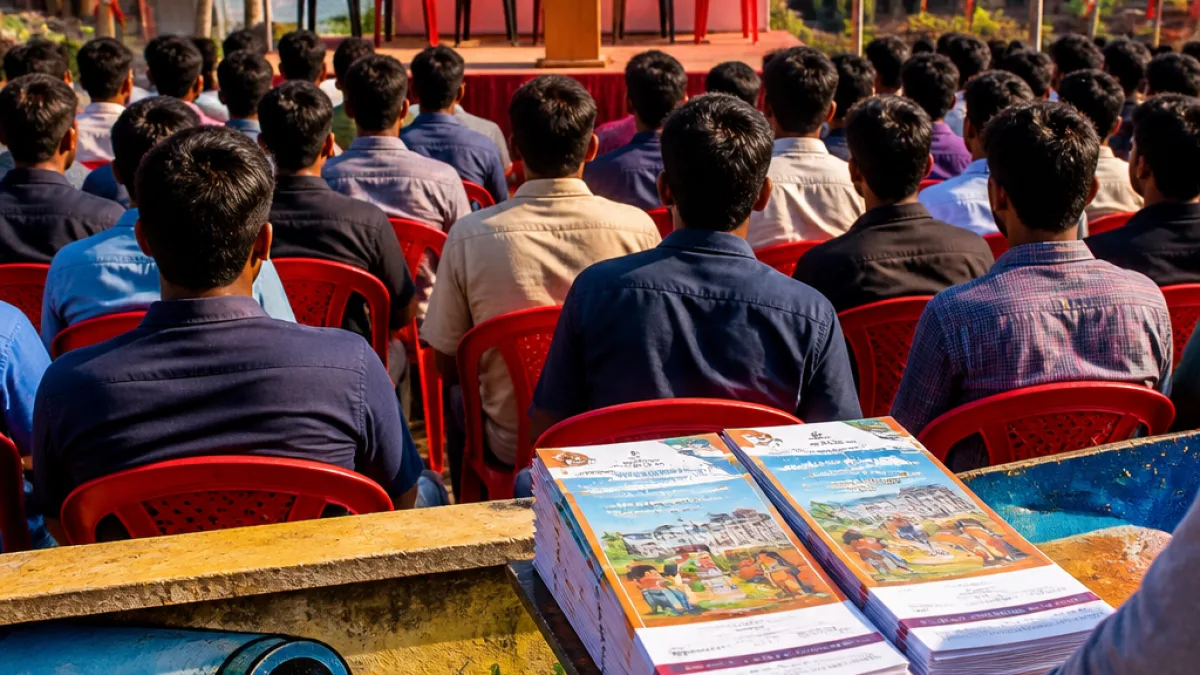
Kannur: Kerala Local Self-Government Department Minister K M Shaji on Saturday reiterated his long-standing opposition to the Prime Minister’s Schools for Rising India (PM SHRI) initiative, saying he remains committed to having the scheme discontinued in the state even as coalition realities constrain single-party action.
Minister repeats call to abandon scheme
Speaking at a Youth League gathering in Kannur, Mr Shaji said his earlier, controversial remark that the PM SHRI project should be hurled into the Arabian Sea continues to reflect his position. He added that while his comment had become a focal point of political discussion, his view on the scheme itself has not changed since he made the remark while in opposition.
“It should be thrown out—if not into the Arabian Sea, then into whatever drain lies beyond it. I have no difference of opinion on that,” said Shaji.
At the same time, Mr Shaji acknowledged the constraints of coalition governance, noting that in a multi-party administration a single party cannot unilaterally terminate a programme agreed with the Centre. He said that once a party assumes ministerial office, public statements must be tempered by the responsibilities of governance and the purview of one’s department.
Background and political context
The PM SHRI scheme was initially signed up for by the previous Left Democratic Front (LDF) administration but implementation was held in abeyance after protests, including dissent from within Left ranks. The United Democratic Front (UDF) that succeeded the LDF has not cancelled the scheme; instead it constituted a Cabinet sub-committee to study the matter.
Mr Shaji belongs to the Indian Union Muslim League (IUML), which had vigorously opposed the scheme while in opposition. The UDF’s General Education portfolio is also held by an IUML leader, General Education Minister N Samsudheen, underscoring the party’s influence over school education matters in the present government.
Coalition dynamics and administrative limits
The minister reiterated a familiar refrain from coalition politics: policy decisions taken at state level with national implications require collective deliberation. He said that although he personally favours scrapping PM SHRI, decisions must be taken in consultation with coalition partners and according to constitutional and administrative procedures.
Observers note that the Cabinet sub-committee’s inquiry provides an administrative route to reassess the scheme without provoking a direct breach with the Centre. Any unilateral cancellation by the state could have legal, financial and political consequences that coalition partners are likely keen to avoid.
What PM SHRI aims to do
The PM SHRI scheme, launched by the central government, is designed to transform selected schools into model institutions by upgrading infrastructure, emphasising learning outcomes and integrating new pedagogical approaches. Opposition to it in Kerala has centred on concerns about central intrusion into state-run education, content and curriculum, and the selection process for beneficiary schools.
| Actor | Position |
|---|---|
| Previous LDF government | Signed agreement with Centre; implementation stalled |
| Current UDF government | Set up Cabinet sub-committee to examine the scheme |
| IUML | Opposed PM SHRI while in opposition; holds General Education ministry now |
Possible outcomes and local implications
- Cabinet sub-committee may recommend modifications, conditional implementation, or continued suspension pending further talks with the Centre.
- Continued standoff could delay infrastructure and pedagogical upgrades in selected schools, affecting planned benefits for students and staff.
- Political friction within the UDF could intensify if parties within the coalition hold divergent public positions on the scheme.
Education administrators and school stakeholders will be watching the sub-committee’s report closely, since any decision will shape resource allocation, project timelines and the state’s relationship with central schemes on schooling.
Mr Shaji’s restatement of his earlier rhetoric is likely to revive public debate in Kerala over the balance between state autonomy in education and the acceptance of centrally sponsored initiatives. The minister’s emphasis on collective responsibility indicates the government will seek a consensual course, even as strong opinions persist within constituent parties.
Further developments are expected once the Cabinet subgroup completes its examination and places recommendations before the state Cabinet, which will then decide on the state’s official position vis-à-vis the Centre’s PM SHRI programme.