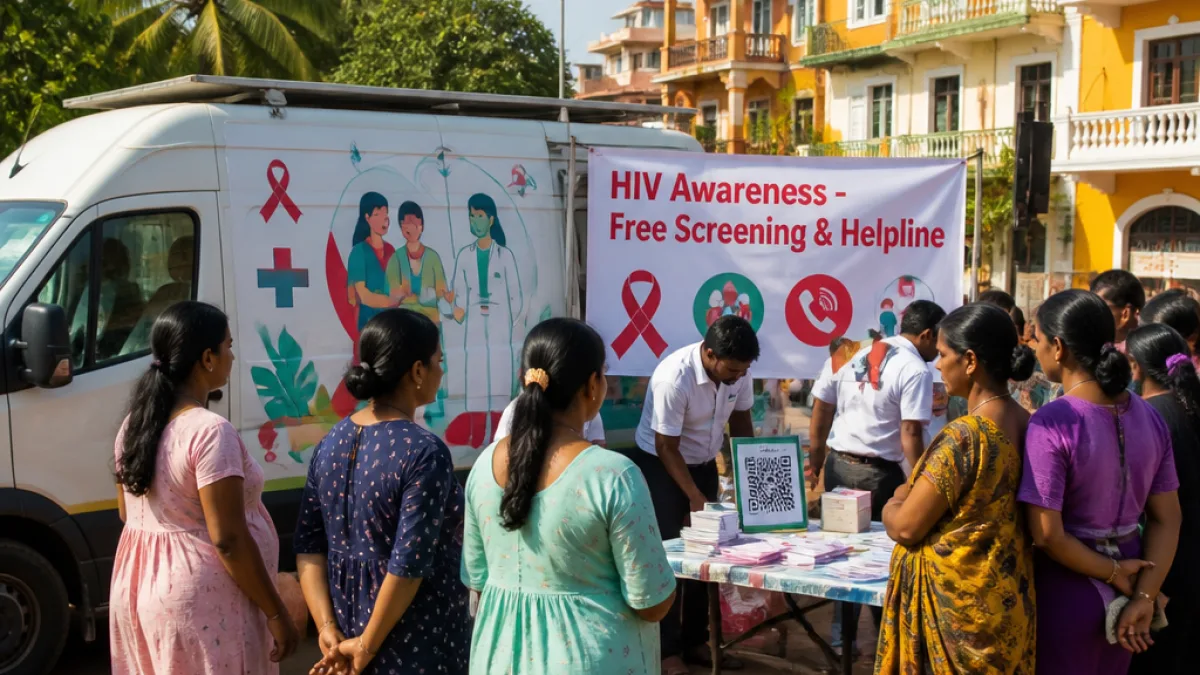
PANAJI: Goa on Wednesday launched a two-month Intensified Integrated IEC Campaign 3.0 aimed at strengthening prevention, testing and anti-stigma measures for HIV/AIDS, Health Minister Vishwajit Rane said. The state will deploy an IEC van to carry awareness activities across rural and urban pockets, with special focus on youth and pregnant women.
Campaign partners, objectives and duration
The drive is being implemented by the Goa State AIDS Control Society (GoaSACS) in association with the National AIDS Control Organisation (NACO). It will run for two months and seeks to expand awareness about HIV transmission, prevention, testing and the legal safeguards available under the HIV/AIDS (Prevention & Control) Act, 2017.
Planned outreach and activities
Officials outlined a mix of community, institutional and digital interventions designed to reach diverse audiences across the state. The campaign package includes door-to-door visits, folk performances and institutional events in schools and colleges.
- Village-level meetings: 50
- Folk performances: 100
- Flash mobs: 5
- Household outreach: 10,000 households (door-to-door)
- School/college programmes: 80 institutions
- Special camps and screening events: 2
Focus areas: youth, antenatal screening and stigma reduction
The campaign will prioritise young people, aiming to improve knowledge about sexually transmitted infections (STIs), safe-sex practices including condom use, and the availability of HIV testing and treatment services. It will also emphasise HIV and syphilis screening for pregnant women and antenatal-care attendees to reduce mother-to-child transmission.
Campaign messaging will include information on transmission routes, prevention measures and legal protections to counter discrimination against people living with HIV, GoaSACS officials said.
Digital tools and helpline
Alongside field activities, the campaign will leverage digital resources. Theme-based daily posts will support online outreach and an online HIV Risk Assessment Tool — accessible via a QR code integrated with the state SOCH application — will be promoted. The national toll-free helpline 1097 will also be publicised for counselling and information.
“Silence has never protected anyone. Awareness does. Dignity does. Action does,”
Mr Rane said in a social media post, underlining the government’s intent to bring information and services closer to communities on International Youth Day.
Officials present and institutional leadership
Health Secretary Yetindra Maralkar and GoaSACS Project Director Dr Jasmine B Pinto attended the launch at Usgao-Ganjem. The Health Ministry machinery and GoaSACS will jointly coordinate field teams, the IEC van schedule and linkages with primary health centres for screening and referrals.
| Activity | Number planned |
|---|---|
| Village-level meetings | 50 |
| Folk performances | 100 |
| Door-to-door households | 10,000 |
| School/college programmes | 80 |
| Flash mobs | 5 |
| Special camps | 2 |
What residents should know and where to seek services
GoaSACS will coordinate with local health facilities to offer testing and link individuals who test positive to antiretroviral therapy and care. Pregnant women attending antenatal clinics will be urged to opt for HIV and syphilis screening as part of routine maternal health checks, the state health department said.
The campaign stresses confidentiality, non-discrimination and the legal entitlements of people living with HIV under the 2017 Act. Residents seeking more information can call 1097 or use the QR-linked HIV Risk Assessment Tool on the SOCH application.
Officials said the use of culturally relevant formats — folk theatre and flash mobs — is intended to open dialogue in communities where stigma and myths can deter people from testing. The IEC van will provide visibility and be a mobile hub for distributing educational materials and directing people to testing services.
Execution of the campaign and its impact will be monitored by GoaSACS and reported to NACO. The authorities said the initiative aims to deepen awareness, reduce discrimination and improve early detection and linkage to care across Goa.