
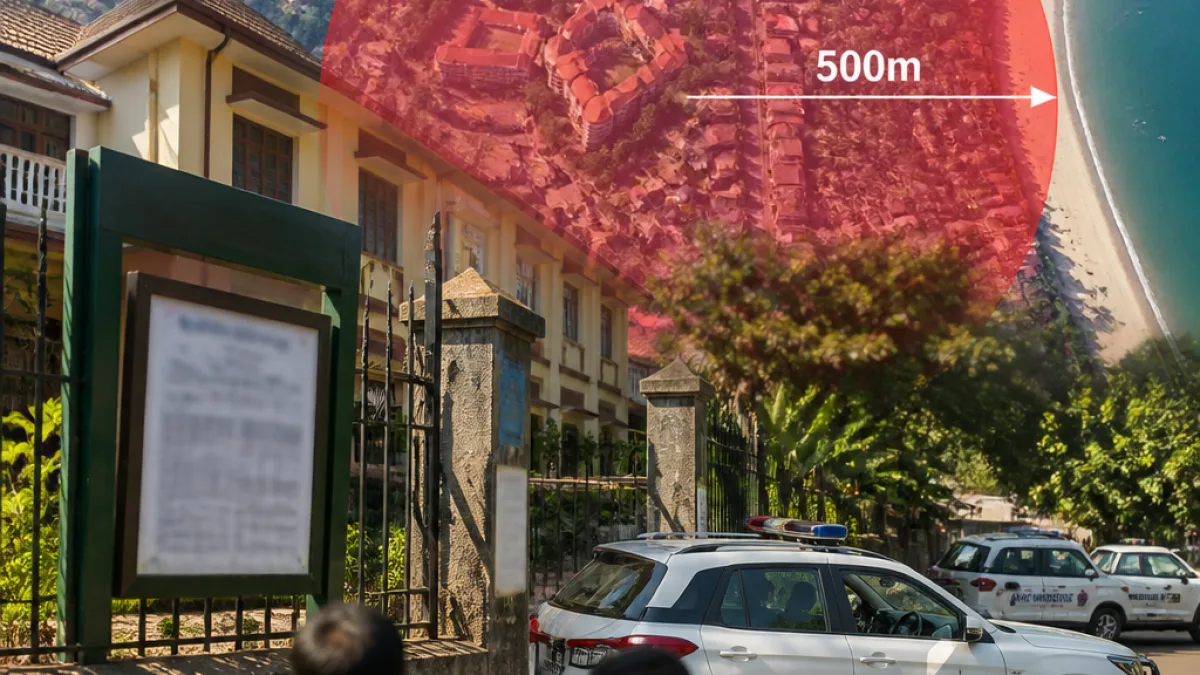
The Directorate of Education in Goa has directed all schools to ensure a 500-metre Drug-Free Zone around their campuses, following recommendations from the Narcotics Control Bureau (NCB) and guidance from the Government of India, officials said.
Official directive and purpose
The circular, issued by the Education Department, asks school heads to immediately implement measures to maintain a 500-metre radius around schools as a Drug-Free Zone. Authorities said the step is intended to create awareness and to help monitor suspicious activity in and around school premises.
Government sources described the measure as an awareness and vigilance initiative rather than a punitive regulation. The Anti-Narcotics Cell in Goa has been referenced in official statements as maintaining active surveillance of drug-related activities in the State.
Chief Minister's response
Chief Minister Pramod Sawant, when asked about the circular and related concerns about Goa's image over drugs, urged the public and media not to create unnecessary confusion. He emphasised that the circular was issued in line with central guidelines and with the aim of protecting school environments.
"Let the Bill be introduced in the Assembly first. The Cabinet has approved it. Let us discuss it in the Assembly,"
said Mr Sawant in response to queries about criticism of an Anti-Conversion Bill and related debates. While that remark referenced a different legislative issue, Mr Sawant used the occasion to reiterate the government’s position that actions taken on drug awareness and school safety should not be used to malign the State.
What schools have been asked to do
- Establish and maintain a 500-metre radius around school premises as a Drug-Free Zone.
- Enhance vigilance and monitor suspicious activity near campuses.
- Comply immediately with the Directorate’s circular, as directed by school heads.
The circular does not, in the text released by authorities, specify exact enforcement mechanisms or penalties for non-compliance; rather, it frames the measure as a preventive and awareness-oriented step aligned with NCB guidance.
State enforcement and public concerns
Officials pointed to the functioning of the State’s Anti-Narcotics Cell as evidence that authorities are keeping a close watch on drug-related activities. The Government clarified that the intent behind the circular is monitoring and awareness, not to unduly harm Goa’s reputation.
At the same time, the directive and accompanying public statements come amid local concerns over law-and-order and infrastructure safety highlighted in recent incidents across the State. These include an accident at a flyover construction site in Dabolim where a falling iron rod damaged a car but caused no injuries, and an alleged mob beating in Colva that resulted in the death of a suspected bike thief—events that have prompted public demands for action and queries about safety and enforcement.
| Recent related incidents | Location |
|---|---|
| Iron rod fell from flyover construction, damaged car; no injuries | Dabolim |
| Mob beating of suspected bike thief; identity unestablished, FIR pending | Colva |
| Police custody of accused in alleged Rs 40 lakh property fraud extended | Mapusa (JMFC Court) |
| Case registered for alleged stabbing and assault | Palolem (Canacona) |
Legal and administrative context
The Directorate’s action follows recommendations from the NCB and Government of India guidelines that aim to create safer environments for children by restricting drug-related activity near educational institutions. School administrators have been instructed to ensure immediate compliance with the circular; local police and enforcement agencies will be the implementing arms should violations or suspicious activity be reported.
Public responses have varied. Some parent and community groups are expected to welcome additional protective measures around schools, while others may seek clarity on how the zone will be monitored and enforced without unfairly targeting residents or businesses located within the 500-metre radius.
Next steps
School heads must implement the circular as directed by the Directorate of Education. The Government has asked citizens not to spread confusion about the measure and has emphasised that surveillance and awareness are the main objectives. Any further procedural details or enforcement frameworks are likely to be communicated through official channels in the coming days.
Authorities have reiterated that Goa’s Anti-Narcotics Cell remains active and that reports of suspicious activity near school premises should be brought to the attention of local police or the Education Department.













