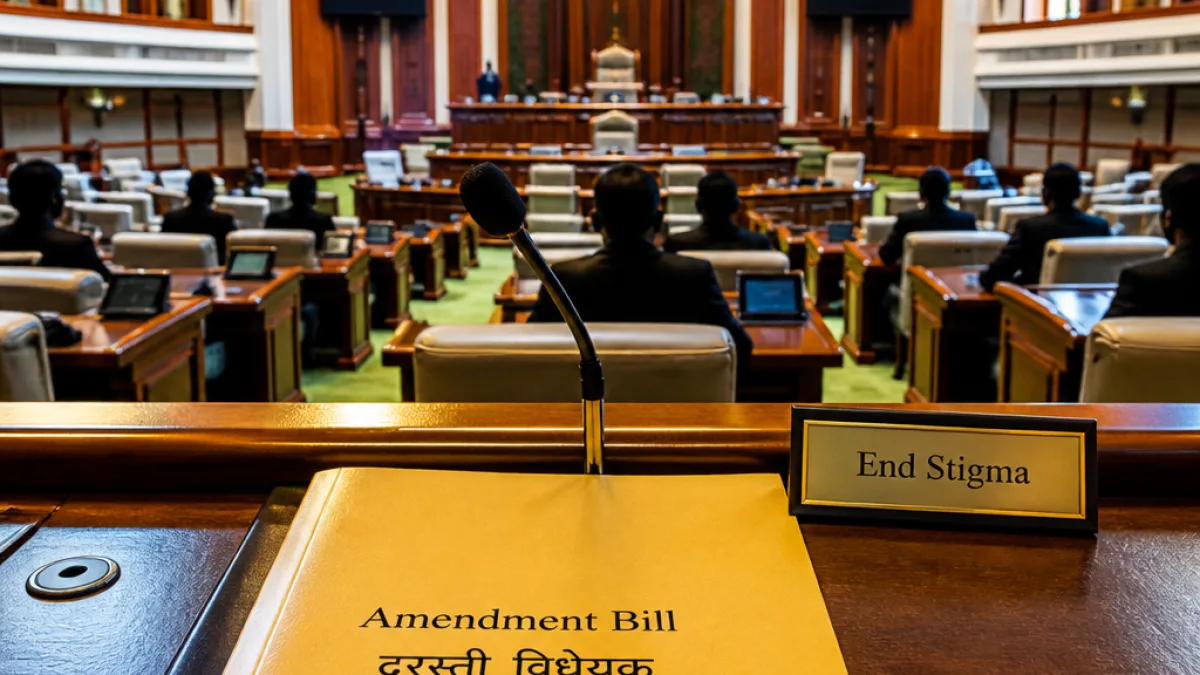
The Goa Legislative Assembly on Tuesday passed the Goa Children's (Amendment) Bill, 2026, which removes references to the disease leprosy from two provisions of the Goa Children's Act, 2003. The amendment, introduced by State Women and Child Development Minister Vishwajit Rane, was adopted by voice vote and will take effect after the governor's assent, the statement of objects and reasons said.
Aim of the amendment
According to the statement accompanying the bill, the amendment has been brought in to remove social stigma and discrimination against persons affected by leprosy and to bring the state law into alignment with a Supreme Court order dated May 7, 2025. The changes do not carry any financial implications and do not involve delegated legislation, the note added.
What the change does
The bill omits the word "leprosy" from two sections of the principal Act. Under Section 2, which contains definitions, the term was previously listed alongside HIV as an illness that carries social stigma. The amendment deletes that explicit reference. It likewise removes "leprosy" from Section 5, which relates to health and nutrition and forbids healthcare facilities and hospitals from denying treatment or admission to children or pregnant mothers suffering from conditions associated with social stigma.
| Provision | Before amendment | After amendment |
|---|---|---|
| Section 2 (Definitions) | Included "leprosy" alongside HIV as an illness carrying social stigma | Reference to "leprosy" removed |
| Section 5 (Health and Nutrition) | Prohibited denial of treatment or admission to children or pregnant mothers suffering from conditions associated with social stigma, naming leprosy | Reference to "leprosy" removed; prohibition on denial of care retained |
Legislative and social context
The move follows the Supreme Court's order of 7 May 2025, cited in the bill's statement of objects and reasons, directing changes to remove discriminatory language in laws that perpetuate stigma. The Goa amendment is part of a wider effort nationally to ensure terminology in statutes does not single out particular illnesses in a manner that fosters exclusion.
By excising the term from the state child-protection law, the government said it seeks to reduce barriers that may prevent children and pregnant women affected by stigmatised illnesses from accessing healthcare and social services. The section on health and nutrition, as retained, continues to bar healthcare facilities from denying treatment or admission on account of stigmatised conditions.
Procedural details
- The bill was introduced in the Assembly by Minister Vishwajit Rane and passed by voice vote.
- The amendment does not entail any additional expenditure or delegated legislation, per the legislative note.
- It will become effective immediately after receiving the governor's assent.
What this means locally
For service providers and child welfare agencies in Goa, the change removes explicit statutory mention of leprosy as a stigmatised condition, though the protective clauses preventing denial of care remain. Administrations of hospitals, anganwadis and child-care institutions will now be expected to apply the Act without referring to leprosy by name in the two amended sections.
Advocates and legal experts who have pushed for changes in statutory language have argued that removing disease-specific labels from social-welfare laws helps in normalising treatment-seeking and reduces discriminatory practices. The Assembly's amendment is a legislative step aimed at addressing one aspect of long-standing social prejudice; wider public-health outreach and implementation at the ground level will determine practical outcomes.
The government did not attach any financial commitments to the amendment, signalling that the change is textual and administrative rather than programme-based. The law's operationalisation will depend on administrative orders and awareness among frontline health and child-welfare workers once the amendment comes into force.