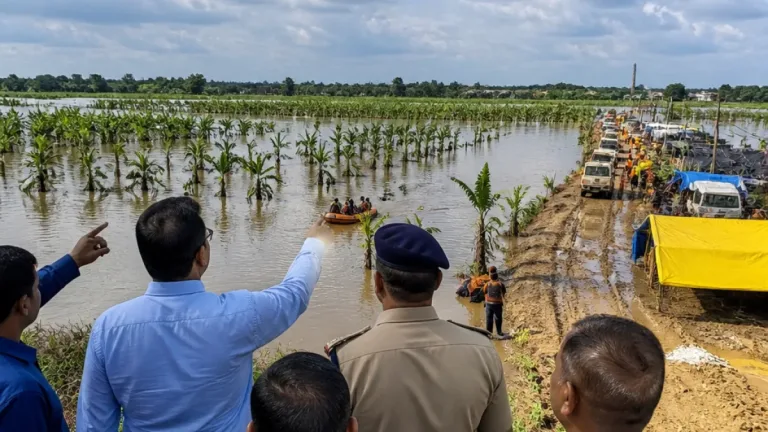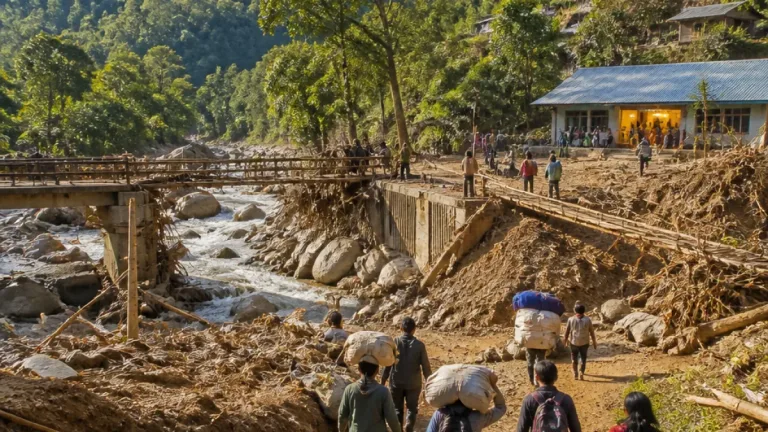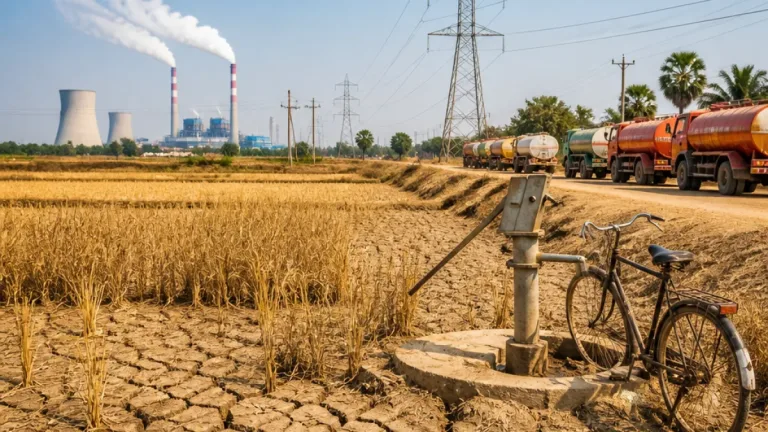
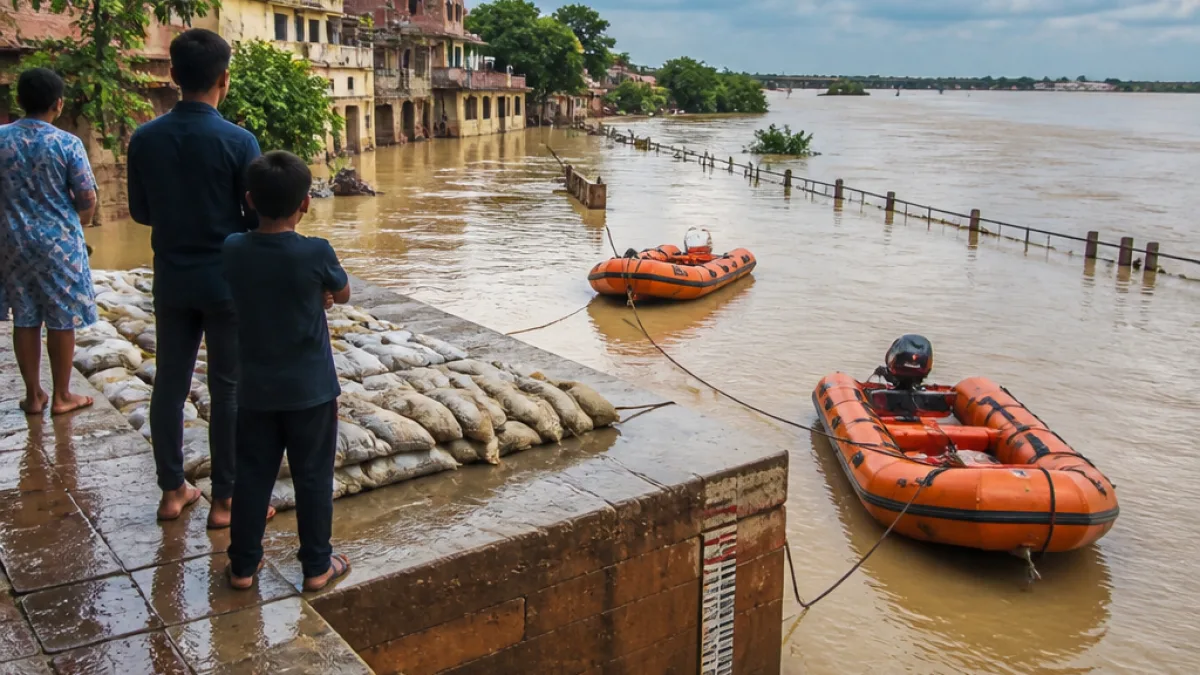
Patna, Sep 7: Flooding in Bihar intensified after the Ganga at Patna’s Gandhi Ghat rose above its previous Highest Flood Level (HFL), officials reported on Monday, with around 22 lakh people affected across 14 districts. Authorities have issued alerts for areas downstream as river levels continue to rise.
Scale and immediate impact
The worsening situation follows heavy monsoon flows into Bihar’s river system. State authorities confirmed that the breach of the previous HFL at Gandhi Ghat — a key gauge point for river behaviour in the state capital — triggered precautionary measures aimed at protecting low-lying settlements and critical infrastructure downstream.
At present, official statements say the floods have affected some 22 lakh people spread over 14 districts. The alert for downstream areas was issued after water levels at Gandhi Ghat surpassed the earlier recorded high, signalling an elevated risk to riverine communities along the Ganga and its tributaries.
Why Bihar remains flood-prone
Experts and administrative reports list several interlinked reasons that make Bihar highly vulnerable to floods. The state’s large alluvial plains, combined with the seasonal surge of Himalayan rivers, routinely place vast tracts under water during peak monsoon months.
- Heavy monsoon rainfall increases river discharge rapidly.
- River overflow from the Ganga, Kosi, Gandak and Bagmati can inundate adjoining areas.
- Siltation raises riverbeds, diminishing channel capacity over time.
- Flat terrain allows floodwaters to spread and drain slowly.
- Embankment issues such as breaches or poor maintenance restrict natural drainage.
- Land-use changes including deforestation and unplanned urbanisation worsen runoff and reduce infiltration.
Table: Key flood drivers cited for Bihar
| Driver | Effect |
|---|---|
| Heavy monsoon rainfall | Rapid rise in river discharge |
| Riverbed siltation | Reduced carrying capacity of rivers |
| Flat, low-lying terrain | Widespread inundation and slow drainage |
| Embankment problems | Waterlogging and potential breaches |
Administration response and community concerns
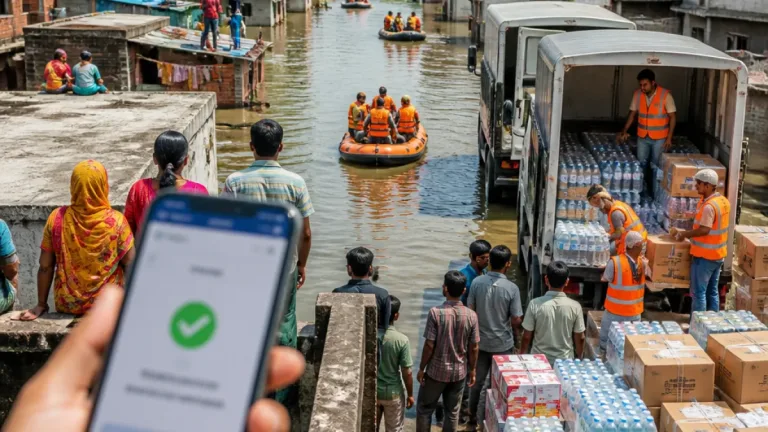
Following the rise at Gandhi Ghat, district administrations downstream were asked to keep surveillance on vulnerable riverside habitations and critical lifelines. The alert is intended to prompt pre-emptive measures such as evacuation planning, movement of livestock to safer ground, and safeguarding of relief stocks and medical supplies.
Local residents and community leaders in low-lying areas expressed anxiety about the speed of the current rise. Officials noted that breaches and embankment failures, where they occur, can multiply the human and economic toll quickly, especially in places where maintenance has been inadequate.
Historical context and long-term challenges
Bihar’s recurring flood cycles reflect both natural hydrological patterns and human-induced changes in land and water management. Over the decades, sediment carried from Himalayan catchments has raised riverbeds; simultaneously, increased settlement and conversion of natural drainage have reduced the landscape’s ability to cope with high flows.
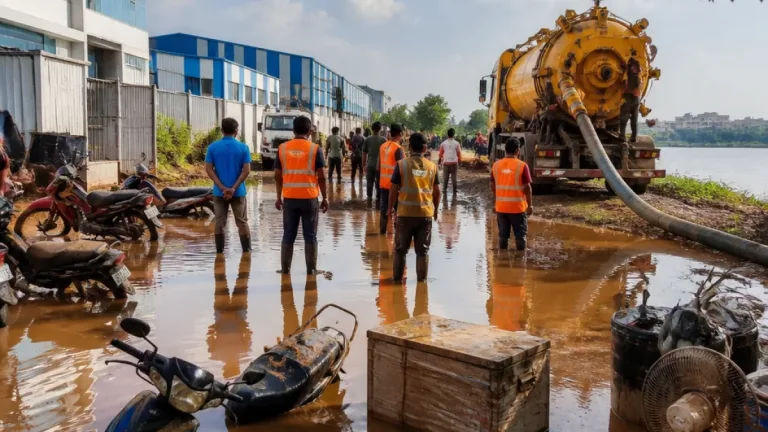
Long-term mitigation requires coordinated action on river management, embankment upkeep, catchment afforestation and planning controls in flood-prone zones. In the short term, authorities are focused on life-saving measures and preventing secondary disasters such as water-borne disease outbreaks and disruption of food and fuel supplies.
What residents should watch for
- Follow directives from district administration and local authorities on evacuation and relief centres.
- Move to higher ground if asked to evacuate; take essential documents and medicines.
- Avoid wading through fast-flowing water and keep clear of embankments showing signs of seepage.
The situation remains fluid. Authorities will continue to monitor river gauges and issue updates for downstream districts as the Ganga’s behaviour at key points such as Gandhi Ghat informs emergency decisions across the state.
Report compiled from official flood advisories and situation updates on Sep 7, 2026.