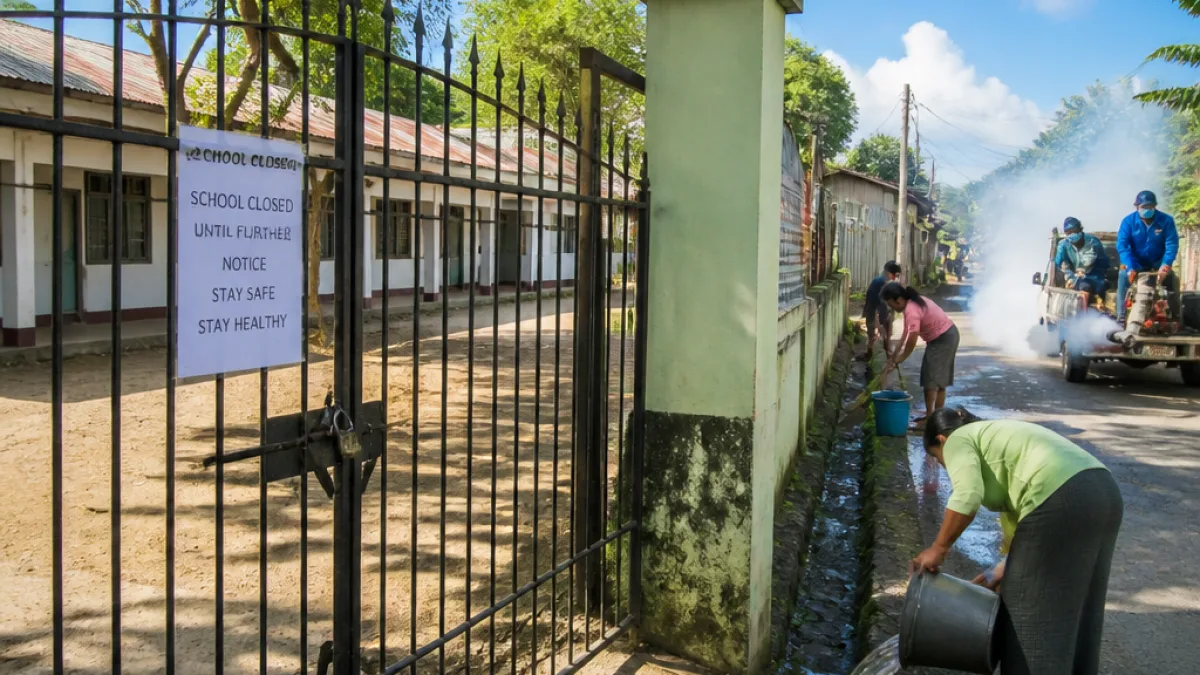
CHURACHANDPUR: Health authorities in Manipur’s Churachandpur district have reported a sharp rise in dengue infections this year, with 752 cases and two deaths confirmed so far, officials said on Tuesday.
District records surge; latest fatality hospitalised with co-infection
The most recent death was identified as Lily Lhingboiniang, who succumbed at Churachandpur District Hospital after being diagnosed with both dengue and typhoid, the health department reported. Earlier, a 13-year-old student from Valveng in New Lamka died on August 22 after developing a high fever, the authorities said.
Compared with the same period last year, when the district logged 332 dengue infections, this year’s caseload has more than doubled, signalling an escalating outbreak that has prompted preventive and containment actions by the administration.
Schools to remain shut; private schools association acts
In view of the rising number of viral-fever and dengue cases, the Churachandpur District Private Schools and Colleges Association, in coordination with the Chief Medical Officer and student organisations, decided to suspend classes district-wide from Wednesday until 30 August 2026. The closure is a precautionary move aimed principally at protecting children, who have been particularly affected during the recent surge.
Officials said the temporary halt will allow health teams to intensify surveillance and for schools to carry out sanitation and vector-control measures before reopening.
Vector control measures intensified
The district’s Malaria Department has escalated anti-mosquito operations, including thermal fogging in Valveng and neighbouring localities, as part of efforts to interrupt transmission. Health workers are also conducting awareness campaigns and urging households to eliminate mosquito breeding sites.
- Reported cases in 2026: 752
- Reported deaths in 2026: 2
- Cases in same period in 2025: 332
- School closure period: 26–30 August 2026
| Item | Number |
|---|---|
| Total dengue cases (2026, Churachandpur) | 752 |
| Deaths reported (2026) | 2 |
| Cases same period last year (2025) | 332 |
Public guidance and on-the-ground response
Health workers in the district have urged residents to adopt personal protective measures, including the use of mosquito nets and the removal of stagnant water around homes to prevent Aedes mosquito breeding. The officials also stressed timely medical consultation for individuals who develop high fever, severe headache, joint pain, or other symptoms consistent with dengue.
The Chief Medical Officer’s office and the Malaria Department are coordinating active case detection, vector surveillance and fogging drives. School authorities were involved in the deliberations that led to the temporary closure, and student bodies participated in the decision-making process, according to the district administration.
Local impact and next steps
The doubling of case numbers compared with the previous year raises concerns about wider community transmission and pressure on local health facilities. The temporary suspension of classes aims to reduce transmission risk among children and to provide time for sanitation work at schools.
Officials will review the epidemiological situation at the end of the closure period and issue guidance on reopening based on case trends and the outcome of intensified control measures. For now, residents are being urged to cooperate with fogging teams and to follow the advice of local health authorities.
People with symptoms suggestive of dengue are advised to seek prompt assessment at designated health centres and to avoid self-medication without professional guidance.