Coimbatore, Aug 18: Exporters in the Coimbatore–Tiruppur manufacturing belt have welcomed the commissioning of the Vizhinjam International Seaport as a potential new gateway for exports to western markets, but warned that several logistical and commercial measures are essential before micro, small and medium enterprises (MSMEs) can shift shipments at scale.
MSME concerns: cost, schedules and container access
Garment exporters in Tiruppur, who shipped goods worth ₹46,000 crore in 2025–26, said the port’s location close to the main East–West shipping route and its deep‑water container handling capabilities present a strategic opportunity for Tamil Nadu’s export clusters. However, the industry stressed that for the predominantly MSME‑driven clusters in Tiruppur and adjoining Coimbatore areas, four operational factors determine competitiveness — logistics cost, transit time, container availability and schedule reliability.
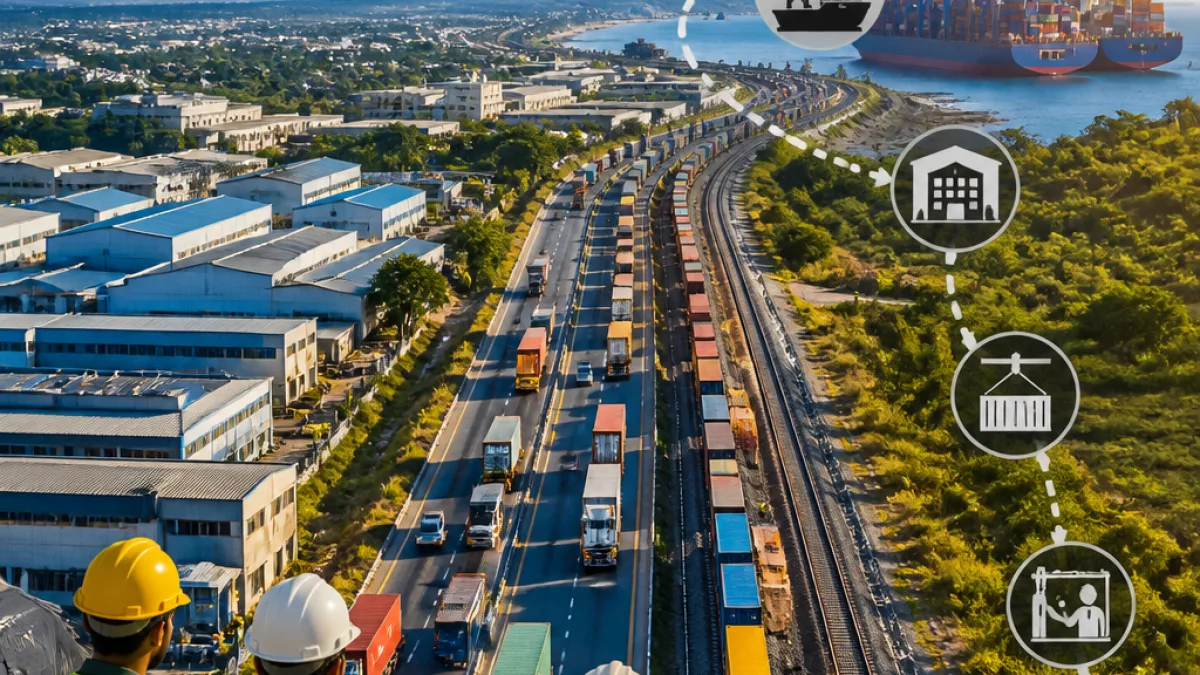
The Tiruppur Exporters’ Association (TEA) has urged development of a dedicated Tiruppur–Vizhinjam EXIM cargo corridor, with either an inland container depot (ICD), a container freight station (CFS) or an appropriate logistics facility at Vizhinjam or at a strategic point along the corridor. The body said focused efforts are needed to secure direct connectivity to the European Union, the UK, the US and west Asian markets.
“As global apparel supply chains increasingly operate on shorter lead times, predictable vessel schedules and competitive transit times will be essential for Tiruppur exporters to confidently route cargo through Vizhinjam,” said the TEA.
Calls for a commercially attractive, transparent logistics package
Industry representatives told officials that for MSMEs to benefit, the total landed logistics cost to European or other western destinations must be competitive with existing ports. They called for a commercially attractive and transparent logistics package covering:
- terminal handling and container handling charges,
- documentation and storage fees, and
- other associated port and logistics charges.
The TEA also sought a single‑window operation integrating the terminal operator, Customs, shipping lines and logistics stakeholders, with industry participation to reduce procedural delays and improve schedule predictability.
Engagement with Kerala government and local trade outreach
To facilitate cargo movement and to incorporate ground‑level inputs, the industry has suggested that the Kerala government organise a trade meet in Coimbatore. Exporters said such an engagement would help identify bottlenecks specific to MSMEs and enable planning for feeder services, container pools and inland logistics that link Tiruppur and Coimbatore to Vizhinjam.
| Key concern | Industry request |
|---|---|
| High landed logistics cost | Commercially attractive, transparent pricing package |
| Uncertain vessel schedules | Direct connectivity and predictable vessel timetables to EU/UK/US/west Asia |
| Lack of ICD/CFS or feeder links | Develop Tiruppur–Vizhinjam EXIM corridor with ICD/CFS or logistics facility |
| Fragmented procedures | Single‑window operation with Customs, shipping lines and terminal operator |
Exporters noted that while Vizhinjam’s deep draft is an advantage for calling large container vessels, the last‑mile and first‑mile linkages for consignments originating from inland manufacturing clusters will determine whether MSMEs can economically route cargo via the new port.
Local traders and logistics providers in Coimbatore said that measures such as pooled container availability, feeder vessel schedules aligned with shipment cycles of garment factories, and transparent terminal tariffs would be critical. They also highlighted the need for industry representation in coordination forums so that operational procedures reflect the realities of MSME cargo flows.
The proposals reflect a pragmatic approach by exporters who want Vizhinjam to become an alternative to established ports, provided it can offer competitive transit times and predictable, affordable logistics for the largely small‑scale units that characterise Tiruppur and parts of Coimbatore.
How the Kerala government, the port operator and central logistics agencies respond to these requests — particularly on corridor development, pricing transparency and single‑window clearances — will decide how quickly exporters in Coimbatore and Tiruppur can begin routing significant volumes through Vizhinjam.