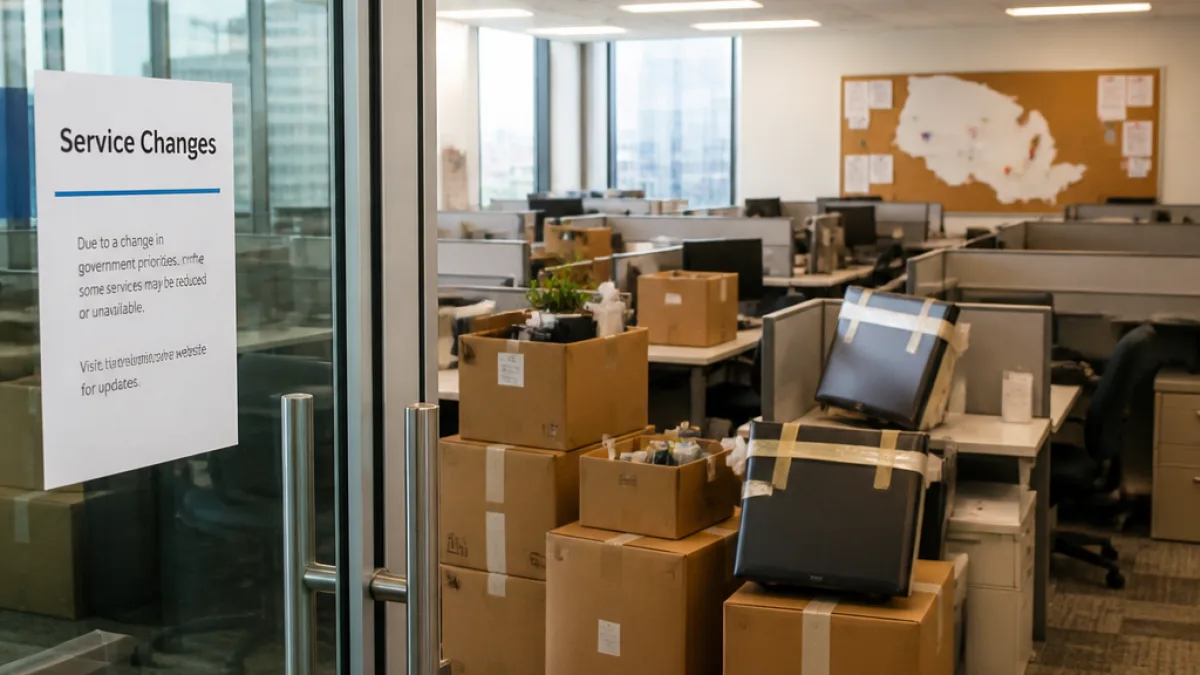
The Workplace Safety and Insurance Board announced it will eliminate 466 positions across Ontario as part of what the agency described as a decision to consolidate back‑office work. The cuts, revealed Thursday, affect employees in a string of northern and southern communities and prompted an immediate response from the union representing WSIB staff, which warns of longer waits for injured workers.
What the WSIB says
In a written statement the WSIB characterised the move as a "difficult business decision" to consolidate some roles in claims and account management that had been performed remotely. The agency said it would offer assistance to impacted employees, including opportunities to relocate, résumé and job‑search services, and a continuation of benefits with access to mental‑health supports during the transition.
"We recognize this is difficult news for impacted team members and their families," the WSIB said in its statement.
The board added there will continue to be local teams providing in‑person support for return‑to‑work services, but did not provide a detailed timeline for when those local teams would be reorganized or how case volumes would be redistributed.
Where jobs are being cut
The WSIB listed nine communities where affected employees are currently based: Sudbury, Windsor, Thunder Bay, St. Catharines, Guelph, Sault Ste. Marie, Kingston, North Bay and Timmins. The agency noted the actual number of job losses could be lower than the announced figure if employees accept relocation offers.
| Region | Impacted communities |
|---|---|
| Northern Ontario | Sudbury, Thunder Bay, Sault Ste. Marie, North Bay, Timmins |
| Southern Ontario | Windsor, St. Catharines, Guelph, Kingston |
Union response and concerns
The Ontario Compensation Employees Union, affiliated with the Canadian Union of Public Employees, expressed strong condemnation of the cuts and said it had also been informed of an additional 155 positions planned for elimination in Waterloo within about a year. The union's president, who has been negotiating mitigation measures with the WSIB, described the ongoing talks as demoralizing.
"Every day is like a gut punch," the union president said, reflecting the view among staff who say the reductions will strain service delivery.
Union officials warned the cuts will mean longer waits for injured workers to receive a response, decisions on claims, reimbursement for health‑care costs and referrals for return‑to‑work services. Those delays could be felt most acutely in smaller communities where local WSIB teams already operate with limited staffing.
Political reaction and wider implications
The announcement drew criticism from provincial politicians who framed the decision as a setback for workers and for industries that rely on timely WSIB support. An NDP critic called the move a betrayal at a time when sectors such as construction, forestry and mining are experiencing higher demand for labour and greater workplace injury risks.
Local officials in affected communities have not yet issued coordinated statements. The policy change raises questions about how the WSIB will preserve service standards while consolidating administrative functions and whether case processing times will be monitored and reported publicly as the reorganization proceeds.
What this means for injured workers
For workers who rely on WSIB for income replacement, health‑care cost reimbursement and return‑to‑work planning, the immediate concern is timeliness. The union's warnings suggest the following potential effects:
- Longer wait times for initial and follow‑up contact from WSIB case managers.
- Possible delays in decisions on claims and approvals for health services.
- Slower referrals to return‑to‑work supports that help injured workers regain employment.
The WSIB has promised continued local in‑person teams for return‑to‑work support, but has not provided detail on staffing levels or caseload caps in each community.
Next steps
The WSIB said affected employees will receive information about relocation and supports, and that some positions may be filled through relocation rather than termination. The union indicated negotiations over mitigation measures are ongoing, and that it will continue to press the board over service impacts.
For residents who rely on WSIB services, the coming weeks will be important for tracking how the consolidation affects response times and outcomes for injured workers across Ontario.
Reporting from communities outside the GTA underscores the contrast between urban centres that can more easily absorb remote work changes and smaller towns where the loss of a few positions can meaningfully reduce local capacity. The consolidation decision, while framed as a business move by the WSIB, will be judged in practice by whether injured workers continue to receive timely access to benefits and rehabilitation supports.