A familiar centre faces a new policy debate
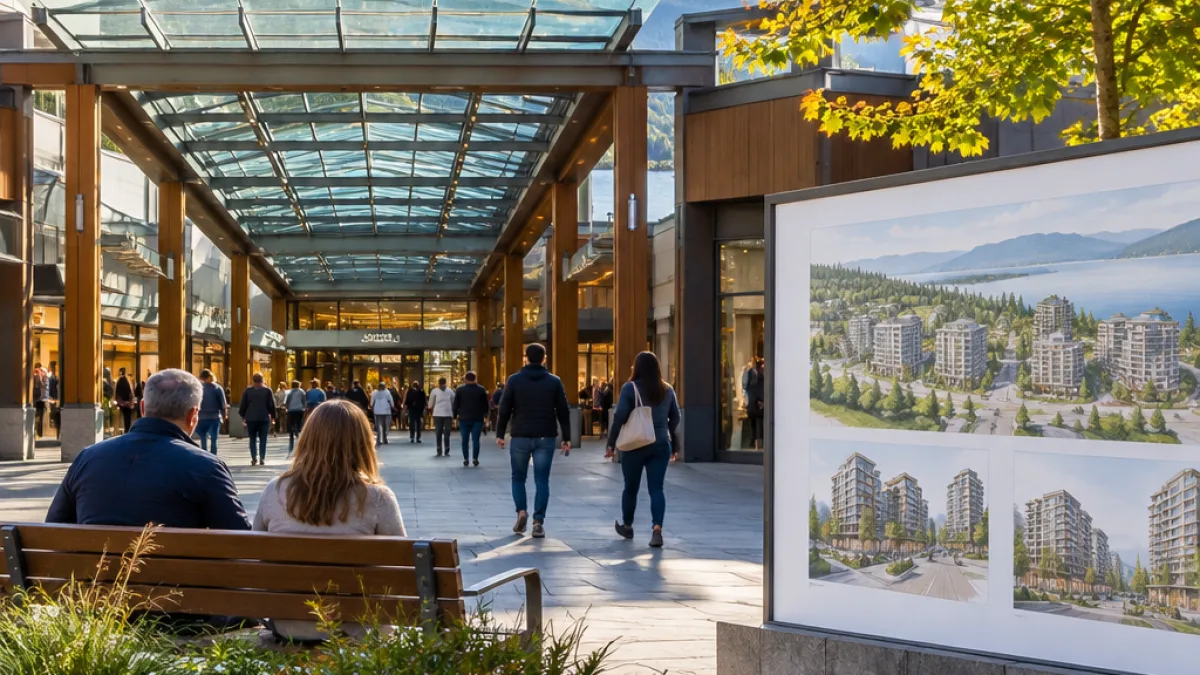
West Vancouver's Park Royal is entering a period of heightened municipal attention as council considers what should happen on land around the shopping centre. The questions are tied to housing policy, but they also reach into the daily life of a place that has long served as more than a retail destination.
Mayor Kirk LaPointe, newly elected to lead the municipality, says the community's established character must remain part of the discussion. At the same time, he has identified the need to weigh that character against housing requirements and the interests of local businesses. The balance will be one of the significant planning challenges facing council during his four-year term.
“This is a community hub, a lot of groups get together and situate themselves on benches and talk for the day,” LaPointe said.
More than a shopping centre
Park Royal's importance in West Vancouver is partly rooted in its history. It was Canada's first indoor covered shopping mall, and it continues to function as a recognizable neighbourhood gathering place. That combination of commercial activity and informal community use gives future decisions around the site a broader meaning than a conventional land-use debate.
For residents, the discussion is likely to centre on how the area can change without losing the qualities that make it familiar. The source material does not set out a specific development proposal, timetable or number of homes. It does, however, indicate that council will face multiple decisions involving land surrounding the mall, making Park Royal an important location for the municipality's approach to growth.
| Issue | What is established |
|---|---|
| Housing | LaPointe wants housing needs included in the policy balance. |
| Community character | The mayor says preserving the neighbourhood's identity matters. |
| Business | Local businesses are part of the considerations identified by the mayor. |
| Timing | Decisions are expected over the mayor's four-year term. |
A test for growth and continuity
The Park Royal debate reflects a familiar West Coast planning tension: how to accommodate change while protecting the social and commercial patterns that residents recognize. In this case, the site includes a historic mall, gathering spaces and nearby land whose future will be considered by council. The outcome could shape how people experience one of West Vancouver's best-known community hubs, although the available information does not yet specify what form any changes would take.
LaPointe's stated approach places several interests on the same table rather than presenting development as a single-purpose decision. The municipality will need to consider, in combination:
- the demand for housing and the direction of local housing policy;
- the continued role of Park Royal as a gathering place;
- the operating environment for nearby businesses; and
- the established character of the neighbourhood.
That list also illustrates why the future of land around Park Royal will matter beyond the mall's boundaries. A decision focused only on buildings or retail space would not capture the area's role as a place where community groups meet and residents spend time. Conversely, a conversation focused only on preserving what exists would leave unanswered how the municipality intends to respond to housing needs.
Decisions ahead for council
No final direction is identified in the material released about the mayor's interview. Instead, the focus is on the choices that will come before council as it works through the future of the surrounding land. The next phase of the conversation will therefore be important for clarifying how West Vancouver defines responsible growth in one of its most established settings.
For now, Park Royal remains both a commercial anchor and a social meeting point. Its history as Canada's first indoor covered shopping mall gives the site a distinctive place in the region's built landscape, while the mayor's comments signal that its next chapter will be judged on more than development potential. The central question for West Vancouver will be whether housing, business activity and community continuity can be addressed as parts of the same future.