A broader role for the capital
Premier Paul St-Pierre Plamondon used an honorary title and a familiar constitutional question to outline an expansive vision for Quebec City on Tuesday, suggesting that independence for Quebec could transform the provincial capital into the centre of a new country.
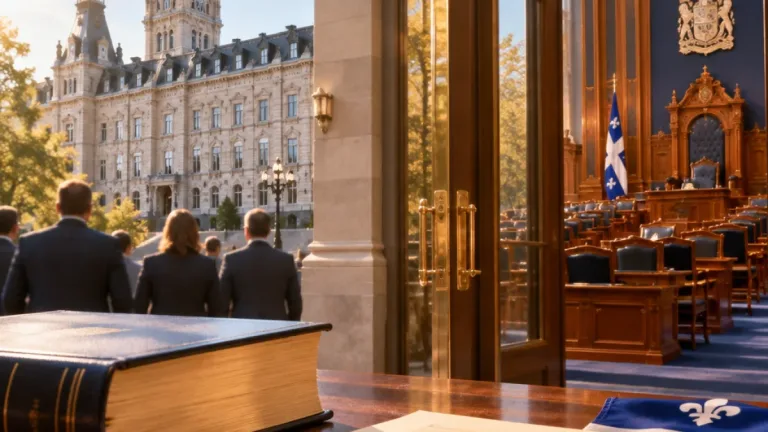
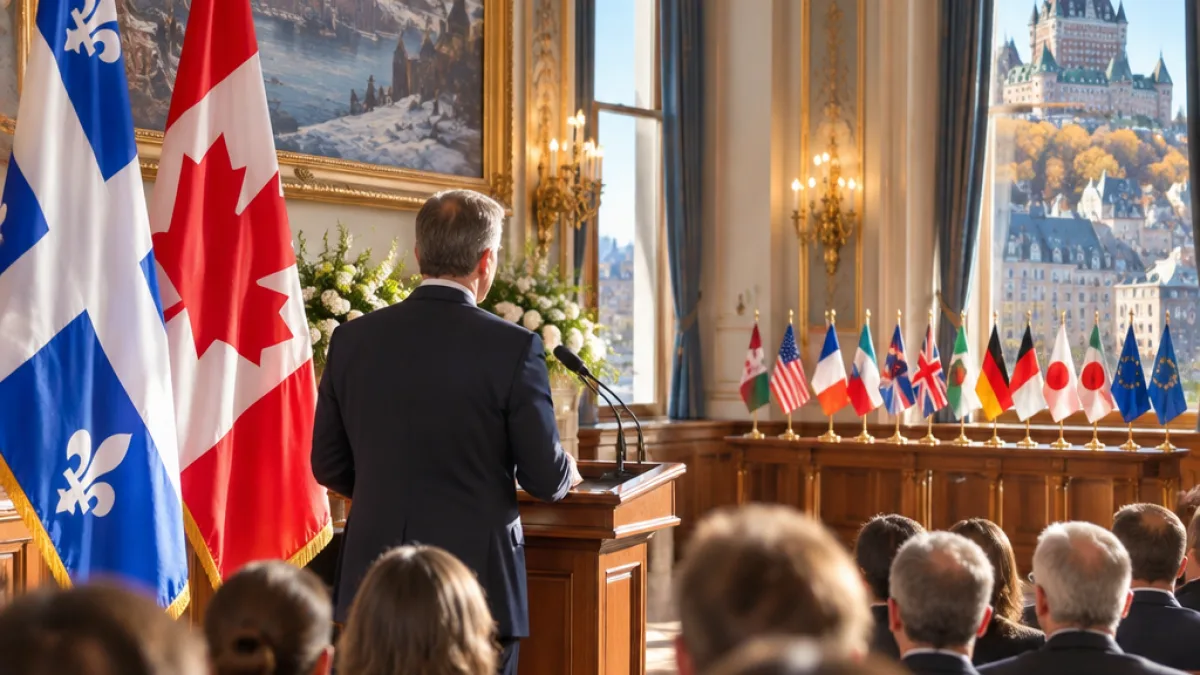
Speaking at a ceremony at Quebec City Hall where he was named honorary mayor, St-Pierre Plamondon said the city would stand to gain if Quebec became sovereign. The honour has also been given to his predecessors, according to the information released about the event.
His remarks placed the city’s possible future status at the centre of the discussion. Rather than describing independence only as a change in Quebec’s political relationship with Canada, the premier presented it as a development that could reshape Quebec City’s institutions, economy and international connections.
“My ambition for Quebec City is for it to become the national capital of a country bearing the same name.”
St-Pierre Plamondon said the creation of a new national capital is an uncommon event, but argued that such a change would produce several positive social and economic effects for the city. He specifically referred to the potential arrival of embassies, saying he had examined that question, and raised the prospect of attracting international organizations.
A vision set against political reality
The premier’s proposal remains conditional on Quebec becoming a country. His speech therefore linked a long-standing Parti Québécois objective with a concrete vision for the city that serves as Quebec’s current capital. The remarks did not announce a plan to establish diplomatic missions or international bodies, but instead described what could occur if independence were achieved.
He also acknowledged the political circumstances surrounding his appearance. The Parti Québécois did not win any seats in Quebec City, a result St-Pierre Plamondon said was not what the party had hoped for. He nevertheless emphasized that his responsibilities extend across the province and that he remains attentive to the capital.
That acknowledgement is significant for a party whose independence project has not always translated into electoral strength in Quebec City. By appearing at City Hall and addressing the city’s possible economic interests, the premier placed local concerns alongside the broader national question.
- Diplomatic presence: St-Pierre Plamondon pointed to the possible arrival of embassies in an independent Quebec.
- International role: He said he would like Quebec City to become a centre for international organizations.
- Political context: He recognized that the Parti Québécois failed to win seats in the city while presenting himself as premier for all Quebecers.
The premier was accompanied by Nicolas Girard, the minister responsible for the national capital, and Stéphanie Martin, his adviser and a former candidate in Vanier–Les Rivières. Their presence underscored that the speech was also directed at the city’s role within Quebec’s existing political and administrative framework.
For residents, the proposal offers a vision of possible long-term change rather than an immediate policy shift. Embassies, international organizations and the activity associated with a national capital could bring new institutions and international visibility, but the source material does not provide estimates of the number of missions, jobs or investments that could result.
St-Pierre Plamondon said he wanted to address concrete problems while also pursuing a larger ambition for Quebec City. His comments consequently combined day-to-day governance with a constitutional scenario that would alter the city’s status. For now, the capital remains within Canada, while the premier’s remarks frame its potential future as one of the central economic and institutional arguments for Quebec independence.