A gathering shaped by grief and resolve
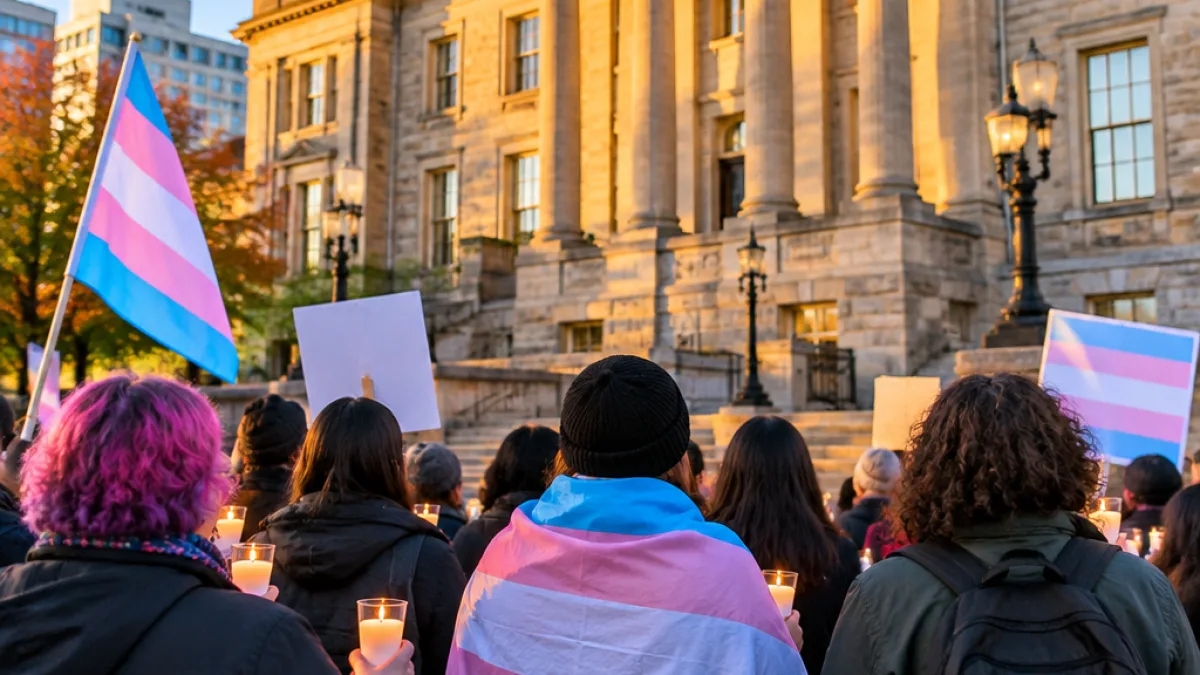
On the grounds of Nova Scotia’s legislature, remembrance carried both sorrow and urgency Friday as about 50 people gathered for Transgender Day of Remembrance. The annual observance honours transgender and gender-diverse people who have died because of anti-transgender violence and hatred, while asking those still living to confront the conditions that allow such violence to continue.
The Halifax ceremony was hosted by Lisa Lachance, the province’s first openly genderqueer member of the legislature. In remarks and an interview, the Nova Scotia NDP member pressed allies to move beyond expressions of support and take practical steps to make life safer for trans people in their communities.
Lachance said the need for that work is underscored by rising violence against queer and trans people. The figures capture only incidents reported to police, they said, leaving open the possibility that the scale of the problem is greater than official records show.
“I think it’s so important that we gather here collectively and resolve to look out for these people.”
The ceremony unfolded as politicians from Nova Scotia’s major parties stood alongside community members. The province’s lieutenant-governor was also in attendance, as were representatives of the Progressive Conservative, Liberal and NDP parties.
Reported hate crimes have climbed
Statistics Canada data released in March recorded 139 police-reported hate crimes targeting gender identity or expression in 2024. According to the figures cited at the ceremony, that number marked a fourth consecutive annual increase.
| Measure | Figure or trend |
|---|---|
| Police-reported hate crimes targeting gender identity or expression in 2024 | 139 incidents |
| Trend since 2020 | Rate experienced by transgender and gender-diverse people has nearly tripled |
| Reporting period | Fourth straight year of increase |
Those numbers provide a national backdrop for a local gathering, but they do not explain every experience faced by trans and gender-diverse Nova Scotians. Police-reported data can reflect changes in reporting, public awareness and access to services as well as changes in the incidents themselves. Lachance emphasized that many people may never report what happened to them.
“Reported violence is up, and yet we know that so much goes unreported.”
That gap between recorded incidents and lived experience was part of the reason Lachance framed allyship as an ongoing responsibility. The challenge, as presented at the legislature, was not limited to attending one annual ceremony. It extended into workplaces, schools, public institutions, neighbourhoods and personal relationships where people can either face isolation or find support.
Poetry brings a personal voice
Halifax artist Asiah Sparks, a former Halifax youth poet laureate, read two original poems during the event. Sparks dedicated the work to trans people navigating hardship and used the readings to honour people who were not given the chance to live openly and safely.
The poems offered a different register from the statistics: intimate, direct and centred on endurance. Sparks told those facing difficult periods that their darkest moments would pass, while urging them not to overlook the strength and care they carry within themselves.
“Just know that you’re bound to pass your hardest moments. A lot of times when we find ourselves in a dark time we can find ourselves looking for love and light in the eyes of others and forget all the love and light we have within ourselves.”
For those gathered, the combination of public remembrance and personal testimony made the event more than a formal commemoration. It connected the names and lives remembered on the day with the people who continue to navigate hostility, fear and uncertainty in the present.
A call that reaches beyond the legislature
Lachance said it was meaningful to see community members, the lieutenant-governor and politicians from across the political spectrum attend together. But the significance of that shared presence, they argued, depends on what happens after the gathering ends.
- Recognize the people lost to anti-transgender violence and hatred.
- Pay attention to the rise in police-reported hate crimes.
- Remember that many incidents may never be reported.
- Carry the responsibility for safety into communities across Nova Scotia.
That final point was central to Lachance’s message. A ceremony can create a visible moment of solidarity at the legislature, but safety is ultimately experienced in the ordinary places where people live their lives. The call to allies was to take that solidarity with them rather than leave it on the grounds of Province House.
As the day’s poems and speeches made clear, remembrance in Halifax was rooted in loss but not confined to the past. It asked Nova Scotians to see the continuing risk faced by transgender and gender-diverse people, to recognize what official statistics leave out and to decide what action should follow public promises of support.