A ruling with an immediate deadline
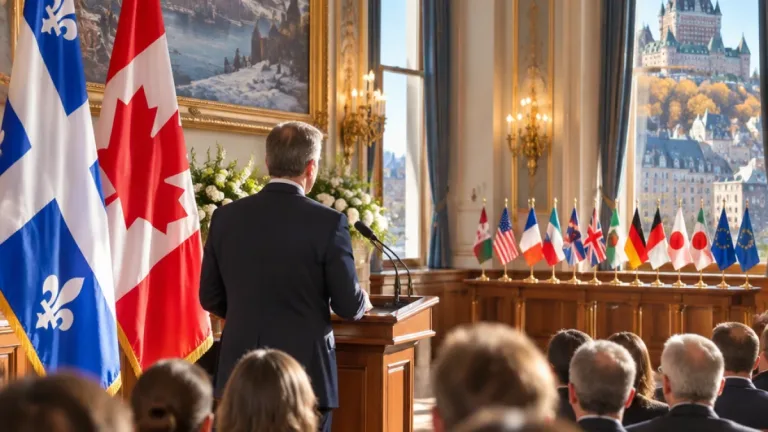
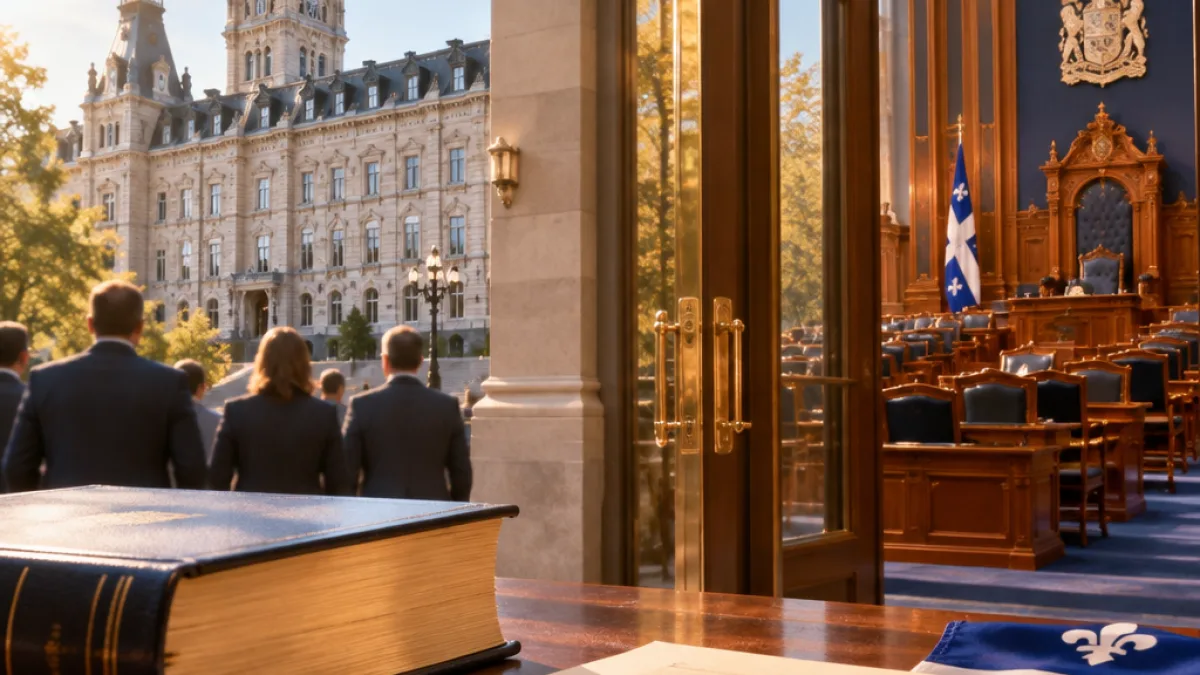
A Quebec Superior Court decision has placed the province’s next legislative session in legal uncertainty, after ruling that members of the National Assembly must swear allegiance to King Charles III before taking part in parliamentary work.
The decision, released Monday by Justice Ian Demers, suspends the effect of a 2022 Quebec law that made the oath optional. The ruling comes only days before the legislature is scheduled to resume on Dec. 1, creating a narrow window for the government and elected members to determine how they will respond.
The issue is particularly sensitive in Quebec, where all 127 legislators elected in the Oct. 5 provincial election declined to swear allegiance to the monarch when they were sworn in. Instead, they pledged allegiance only to the people of Quebec. The unanimous decision reflected the province’s long-standing debate over the role of the Crown in its public institutions.
Government preparing an appeal
Premier Paul St-Pierre Plamondon said Quebec will seek to appeal the judgment and is examining both legal and political options. He has also made clear that he does not intend to take the oath required by the ruling.
“I cannot take an oath to the King of England. And I think we are dozens and maybe more than 100 elected members of Parliament, duly elected through a democratic process, who think it’s a disgrace,” said Plamondon.
The premier also said the government believes it has strong public support on the matter, pointing to polling without citing specific results. His position sets up a direct confrontation between the province’s elected government and a court decision that Justice Demers says applies immediately.
What the decision means for the legislature
Lawrence David, founder of the Public Interest Litigation Institute and the Ottawa-based lawyer who brought the application, said an appeal would not automatically suspend the judgment. He said the appeal process could take time, leaving the National Assembly facing an unresolved legal question when it is expected to reconvene.
David’s position is that members who have not taken the oath would not be legally entitled to sit in the chamber or participate in parliamentary activity. That could include introducing legislation, debating bills or voting on them. He said the assembly therefore could not proceed as planned on Dec. 1 unless the members first complied with the ruling.
The practical consequences could extend beyond the opening of the session. David said laws passed by MNAs who were not legally entitled to sit could later be declared invalid. That possibility adds uncertainty to any government attempt to proceed while challenging the judgment.
The constitutional argument
Justice Demers rejected the idea that the oath is merely a ceremonial formality. In his decision, he said it has a constitutional function and recognizes the role of the monarch within Canada’s governing framework.
“Contrary to what it may seem, the oath does in fact play a vital role in our democracy,” Demers wrote, adding that it “acknowledges the primacy of the Constitution, personified by the King.”
The ruling therefore reaches beyond the wording of an oath. It addresses the relationship between Quebec’s legislature, the Canadian Constitution and the Crown, while also testing the limits of a provincial law that attempted to remove the obligation from elected members.
A dispute over Quebec’s political identity
For the Parti Québécois government, the oath is also tied to the province’s political identity. Plamondon’s refusal reflects the view that elected representatives derive their democratic legitimacy from Quebec voters rather than from a pledge to the monarch. The court’s decision takes the opposing position that the constitutional role of the Crown cannot be set aside by provincial legislation.
The conflict leaves Quebec’s MNAs with a limited set of choices before the scheduled return of the legislature:
- take the oath and resume parliamentary duties;
- refuse it while the government pursues an appeal; or
- delay the assembly’s work while the legal dispute continues.
Each option carries political consequences. Taking the oath would allow the legislature to function but would conflict with the position unanimously adopted by members after the election. Refusing it would preserve that position while risking a disruption of parliamentary business. A delay would leave bills and other legislative work on hold.
The immediate timeline
| Date or period | Development |
|---|---|
| 2022 | Quebec adopts legislation making the oath to the monarch optional for MNAs. |
| Oct. 5, 2026 | The provincial election is held. |
| After the election | All 127 elected members pledge allegiance only to the people of Quebec. |
| Nov. 23, 2026 | Justice Ian Demers releases the ruling suspending the 2022 law. |
| Dec. 1, 2026 | The National Assembly is scheduled to resume. |
Because the judgment is immediately applicable, the pending appeal does not by itself resolve the problem facing the assembly. The government must either obtain further court relief, accept the oath requirement or confront the possibility that the legislature cannot lawfully carry out its work as scheduled.
For national observers, the dispute offers a clear example of how Quebec’s political culture can collide with Canada’s constitutional structure. The province’s elected members have taken a unanimous political position, while the court has affirmed a legal requirement rooted in the Crown’s place in the Constitution. The next step will determine whether that conflict is settled in court, in the legislature or through a delay that prevents the assembly from sitting at all.