
A call for broader political space
Victor Ochei, a senatorial candidate for Nigeria’s Democratic Congress, says a lack of political tolerance in Delta State contributed to his decision to leave the All Progressives Congress after 11 years. His comments, made during an interview with ARISE NEWS on Wednesday, focused on the treatment of opposition parties, a disputed rally and the responsibilities of police and other security agencies.
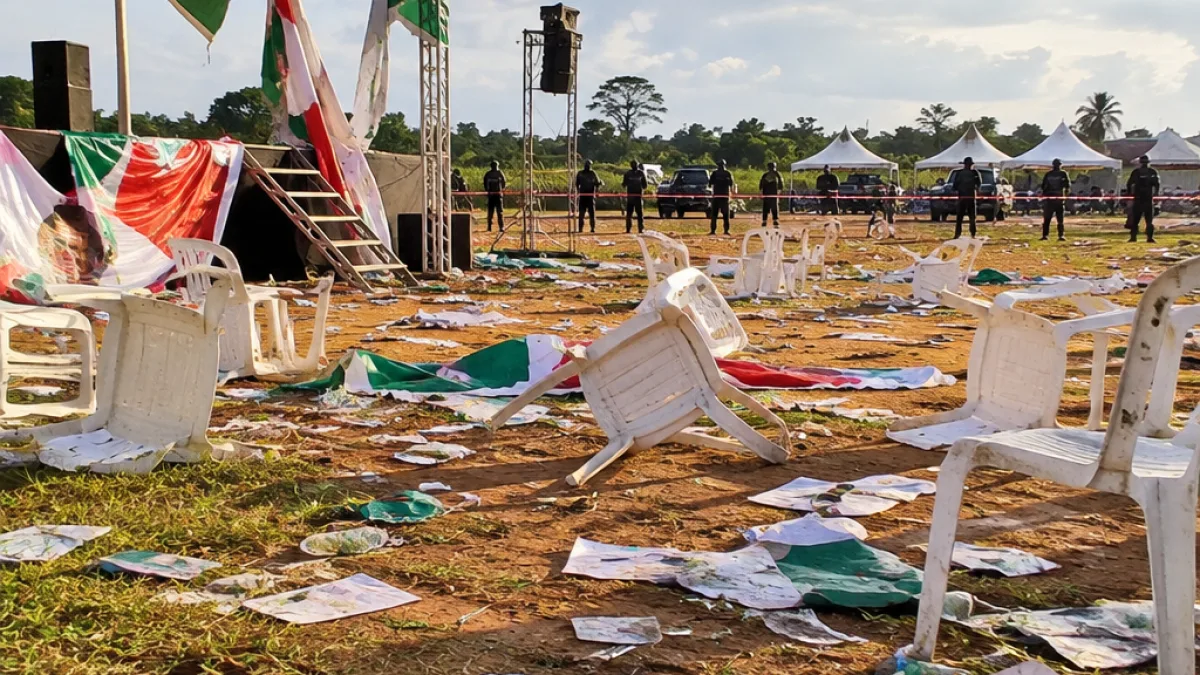
Ochei said political parties should be allowed to organize peaceful rallies and processions without intimidation. He argued that restrictions imposed after violence at an event organized by the OK Movement risk addressing the visible activity rather than the conditions that allowed the incident to happen.
“That tolerance is not there. The first thing they need to do is have the political tolerance, whether you hold it in closed spaces or in open spaces, for as long as there’s political tolerance, I mean tolerance across board, you will not have issues of violence.”
The politician condemned the violence connected to the rally and questioned the timing of police guidance that political parties should hold their activities indoors. Ochei said he had not seen such advice before the police issued a statement following the incident. In his account, the guidance became known to him only through the police response after the violence had already taken place.
Dispute over rallies and security advice
Ochei also challenged the idea that opposition parties should bear responsibility for attacks against the governing party. He characterized those claims as unfounded and said the political debate should not be used to justify blanket limits on public gatherings.
His position places the emphasis on prevention rather than prohibition. Ochei said police and other security agencies should act on intelligence when they believe an event could face a threat. In his view, the appropriate response is to protect a peaceful procession and prevent an attack, rather than simply direct parties to move their activities into closed spaces.
- Ochei’s central demand: greater tolerance for lawful political activity.
- His complaint: opposition members and events were treated unfairly.
- His proposed security approach: use intelligence to prevent violence and protect gatherings.
A political dispute with public-safety implications
The disagreement reflects a recurring tension in the account: public rallies are presented as constitutionally protected activities, while security authorities are described as responding to the risk of violence by limiting where parties can meet. Ochei said peaceful processions are guaranteed by Nigeria’s constitution and maintained that security agencies have a duty to avert attacks rather than restrict political participation after the fact.
The report does not provide an independent account of the incident at the OK Movement rally, identify the specific police official whose statement Ochei referenced, or outline any response from the ruling party. It records Ochei’s criticism and his explanation for leaving the APC, as well as his argument that opposition organizations should not be blamed automatically for attacks on the governing party.
For now, the political dispute remains centred on how Delta State authorities and security agencies should balance public safety with the right of parties to campaign and organize. Ochei’s remarks call for a system in which security concerns are acted on before violence occurs, while political groups retain the ability to meet in public and make their case to voters.