Oakville has become the first municipality in Ontario to impose a one-year moratorium on new data centres, a move council says is intended to buy time to study how the fast-growing industry could affect the town’s infrastructure, environment and neighbourhood character.
Local pause aimed at evidence-based planning
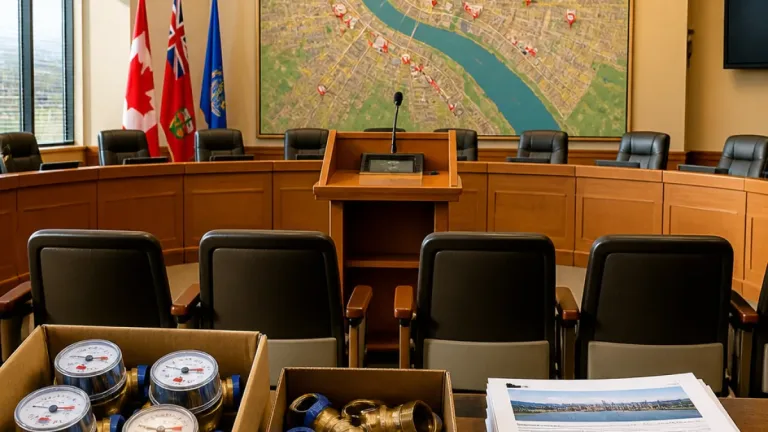
On Tuesday, town councillors voted unanimously to halt new data-centre approvals for 12 months and directed municipal staff to review whether local rules need updates to address potential issues tied to large AI-focused facilities, including noise, vibration and emissions.
Mayor Rob Burton told council the decision was precautionary rather than reactive to any single application.
“We’re operating here not out of fear, and not in reaction to any one application. That’s our job: to be alert, and to take the measures necessary.”
The moratorium arrives amid wider debate across the Greater Toronto Area about how to manage a new wave of developments designed to host artificial intelligence workloads. Neighbouring Mississauga is expected to consider its own freeze next month, and several Ontario municipalities are examining what local controls they can deploy.
What prompted Oakville’s action
Although Oakville officials said the town had no formal data-centre applications at the time of the vote, public records indicate a subsidiary of developer Hive Digital Technologies bought property in Oakville days after the firm announced plans in May for a 320-megawatt AI facility targeted for the second half of 2027 in the Greater Toronto Area.
Councillor Tom Adams, who represents the ward where the purchased property sits, supported the moratorium and framed the study as necessary to protect municipal systems and residents.
“Oakville deserves a clear, evidence-based understanding of how data centres interact with our electricity, our water, our wastewater and our telecommunications infrastructure, our environmental goals, our employment lands, the character of our neighbourhood, and, most importantly, the health of our residents.”
Key issues under review
Council asked staff to examine a range of potential impacts and regulatory gaps, including how large-scale compute facilities could:
- affect electricity demand and local grid stability;
- use water and discharge to wastewater systems;
- generate noise, vibration and airborne emissions; and
- change the character of employment lands and nearby residential areas.
In a statement, a Hive spokesperson did not comment directly on the moratorium but said the company respected Oakville’s right to develop a planning framework for data-centre development and remained committed to earning the community’s trust through open engagement.
Implications for municipalities and the province
Oakville’s move could set a tone for other municipalities across Ontario as local governments try to balance economic development with community and environmental concerns. Data centres that cater to AI workloads typically require more power and cooling than conventional facilities, prompting questions about where they should be located and how their service needs align with municipal infrastructure planning.
Municipalities traditionally control land use, zoning and local environmental protections, but energy supply and broader grid planning fall under provincial and regional purview. That division raises practical questions about coordination between municipalities, the provincial government and utility operators if data-centre demand grows rapidly.
How Oakville plans to proceed
Over the next year, town staff will prepare analysis and recommendations for council consideration. The study is expected to identify whether zoning changes, noise and emissions limits, servicing requirements or other development standards are necessary to protect public interests.
To illustrate the core areas the review will target, the town outlined preliminary topics in its council direction:
| Area of concern | Why it matters |
|---|---|
| Electricity demand | Large AI data centres can draw substantial, continuous power and may strain local distribution. |
| Water and wastewater | Cooling systems often require significant water use and can affect wastewater discharge volumes and quality. |
| Noise and vibration | Mechanical equipment and cooling systems can create nuisance issues for nearby residential areas. |
| Land-use and employment lands | Conversion of employment lands can displace other uses and alter local economic profiles. |
Local voice and next steps
Councillors framed the moratorium as a measured step that preserves the town’s ability to set local standards. For residents and businesses, the review will be the moment to raise concerns or support for specific measures, whether about environmental safeguards, community impacts or economic opportunities.
As municipalities across Ontario look at similar questions, Oakville’s study and any resulting policy choices could influence how the region accommodates data-centre growth tied to AI — balancing industrial-scale computing needs with municipal planning responsibilities and neighbourhood expectations.
Reporting from Oakville; further developments are expected as the town’s study progresses and neighbouring municipalities continue their own deliberations.