
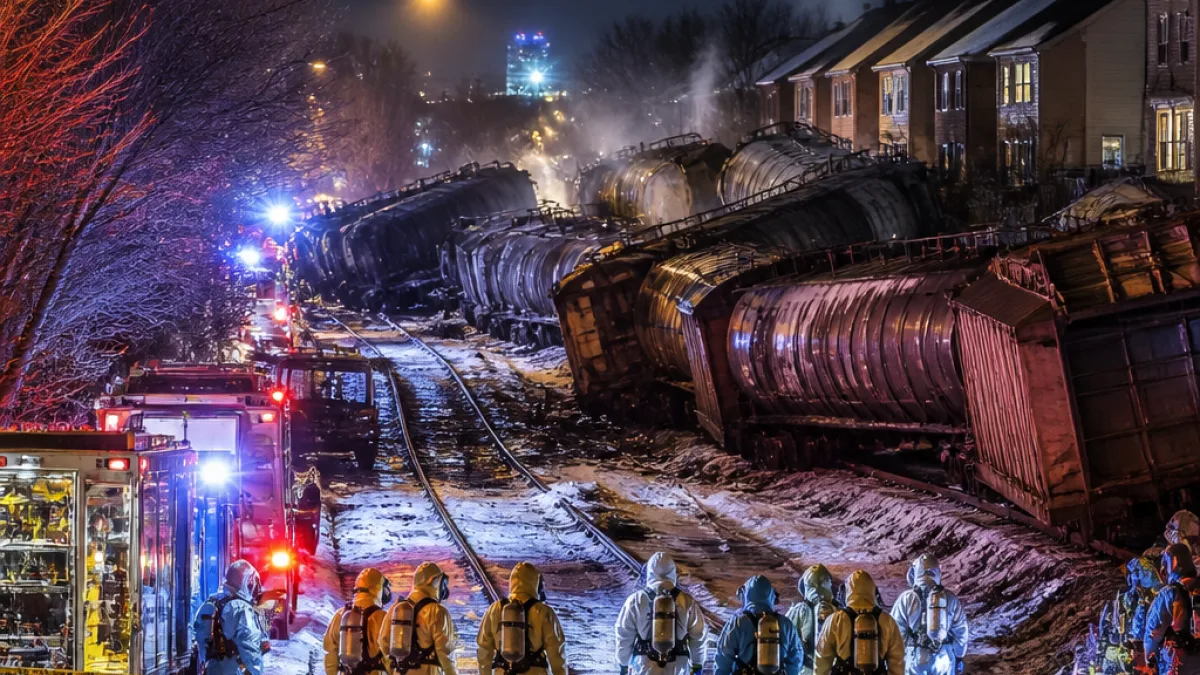
Community shaken by winter night derailment
At about 9 p.m. on Friday, Dec. 18, 1992, a CN freight train carrying hazardous chemicals passed from Newton toward the small community of Oakville. Moments later an axle failed and broke shortly after the train passed the village, initiating one of the most serious railway incidents in the region’s history.
Investigators later reported that 29 cars left the tracks. Several of those cars were damaged and began leaking dangerous materials into the snow. The cargo manifest included ethylene oxide, vinyl chloride, sulfuric acid and acetic anhydride, chemicals whose release posed an immediate risk of toxic fumes and other hazards to residents downwind.
The derailment's scale and the presence of volatile chemicals prompted an emergency response that lit the area like daytime. Residents described a scene dominated by emergency vehicles and bright lights around Oakville’s skating rinks and the village core.
“I could hear this loud banging, and I thought, ‘Oh, it must be them just shunting the cars around,’” said Oakville resident Dorinda Holmes, who was downstairs folding laundry when she heard the derailment. “I didn’t think anything of it.”
Her husband, Murray Holmes, who was working a shift at McCain Foods in nearby Portage la Prairie, returned home to find the area aglow with emergency activity.
“It was all lit up down there just like daylight with vehicles,” he recalled. “You’d think there was a tournament and a bonspiel going on and a party in the parking lot because there were lights everywhere, emergency vehicles.”
Despite the visible emergency presence that night, the Holmes family said they were not immediately told to evacuate and remained at home until the next afternoon.
Evacuation and public-safety response
By the afternoon following the derailment, emergency officials began evacuating residents from Oakville. Approximately 410 people were evacuated as authorities worked to contain leaking chemicals and assess the risk posed by toxic fumes.
- Incident time: about 9 p.m., Dec. 18, 1992
- Location: CN freight route through Newton toward Oakville
- Derailment: 29 cars left the tracks; several leaked chemicals
- Cargo included: ethylene oxide, vinyl chloride, sulfuric acid, acetic anhydride
- Evacuated residents: about 410
The release of volatile chemicals into snow-covered ground presented multiple hazards. Ethylene oxide and vinyl chloride are both flammable and carry significant health risks, while acids such as sulfuric acid and acetic anhydride can cause corrosive injuries and environmental contamination.
Local memories, broader implications
For many Oakville residents, the night remains vivid: unexpected noise, the surreal brightness of emergency lights and the unsettling realisation that a routine freight movement had become a public-safety crisis. The Holmes family’s account — staying home the first night and finding out about the evacuation only later — underscores the challenges emergency managers face in communicating urgent orders during fast-moving incidents.
Although the derailment occurred more than three decades ago, the incident is a reminder of the risks that transporting hazardous materials poses to communities along rail corridors. It also highlights the importance of axle and equipment maintenance, prompt detection of mechanical failures and clear, timely evacuation communications.
| Key fact | Detail |
|---|---|
| Derailment date | Dec. 18, 1992 |
| Cars derailed | 29 |
| Residents evacuated | Approximately 410 |
Residents who lived through the event remember the upheaval of being displaced at Christmas and the intense emergency response that followed. For communities across Canada that sit alongside busy freight corridors, the 1992 Oakville derailment remains a case study in preparedness and the social impact of rail accidents.















