Elon Musk’s political investment in the Republican Party has produced a difficult business landscape for the billionaire after Democrats won both chambers of the U.S. Congress and Texas elected its first Democratic governor in more than three decades.
Musk spent nearly US$500 million supporting Republican candidates and attempting to preserve Texas as a Republican stronghold, according to the source. The state is strategically important to his corporate interests: it is home to Tesla and SpaceX, while also being the location of a planned chipmaking venture.
The results have put Musk’s political influence under renewed scrutiny. The billionaire, who encouraged his followers on X to vote Republican as recently as Tuesday, has spent years criticizing the Democratic Party. He also warned last month that there could be retaliation through his social-media platform after a report said Democrats might investigate his companies if they took control in the midterms.
Markets react to a tougher outlook
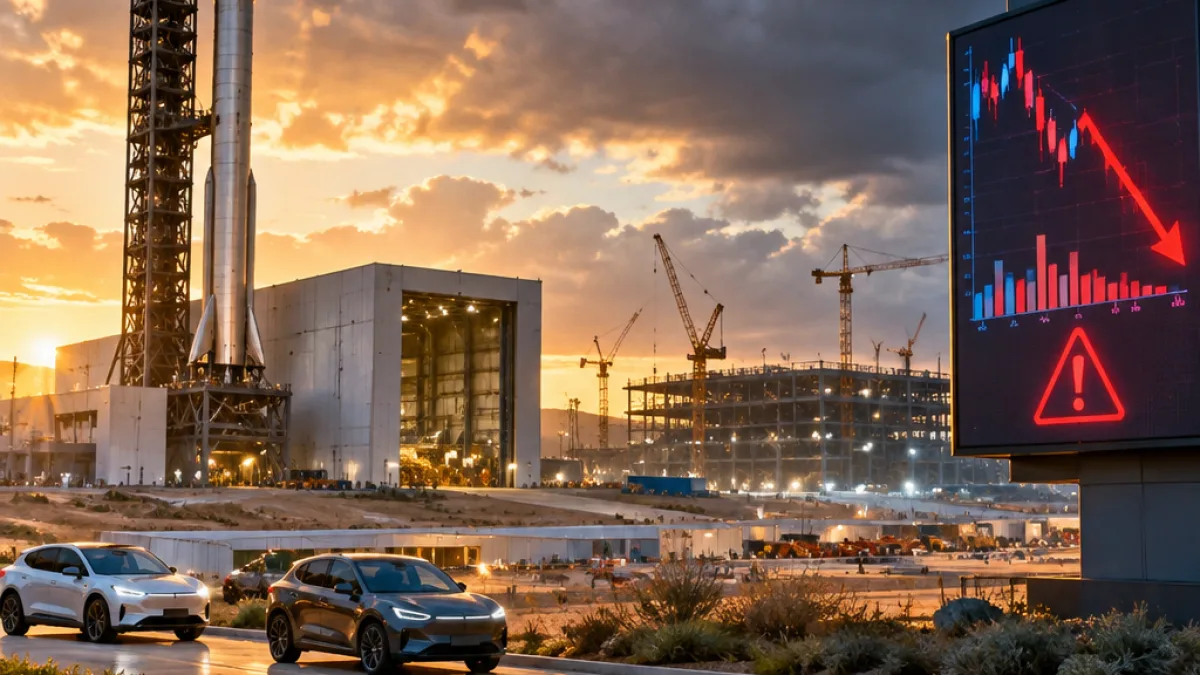
Investors responded negatively as the election outcome raised the possibility of increased oversight of technology and artificial-intelligence businesses. SpaceX shares fell 5.5 per cent, while Tesla declined 5.1 per cent. Both companies underperformed the broader market.
The immediate market reaction reflects concern that the political shift could affect the timing and cost of Musk’s expansion plans. A key risk involves the approvals required for data centres, which are central to SpaceX’s plans to pursue what it has presented to investors as a US$28.5-trillion addressable market.
Democratic officials and local governments could apply greater scrutiny to such projects, particularly where new facilities place pressure on electricity systems or raise utility costs for residents. Analysts and experts cited in the source expect Democrats to examine data-centre developments more closely and to support possible construction moratoriums as opposition grows over electricity expenses.
“regulatory pressure on everything AI”
That prospect matters beyond one company. Data centres require substantial power and infrastructure, and delays in obtaining permits can affect the schedule and economics of technology projects. Tighter reviews could therefore slow expansion, increase development uncertainty and make investors more cautious about ambitious artificial-intelligence strategies.
Political spending and corporate exposure
Musk’s position is unusually exposed because his political activities and commercial interests overlap in several ways. His companies operate in sectors that depend on public approvals, government policy and large infrastructure investments. Tesla’s operations in Texas, SpaceX’s technology and planned projects, and the proposed chipmaking venture all leave the businesses sensitive to changes in the political environment.
The election results also weaken the assumption that Musk’s spending could reliably protect Republican control in areas important to his companies. The source describes the outcome as a setback for Musk, whose financial support did not prevent Democrats from winning nationally or from taking the Texas governor’s office.
| Business or exposure | Potential consequence |
|---|---|
| Tesla | Shares fell 5.1 per cent after the results |
| SpaceX | Shares fell 5.5 per cent; data-centre approvals may face more scrutiny |
| Planned chipmaking venture | Could face a more demanding political and regulatory environment in Texas |
Jake Dollarhide, chief executive of Longbow Asset Management, said a Democratic sweep could increase pressure on technology companies and curb the rapid growth associated with artificial intelligence. His assessment points to a broader question for investors: whether the sector’s expansion can continue at its current pace when energy costs, local opposition and regulatory reviews become more prominent.
For Musk, the consequences are both political and financial. The midterm results do not by themselves determine the future of Tesla, SpaceX or the Texas projects, but they signal that the companies may have to operate under closer scrutiny. The decline in their shares shows that investors are already weighing the possibility of slower approvals and a less accommodating policy environment for Musk’s technology ambitions.