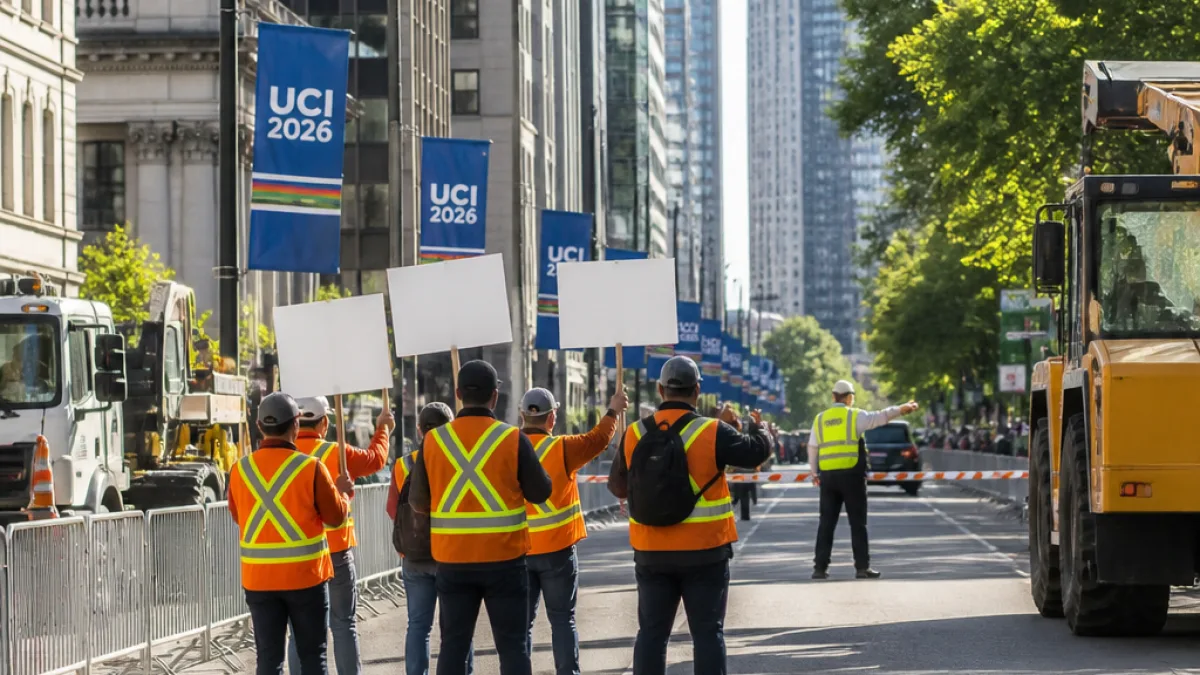
Montreal’s largest blue-collar union is threatening strike action that could coincide with the UCI 2026 Road World Championships, a move the city says would risk major disruption as the international cycling event takes over downtown streets from Sept. 20 to 27.
Stalled talks, looming deadline
The Syndicat des cols bleus regroupés de Montréal (CUPE 301) represents roughly 6,000 city workers whose collective agreement expired on Dec. 31, 2024. The union says it has engaged in about ten rounds of negotiations since early May but that the employer has remained "rigid and inflexible" on financial issues.
In a news release, the union warned that if negotiations do not accelerate, it will have "no choice" but to escalate pressure tactics — a step that could produce a "historic labour dispute" during the international cycling championships.
"This decision is all the more difficult to justify given that the city itself has admitted that outsourcing the work to the private sector costs three to four times more than if it were done in-house. This affront shows a lack of respect for these workers and for taxpayers,"
— Nicolas De Ciccio, president of the Syndicat des cols bleus regroupés de Montréal
Workers’ concerns and city preparations
The union says the city’s current offers would "impoverish" members, who, it notes, "have not received a raise since 2024," leaving them about 10 per cent worse off under proposed terms. Blue-collar members already staged several days of strikes in April, signalling a willingness to use job action to obtain better conditions.
City officials have been contracting private firms to resurface roads and carry out other preparations in advance of the championships. The union criticised that decision, saying the city has acknowledged higher costs for outsourcing — at rates it put at three to four times the in-house cost — and that shifting work away from city crews shows disrespect for workers and taxpayers alike.
- Event: UCI 2026 Road World Championships
- Event dates: Sept. 20–27, 2026
- Union members represented: ~6,000
- Collective agreement expired: Dec. 31, 2024
- Union claim on wage erosion: ~10% without raises since 2024
| Item | Detail |
|---|---|
| Negotiation rounds | About 10 since early May |
| Outsourcing cost claim | 3–4 times costlier than in-house, per city admission cited by union |
Local consequences and political stakes
The timing of any strike would raise immediate concerns for residents and visitors. Road resurfacing and other municipal services related to event logistics are typically time-sensitive; any job action that affects those operations could affect everything from race infrastructure to traffic management and routine city services.
For municipal leaders, the dispute also carries political risk. The union’s public rebuke of outsourcing — framed as both a fiscal and moral issue — may pressure elected officials to justify decisions about contracting and public-sector labour policy ahead of a high-profile international sporting event.
For the union, moving negotiations into the public sphere increases leverage by drawing attention to the cost of outsourcing and the financial position of rank-and-file workers. The union insists members have gone without raises since 2024 and says the city’s current proposals would leave them materially worse off.
Both sides will face a tight calendar: with the championships less than a month away, there is limited time to reach an agreement that satisfies workers while allowing municipal crews and contractors to complete necessary preparations.
As negotiations continue, Montrealers can expect heightened political debate over labour, contracting and the allocation of funds for major events — and, depending on how talks progress, the real possibility of service interruptions during one of the city’s largest international showcases.