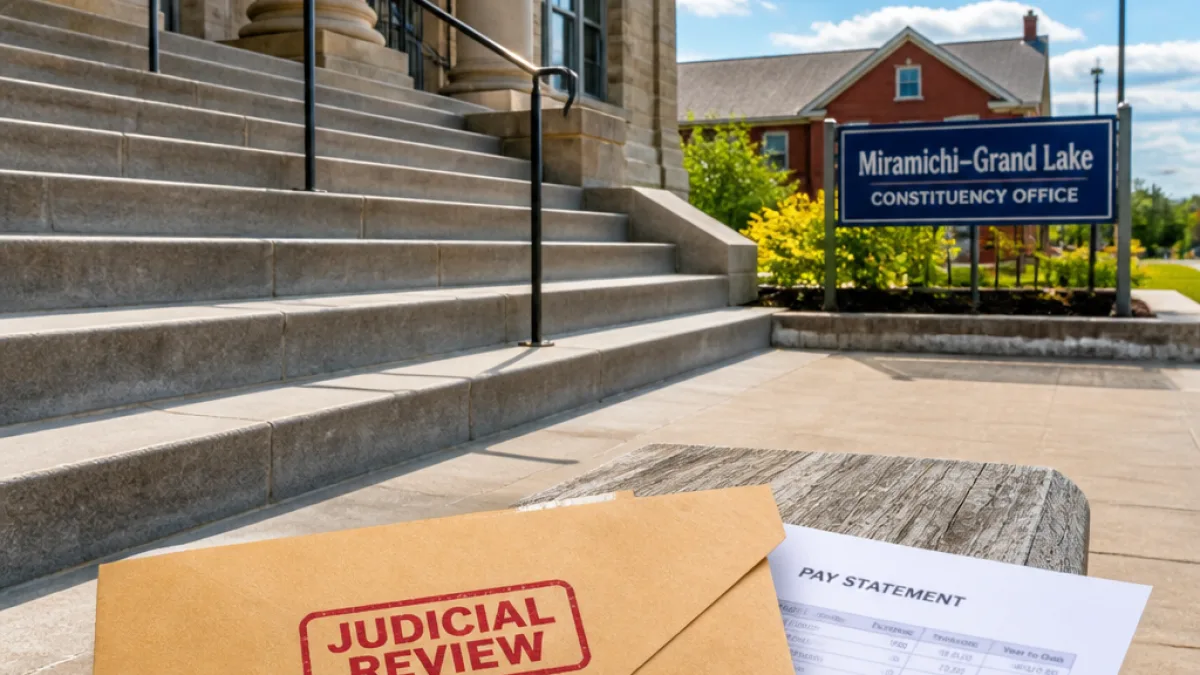
Conservative MP Mike Dawson of Miramichi–Grand Lake has asked the Federal Court to let him decline an annual pay increase that raised MPs' base salaries by roughly $8,000 earlier this year, setting up a legal clash with the House of Commons administration over whether members can refuse statutorily mandated pay.
What Dawson says and why he acted
In an application for judicial review filed in June, Dawson said he seeks to reject the recent adjustment to MPs’ pay because elected officials should display “fiscal restraint and solidarity with ordinary Canadians” who are grappling with rapidly rising living costs. In an affidavit accompanying his application he wrote:
“I continue to hold that belief.”
Dawson told reporters earlier this year that he would not accept the increase, and said he had received more than 20,000 messages from Canadians supporting his stance; several of those letters were included in the affidavit’s appendix.
House of Commons says law leaves no choice
Clerk of the House of Commons Eric Janse filed an affidavit in the Federal Court proceeding arguing the Parliament of Canada Act requires that all members be paid the amounts set out in legislation. Janse wrote that implementing Dawson’s requested refusal would be both illegal and administratively burdensome.
“Implementing the applicant’s request not to apply those annual adjustments would, in addition to being inconsistent with the Act, require the House administration to undertake administrative measures that are not required for any other member of Parliament,” Janse said in his affidavit.
A spokesman for the Office of the Speaker, Olivier Duhaime, told The Canadian Press the House of Commons expects Dawson to file a memorandum of fact and law by the end of August or in early September. Once that is filed, the House will have 20 days to submit its own memorandum setting out its legal position. The office declined further comment while the matter is before the court.
Pay figures at a glance
| Year | MP base salary |
|---|---|
| Previous year | $209,800 |
| After April adjustment | $217,700 |
Process and possible next steps
The court process will centre on whether the House administration — and ultimately Parliament itself — has the legal discretion to accept a member's refusal of a legislated pay adjustment. Key dates and steps identified so far include:
- Dawson filed for judicial review in June.
- The House has filed an affidavit from Clerk Eric Janse asserting the statutory obligation to pay.
- Dawson is expected to file his legal memorandum by late August or early September; the House then has 20 days to file its response.
The House’s position, as framed by the clerk, emphasises the administrative difficulties and legal inconsistency that would arise if one member were treated differently from all others. The exact legal arguments Dawson will press in his memorandum were not made public by the court filing beyond the affidavit language about fiscal restraint and public sentiment.
Political and public context
The case touches on several themes central to public debate: the optics of elected officials receiving pay increases while many Canadians face affordability pressures, and the limits of individual conscience where Parliament’s compensation regime is governed by statute. It also raises practical questions about payroll administration and equal treatment among members.
MPs’ pay is set out in legislation and adjusted annually; whether a personal refusal can be accommodated without amending the law is the matter the Federal Court will be asked to resolve. Dawson’s action is atypical — most members accept statutory adjustments — but his filing spotlights the broader political debate about remuneration for public officials amid economic strain.
The litigation is in its early stages. The clerk’s affidavit and the Office of the Speaker’s statements indicate the House administration will vigorously defend the position that statutory pay must be paid to all members. Dawson’s lawyer, Robert Blakely, was quoted previously as expecting a hearing, but no date has been set in the documents made public so far.
The outcome of this case could have implications beyond one member’s paystub: a ruling that allows or disallows voluntary refusals may define how Parliament reconciles statutory obligations with an individual member’s public appeal to demonstrate restraint.