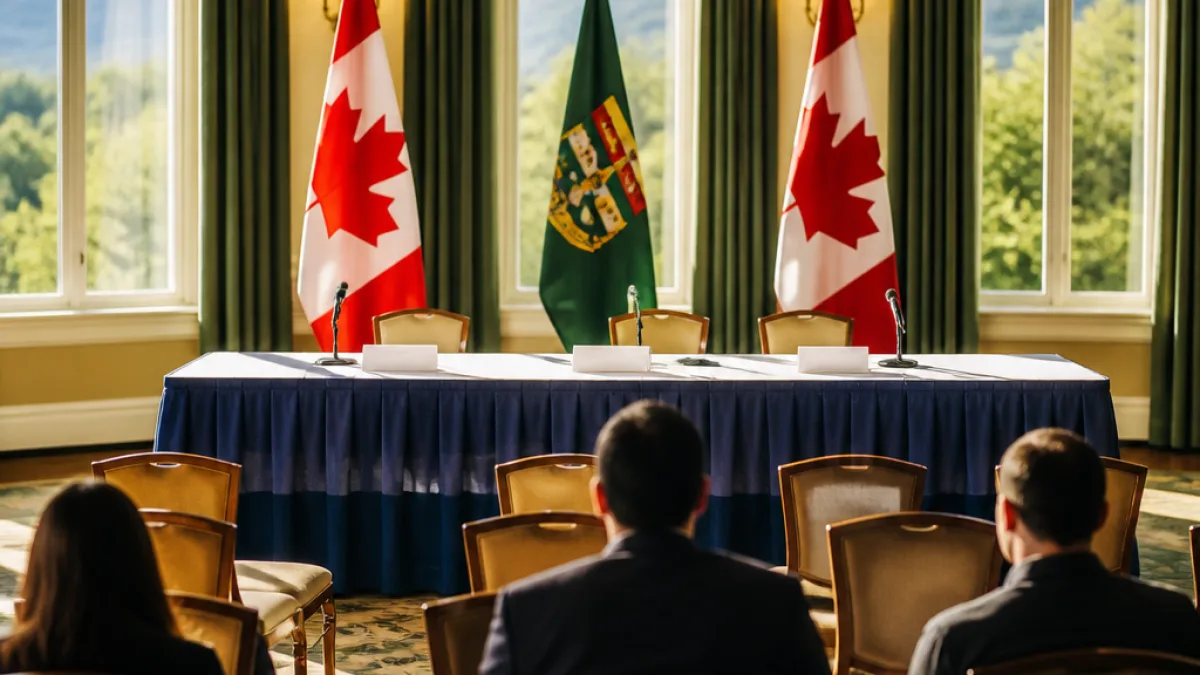
A regional summit in Vermont intended to bring together New England governors and eastern Canadian premiers proceeded this week with a markedly reduced delegation, underscoring fraying ties amid mounting trade tensions.
Attendance well below expectations
Organisers had expected the gathering to include the full complement of New England governors and eastern Canadian premiers. Instead, only three of the 11 officials arrived in Vermont to take part in the meetings, according to reporting on the event.
That tally included just one of New England’s six governors and two eastern Canadian premiers. One governor, identified in reports as Holt, chose not to attend.
The limited turnout came amid rising trade disputes between some U.S. states and Canadian jurisdictions, though specific agenda items for this session were not detailed in the material provided.
What the numbers show
| Group | Expected | Reported attending |
|---|---|---|
| New England governors | 6 | 1 |
| Eastern Canadian premiers | Part of combined 11 | 2 |
| Total leaders expected | 11 | 3 |
Regional context and implications
Meetings between New England governors and eastern Canadian premiers traditionally provide a forum to coordinate on cross-border trade, energy, transportation and environmental issues that directly affect Atlantic provinces such as New Brunswick.
A diminished delegation could reduce the meeting’s capacity to produce concrete agreements or forward-looking initiatives. For New Brunswick, which relies on cross-border commerce and regional cooperation, the outcomes from these forums can influence economic planning, transportation linkages and market access.
Observers say low participation can also signal political sensitivities at play. While these gatherings are not formal treaty-making bodies, they serve as important venues for relationship-building and practical problem-solving on matters such as supply chains, border procedures and shared infrastructure.
Who was missing
- Several New England governors did not attend the Vermont meetings.
- At least one governor, named in reports as Holt, opted out of this session.
- Only two premiers from the eastern Canadian provinces were present.
The scale of absences leaves unanswered questions about whether future sessions will be able to tackle contentious trade issues or restore momentum on joint projects.
Next steps and what to watch
Officials often issue post-meeting statements or communiqués summarising agreements and follow-up actions. For New Brunswickers, the most relevant items to monitor include any pledges on transportation corridors, energy interconnections, or measures to ease cross-border commerce.
Given the reduced participation this week, any substantive outcomes may be limited. Journalists and stakeholders will be looking for:
- Official summaries from the hosts in Vermont;
- Statements from the premiers’ offices in Atlantic Canada, including New Brunswick; and
- Announcements of follow-up meetings or working groups to address unresolved issues.
As these developments unfold, the provincial government in Fredericton will be watching closely to assess potential impacts on trade and regional cooperation. For now, the gathering served as a reminder that cross-border diplomacy can be as dependent on attendance as it is on agenda-setting — and that low turnout can blunt a conference’s practical effect.
Reportage continues as officials and aides release formal accounts of the talks and any decisions or action items arising from the limited meeting in Vermont.