
Province charges St. Thomas rescue for costs after cat removals
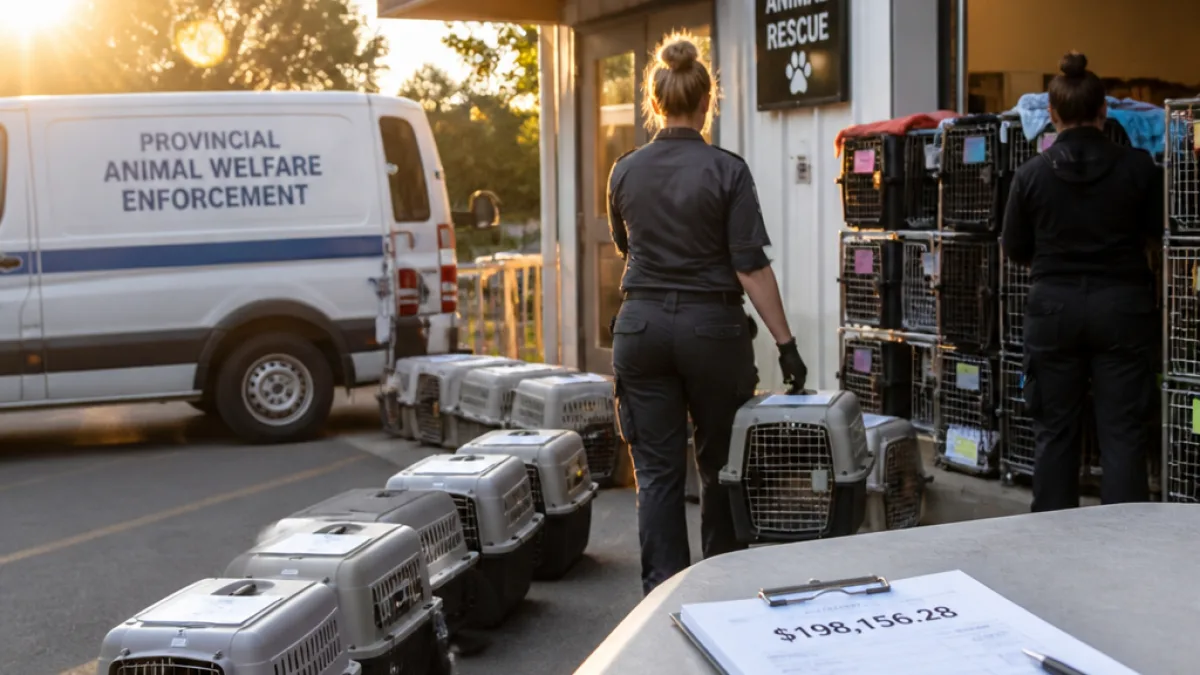
The animal rescue Saving Animals’ Lives Together (SALT) in St. Thomas is facing an uncertain future after Provincial Animal Welfare Services (PAWS) issued a statement of account totalling $198,156.28 for the removal and care of cats taken from the facility earlier this year.
According to the statement viewed by Global News, the bulk of the bill was for veterinary care — $125,640.50 — with boarding fees accounting for $72,524.78. The rescue says it received the invoice on Monday and has been given a payment deadline of Aug. 25.
“Have you ever been hit by a two-by-four,” said Bonnie Smith with SALT. “I figured it would be around $200,000. I don’t know, I just figured because when they came in the way they did and so gung-ho, it’s like, ‘We got to shut this person down.’”
PAWS conducted an inspection of the facility in May and reported that approximately 140 cats were being housed at that time. Soon after the inspection, SALT was told a complaint had been filed, though staff say they were not informed who lodged the complaint or what it concerned.
Following the complaint, PAWS assigned a shelter veterinarian and transferred multiple cats to other organisations. The Toronto Humane Society confirmed it took in 41 cats but declined further comment, saying the matter is the subject of an active provincial investigation. SALT reports that another roughly 66 cats were removed and that it was later informed 17 cats were euthanized without the rescue’s consent.
Section 35 of provincial act places costs on custodians
The financial liability rests on the custodian under section 35 of the Provincial Animal Welfare Services Act, 2019, which states that owners or custodians are responsible for costs when PAWS removes animals to protect their safety and welfare. Brent Ross, a spokesperson with the Ministry of the Solicitor General, reiterated that principle in comments to media.
The bill and the circumstances around the removals have left staff and volunteers at the rescue reeling. SALT representatives described the staff reaction as distraught after being told some animals had been euthanized.
- May — PAWS inspects SALT; approximately 140 cats recorded in care.
- Shortly after — SALT notified a complaint had been made; details not disclosed to the rescue.
- PAWS assigns a shelter veterinarian, begins removing cats and transferring some to other organizations.
- Statement of account received by SALT: $198,156.28, due Aug. 25.
The situation raises questions for London and surrounding communities about how provincial animal-welfare interventions are implemented and funded. Local rescues often operate on tight budgets and depend on donations, volunteers and municipal supports; unexpected liabilities of this size can imperil their operations and the services they provide to the region.
| Category | Amount |
|---|---|
| Veterinary | $125,640.50 |
| Boarding | $72,524.78 |
| Total | $198,156.28 |
Provincial rules that place removal costs on custodians are intended to ensure the animals’ wellbeing and to recoup public expense, but critics say the system can be opaque and punitive for grassroots rescues that lack formal operating reserves. SALT’s representatives say they were left without clear information about the complaint and the subsequent decisions made during the investigation.
For London residents who support animal welfare — whether through fostering, donations, volunteering or adopting — the case illustrates how provincial enforcement actions can ripple through the local network of shelters and rescues. If SALT is unable to pay the bill, the future of the rescue and the animals it serves could be jeopardized.
PAWS and the Ministry of the Solicitor General have stated that removals occur to protect animals’ safety and welfare. The Toronto Humane Society acknowledged receiving 41 cats but would not provide further detail while the provincial investigation continues.
As the Aug. 25 deadline approaches, SALT and neighbouring communities will be watching closely for developments that will determine whether the rescue can absorb the costs, negotiate a resolution with the province, or face further consequences that affect animal care capacity in the region.















