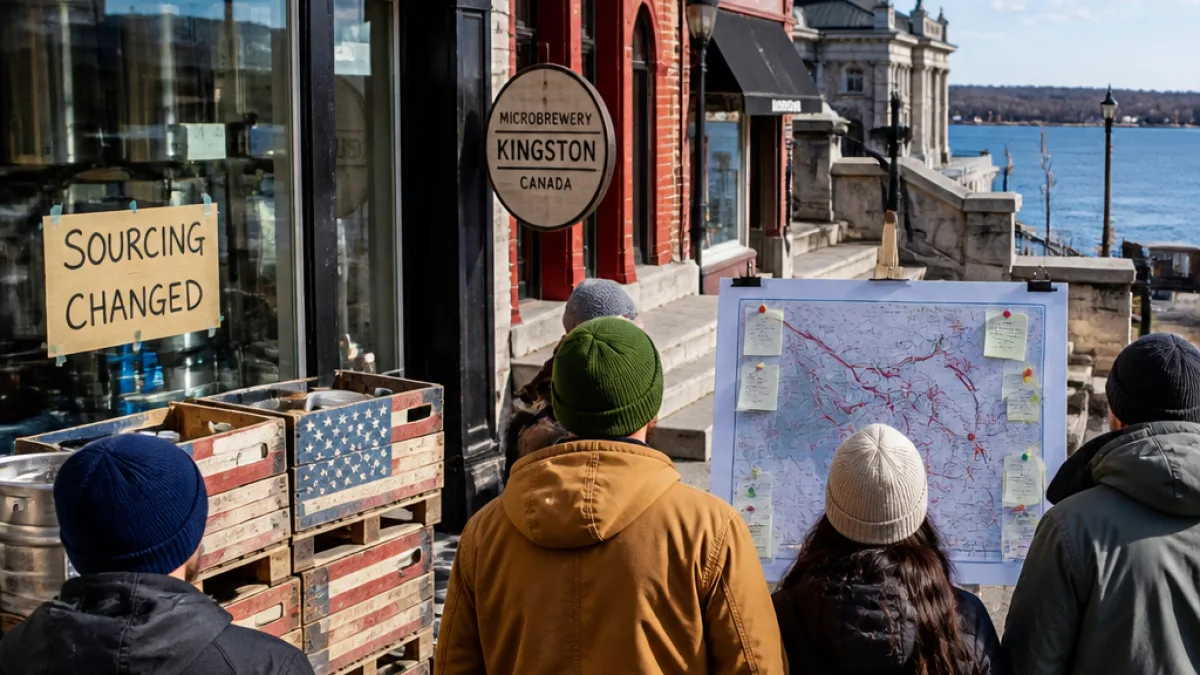
Political leaders and business owners in Kingston say they are frustrated and alarmed by recent threats of sweeping tariffs from the United States, and local operators are racing to adjust supply chains to limit potential damage.
Local reaction: exasperation turns to action
The first public signs of disruption have appeared in Kingston’s small-business community. While some responses were rhetorical — a mixture of dismay and resigned humour — others were concrete.
The reaction from elected officials was described collectively as a "rolling of the eyes and soured laugh, followed by a gritting of teeth," reflecting frustration at the prospect of fresh trade barriers with a major market. That sentiment mirrored comments from business owners who said they are working to insulate operations from tariff shocks.
"A screw-you attitude"
Adam Rondeau, chief executive officer of Daft Brewing, told reporters he is already changing suppliers so his Kingston microbrewery relies less on U.S. ingredients. According to a photograph caption, he has dropped U.S. hops in favour of other sources. The photograph was taken on Aug. 25, 2026.
Practical steps under way
Local operators who sell into, import from, or source inputs in the United States face a mix of uncertainty and decision-making. Some small firms are taking steps now to reduce exposure rather than waiting for policy outcomes on the other side of the border.
- Supplier diversification: At least one Kingston business has reported supply changes to avoid U.S. inputs.
- Cost planning: Businesses are assessing price pressures that new tariffs could create.
- Market strategy: Firms are considering whether to seek alternative export markets or to absorb costs temporarily.
Those moves reflect a broader pattern among small and medium-sized enterprises that trade internationally: when faced with policy uncertainty, many shift toward greater resilience in procurement and pricing.
Political leaders weighing local impacts
Although details of any federal or provincial responses were not provided in the material reviewed, Kingston’s political class has been characterised in local coverage as angry about the tariff rhetoric. Elected officials in border communities typically monitor negotiations closely because tariffs can quickly affect manufacturers, food producers and service exporters.
| Potential local effect | Why it matters for Kingston |
|---|---|
| Higher input costs | Many small producers use components or ingredients from the U.S.; higher costs squeeze margins. |
| Supply-chain disruption | Delays or supplier changes can affect production schedules and inventory for local businesses. |
| Need to find new markets | Exporters may seek buyers outside the U.S., which can be costly and time-consuming. |
Local political leaders typically press for clear information and supports if national or international trade disputes threaten jobs and economic activity. Kingston’s economy includes a mix of manufacturing, small-scale food and beverage producers, services and a significant public sector presence — sectors that can be differently exposed to trade measures.
What Kingston businesses say they need
Business owners in Kingston told local reporters they want more certainty and practical help to manage short-term shocks. That can include government guidance on tariff rules, temporary supports for retraining or pivoting sales channels, and access to alternative supply information. The public comments captured in local reporting emphasised that many small firms do not have large procurement teams and so must make quick decisions when trade risks appear.
For now, at least one Kingston company has already reworked inputs to limit exposure to U.S. policy changes. Whether that pattern becomes widespread will depend on how the tariff threats evolve and on Ottawa’s and other governments’ responses. In the meantime, local businesses and municipal leaders are watching developments closely while preparing contingency plans.
This coverage reflects reporting from local sources and on-the-ground observations in Kingston as businesses and leaders respond to cross-border policy uncertainty.