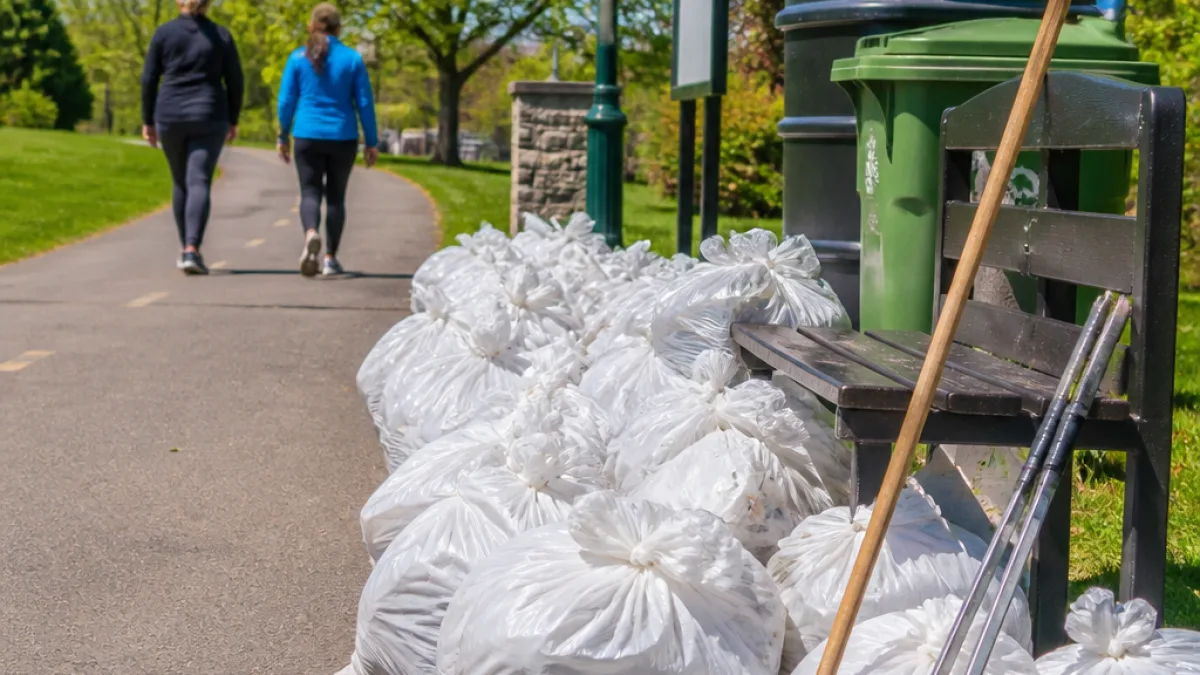
HAMPTON, N.B. — For nearly 21 years, John and Phyllis Holmes have taken their daily walks with bags in hand, collecting whatever stray waste they find on sidewalks and trails in their community. What began as a personal response to a messy route has produced a startling tally: 9,153 bags of litter picked up since they started during the Thanksgiving weekend of 2005.
From ad hoc tidy-up to recognised habit
The couple’s routine predates the popular term now attached to it — “plogging” — but the practice is identical: moving for exercise while picking up litter. John improvised a litter picker by attaching a nail to a stick, while Phyllis used kitchen tongs. Their early efforts caught the attention of neighbours and local businesses.
“As of today, we are up to 9,153 bags that we have picked up so far,”
A manager at the Hampton Home Hardware saw them working one day and asked how they managed for bags; the store donated a box of 100. Their visible presence on local streets prompted questions from town council and residents, which in turn led to municipal action.
Municipal steps and measurable change
At the end of 2008 the town installed public receptacles around Hampton. The couple said the change corresponded to a marked decline in their annual bag use: where they used to collect close to 1,000 bags a year, the figure fell to roughly 300–400 a year after bins were placed in town.
| Year (approx.) | Reported annual bags |
|---|---|
| Up to 2008 | Close to 1,000 |
| Post‑2008 | About 300–400 |
| Total (2005–2026) | 9,153 |
The couple often calls the town when bins need emptying, a sign they continue to monitor the network of receptacles. Their experience illustrates how small, sustained individual actions can prompt civic responses that reduce litter at source.
Why small acts matter
Researchers have argued that practices like plogging can have effects beyond the immediate removal of debris: they can change social norms about littering, increase public awareness of local waste streams and encourage municipal investments in waste management. While the Holmeses are not researchers, their long-term record reflects those dynamics in one New Brunswick town.
For residents, the couple’s work is also personal. They say the activity gives daily walks a purpose and offers a way to contribute to the visual and environmental quality of their community. Their story shows how an ordinary routine can become civic participation.
Practical takeaways for communities and volunteers
Hampton’s experience offers a few practical lessons for other communities and individuals who want to reduce litter without large budgets:
- Visible, persistent local volunteers can prompt municipal action — receptacles in public spaces were introduced after the Holmeses’ efforts drew attention.
- Small infrastructure changes can reduce the burden on volunteers — Hampton’s bins corresponded with a drop in yearly litter collection by the couple.
- Simple tools are effective — improvised pickers and donated bags were adequate to keep the effort going for years.
Those interested in starting similar efforts should contact their municipal office about bin placement and waste collection schedules, and local businesses about material support such as bags or grabbers.
Community recognition
Word of the Holmeses’ work spread locally, and they have become a familiar sight on Hampton streets. Their dedication also offers a civil reminder: individual actions can be sustained, impactful and contagious. Whether it is one coffee cup, a cigarette butt or a crushed beer can, the couple has made it their habit to remove the small things that add up.
As plogging gains a name and more adherents, the Holmeses’ two‑decade record stands as a concrete example of how neighbourhood stewardship and modest municipal investments can together reduce litter and improve public spaces.