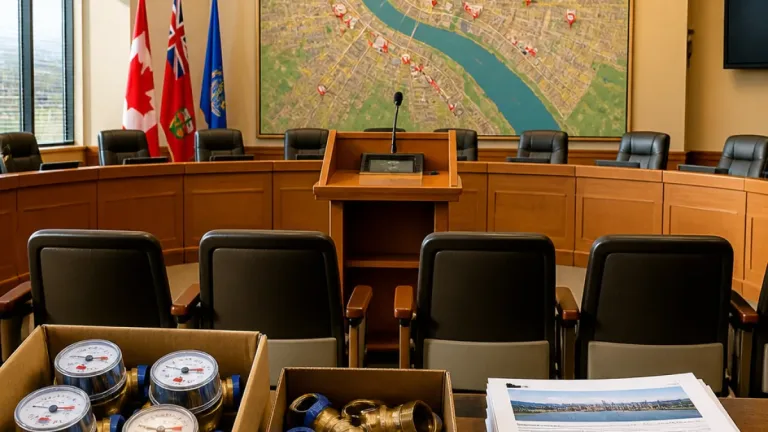

YAMACHICHE — Quebec Premier Christine Fréchette said Monday she is prepared to consider allowing American wines back onto the shelves of the province's liquor stores, but only if the move is part of a larger set of trade gains for Quebec and its priority sectors.
Conditions tied to broader trade wins
Fréchette framed any potential reversal of last year's directive — which removed U.S. products from government-run liquor outlets in retaliation for earlier U.S. tariff measures — as conditional. She told reporters she expects tangible concessions that would improve market access for Quebec goods, particularly in areas where the province has long sought relief from tariffs.
The premier specifically pointed to the need for reductions in barriers affecting forestry, aluminium and manufacturing sectors. At the same time, she reiterated resistance to changes that could weaken Quebec's supply management systems or that might affect the province's culture and language protections.
What prompted the directive and what's at stake
The Quebec government instructed its liquor board to stop selling American products last year after Washington announced rounds of tariffs. The decision removed a range of U.S. wines and other beverages from government-controlled outlets — a move that underscored how trade disputes can ripple into everyday consumer choice in Quebec.
Fréchette’s public positioning comes as a new round of substantial U.S. tariffs is slated to take effect on Aug. 19. Those measures would impose 50 per cent duties on a variety of Canadian goods and, importantly, unlike earlier U.S. actions, are announced with no exemptions for products that comply with the Canada–U.S.–Mexico trade agreement.
| Item | Detail |
|---|---|
| New U.S. tariff rate | 50% |
| Effective date | Aug. 19, 2026 |
| Exemptions for CUSMA-compliant goods | None |
Balancing trade leverage and Quebec priorities
By tying any reopening of liquor shelves to concessions on tariffs for resource and industrial sectors, the premier is signalling a transactional approach to trade diplomacy: consumer-facing adjustments will follow only if producers gain relief. The stance aims to protect jobs and regional economies dependent on forestry, metal processing and manufacturing.
At the same time, Fréchette drew a line around two sensitive provincial priorities. She said Quebec will not accept measures that undermine the province’s supply management regime — the system governing production and prices in dairy, poultry and eggs — nor will it accept changes that threaten the province’s cultural and linguistic policies.
Local impact and consumer implications
The removal of U.S. wines last year reduced the selection available in the province's state-run liquor stores and prompted reactions from consumers and importers. If Washington and Ottawa reach an understanding that addresses Quebec’s sectoral concerns, the premier’s comments leave open the possibility that some U.S. products could be restored — but only as part of a negotiated package that yields measurable benefits for Quebec exporters and preserves provincial policy priorities.
- Consumers: potential partial restoration of U.S. wine offerings if trade concessions are secured.
- Producers: forestry, aluminium and manufacturing sectors are principal bargaining chips in negotiations.
- Policy stakes: supply management and cultural/linguistic protections remain non-negotiable for Quebec’s government.
The federal government and U.S. authorities have been engaged in ongoing consultations over tariffs and trade frictions. Quebec’s stance underscores how provincial governments can leverage consumer-market decisions to press for improvements in market access for regional industries.
As Aug. 19 approaches and the announced 50-per-cent duties loom, Quebec businesses and consumers will watch closely to see whether negotiations produce the tariff relief Fréchette described as necessary to permit a return of American wines to the province's shelves.
This report was compiled from a Canadian Press dispatch.