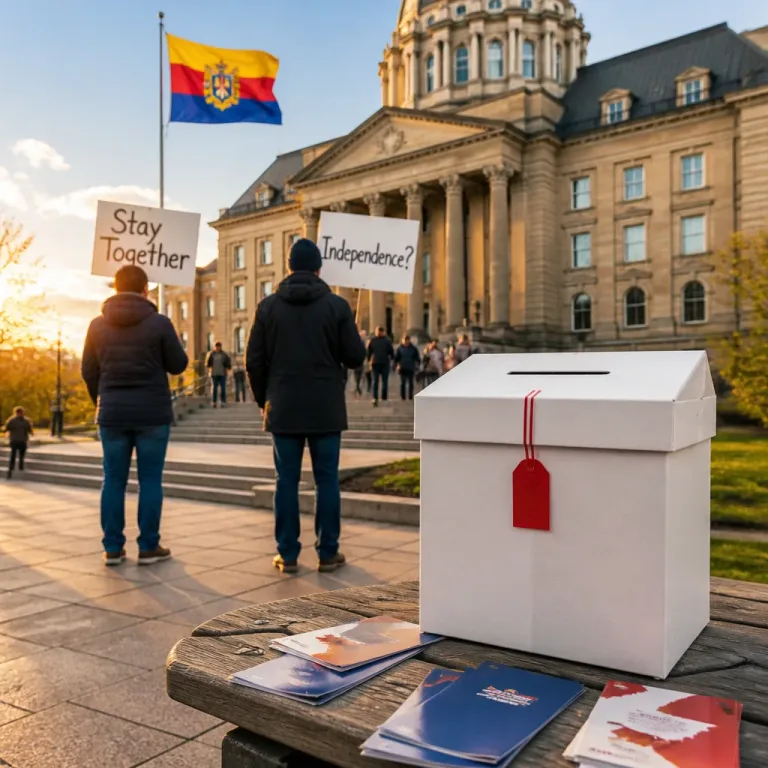
EDMONTON — As Alberta counts down to an Oct. 19 referendum on its future in Canada, campaign season has moved beyond debate halls into neighbourhoods, driveways and social media — and with it, a steady chorus of fear, defacement and carefully chosen visibility.
Signs, theft and a reluctance to be visible
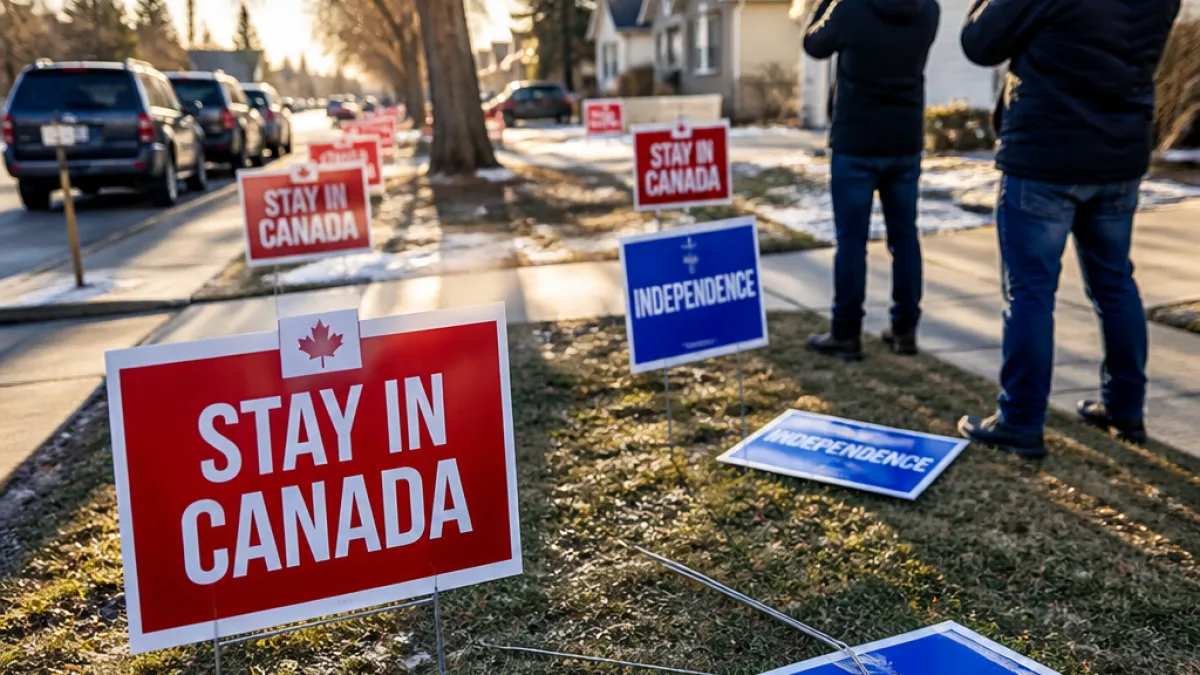
Drivers through many Alberta communities are seeing a sea of lawn signs: red-and-white placards urging residents to remain in Canada, and blue signs backing a move toward independence. But those blue signs are sometimes less visible on private property.
Keith Wilson, co-leader of the separatist Let Alberta Decide campaign, said his team has heard reports of supporters who hesitate to display a sign at home because they worry about vandalism.
“(It’s) out of fear that their car will get keyed in the driveway.”
Wilson said the campaign is shifting resources toward digital outreach and placing larger signs — over a metre high — on public land beside roads, partly to avoid singling out homeowners who might become targets.
Online vitriol and the human cost
The summer’s engagement has been intense enough that long‑time activists on both sides describe an escalation of threats and abusive communications. Cory Morgan, an online commentator and organiser with Pathway to Independence, said the volume and tone of messages he receives has increased sharply.
He described outraged emails and said the tenor of correspondence has moved beyond ordinary political anger into sustained hostility. Morgan also noted a paradox: while some supporters want to back the cause financially, they draw the line at publicly displaying a lawn sign.
“When they see a neighbour or two put one of those signs out, they feel more comfortable doing it as well,” Morgan said, noting that visible signs can encourage others to be public. He warned the competition over yard signs could intensify as the referendum nears.
Pro‑unity campaigners go on the road
On the other side, Thomas Lukaszuk, former deputy premier and a long‑time pro‑federalism organiser, has been touring the province in a pink-and-red RV known as the Unity Bus. For more than a year, Lukaszuk has been collecting signatures aimed at forcing a legislative vote on remaining in Canada, and the bus tour is part of a push to make that case more visibly across communities.
The duelling visibility strategies reflect a broader tactical split: one side concentrating on large, public displays and digital channels to protect individuals from harassment, the other emphasising doorstep contact and high‑profile, mobile campaigning.
Local impact and what to expect in the run-up to the vote
The immediate effect is a more charged public atmosphere in neighbourhoods and on social platforms. Vandalism and theft of signs have been reported on both sides, and campaign teams are adapting by relocating signage to public strips, increasing digital outreach and encouraging neighbours to show solidarity.
- Campaigns are placing larger signs on public land to avoid targeting homeowners.
- Supporters report an uptick in abusive messages and threats online.
- Visible yard signs can influence neighbours’ willingness to publicly support a position.
For voters, this means the final month will likely bring intensified local activity: more rallies, sign placements, and online mobilisation. Municipalities may see higher rates of reported sign theft or vandalism, and residents who prefer to avoid confrontation may keep their views private.
What this means for Alberta politics
The tenor of the campaign underlines how deeply the referendum has cut into community life. Political actors are balancing persuasion with protection, seeking ways to make their presence known without exposing volunteers and supporters to reprisal.
At the same time, the visible sign war and reports of intimidation could affect turnout dynamics. When public displays of support are suppressed by fear, campaigns lose a form of grassroots signalling that often spurs others to vote or volunteer.
| Item | Observed impact |
|---|---|
| Delicate visibility | Supporters avoid putting signs on private property |
| Campaign tactics | Large public signs and digital outreach used to reduce risk |
| Community atmosphere | Increased tension, reports of theft and online vitriol |
As the clock winds down to Oct. 19, both sides face the challenge of mobilising supporters while preventing intimidation from defining the campaign. For many Albertans, the referendum is no longer an abstract policy debate — it is playing out in front yards, on social feeds, and in the quiet calculations of whether to put up a sign at all.
Key dates: the referendum is scheduled for Oct. 19, just over a month away.
Reporting from the campaign trail shows a province grappling with anger and solidarity in equal measure, and political organisers say the final weeks will determine how that energy translates into votes.