Cross-lake freight link could reposition Wheatley and Chatham-Kent as a trade gateway
Chatham-Kent leaders say a newly announced exploration into a truck ferry service between Wheatley and Cleveland could transform the municipality’s role in Canada–U.S. freight movement, offering an alternative to congested road and rail corridors.
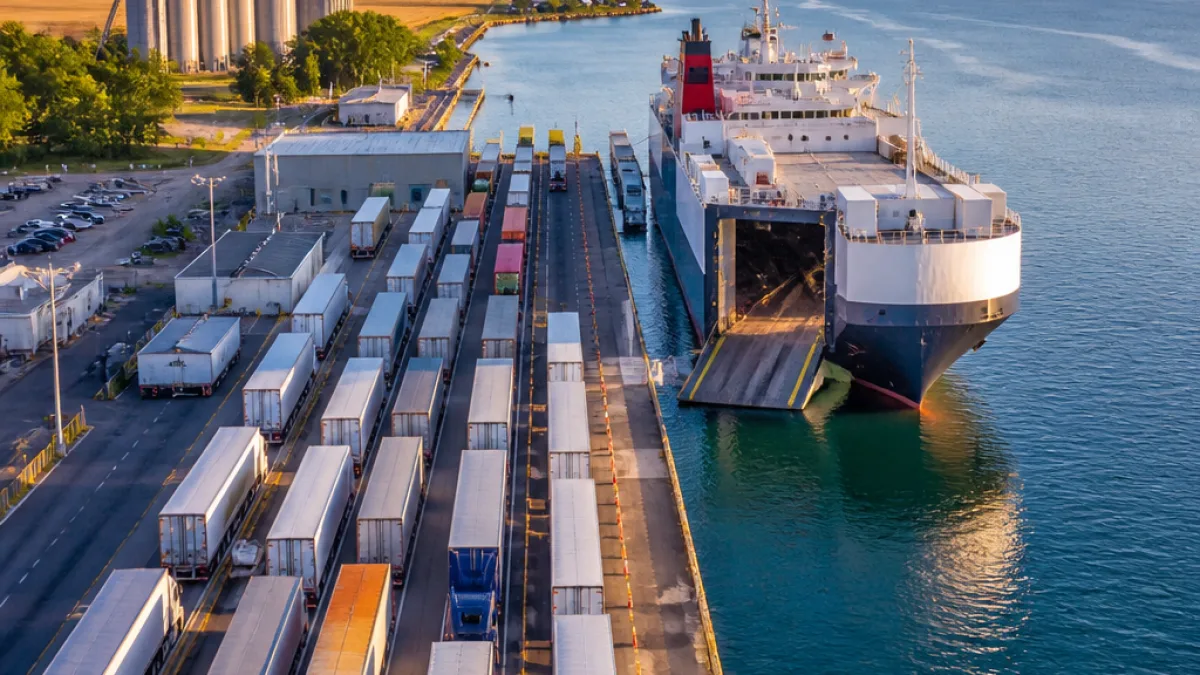
The proposal, outlined in a memorandum of understanding signed between Milo Harbour Inc. and the Port of Cleveland, would establish a cargo terminal at Milo Harbour in Wheatley and operate a direct maritime freight connection across Lake Erie. Organizers anticipate a launch in early 2028 and say the service could handle up to 300 round-trip truckloads per day with a one-way transit time of roughly two to three hours.
Municipal leaders are broadly positive, while signalling they want more detail about the project's implications for local infrastructure, agriculture and future investment.
“This is ... an exciting opportunity that could further position Chatham-Kent as an important gateway for trade between Canada and the United States,”
said Mayor Darrin Canniff, who described the MOU as a potential catalyst for investment and new economic activity.
Councillor Lauren Anderson, whose ward includes Wheatley, highlighted the community’s existing role on the Great Lakes and said the proposal builds on that strength. She pointed to Wheatley’s commercial fishing activity and described the cross-lake link as a potential source of new opportunities for the local economy.
What the service would look like — and what it might mean locally
Those involved in the initial announcement say the ferry would provide manufacturers, shippers and trucking firms with a maritime alternative to busy border crossings and overland routes. If the figures in the MOU hold, the project would shift some freight volumes off highways and rail, and route them across Lake Erie directly between Wheatley and Cleveland.
- Projected capacity: up to 300 round-trip truckloads per day.
- Estimated transit time: roughly two to three hours one way.
- Target start: early 2028 (subject to further study, approvals and financing).
Locally, the arrival of a cargo terminal and regular truck ferry service would raise immediate infrastructure questions: road access to Milo Harbour, local traffic patterns, parking and staging areas for trucks, and municipal services to support terminal operations. Agricultural producers and food processors, who rely on reliable, time-sensitive shipping, could see both opportunities and new logistical choices.
Economic development possibilities and concerns
Proponents say a direct maritime freight link can attract new business, ease pressure on congested border crossings and shorten transit times for certain routes. That combination could make Chatham-Kent a more attractive location for firms seeking efficient access to U.S. markets without relying solely on highways.
At the same time, municipal staff and residents are likely to want answers about environmental effects, financing, noise, and the capacity of local roads to accommodate a potential surge in heavy truck traffic. The MOU is a preliminary step; detailed studies, regulatory approvals and private and public-sector investment will be required before the service becomes a reality.
| Item | Detail |
|---|---|
| Planned terminal | Milo Harbour, Wheatley |
| Partner | Port of Cleveland |
| Projected daily capacity | Up to 300 round-trip truckloads |
| Transit time | ~2–3 hours one way |
| Target launch | Early 2028 |
Mayor Canniff framed the agreement as an exploratory yet important phase. Councillor Anderson said Wheatley’s existing maritime and commercial infrastructure positions the community well to assess the ferry’s potential benefits and drawbacks.
For Chatham and surrounding rural areas, the possible ferry raises several local considerations: whether new jobs would be created at the terminal and in related services; how agricultural shippers might adapt routing and contracts; and which municipal and provincial investments would be necessary to ensure safe and efficient movement of freight to and from the harbour.
The MOU marks the start of a period of study and discussion. If the concept advances beyond memorandum stage, it will prompt more detailed economic, environmental and transportation assessments — and a closer look at how this cross-lake link could reshape the balance between Ontario’s inland road network and maritime alternatives.
Chatham-Kent officials say they will continue to engage with project partners and the community as more information becomes available.