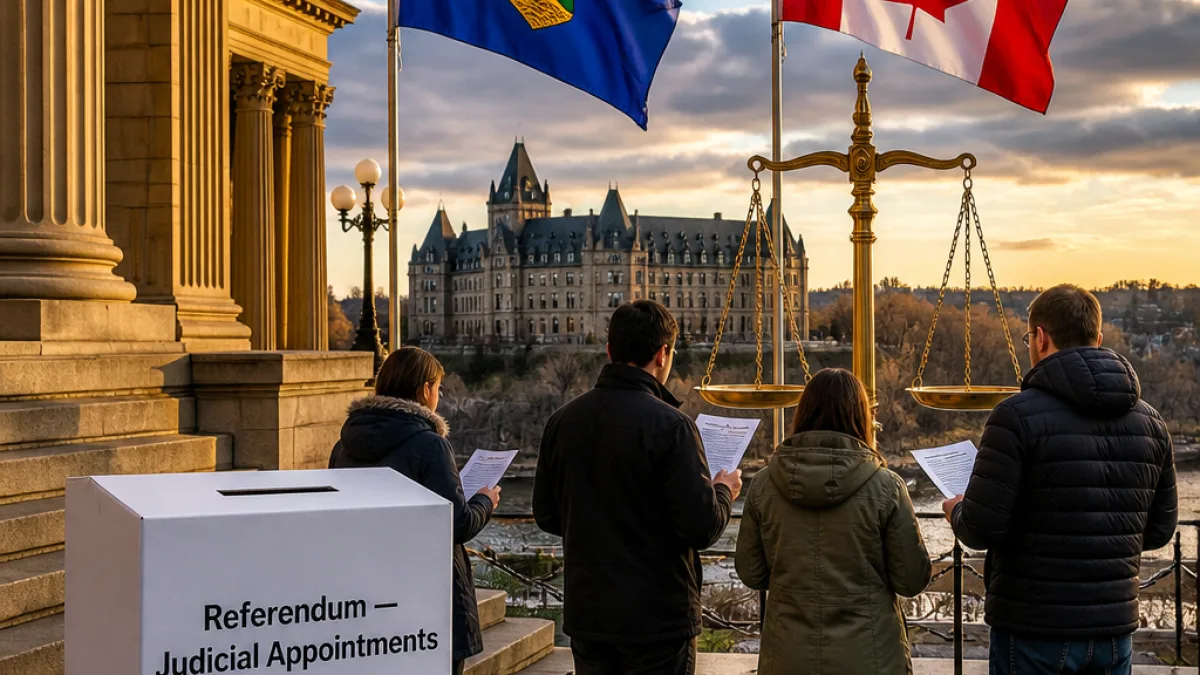
Albertans will be asked this October to weigh in on a proposal with far‑reaching legal consequences: whether the province should seek the power to appoint judges to its Court of King’s Bench and Court of Appeal, currently filled by federally appointed jurists.
What the question means
At Confederation in 1867, an arrangement was established whereby the federal government selects judges for superior provincial courts. Those courts — the Court of King’s Bench and the Court of Appeal in Alberta — handle the most serious criminal and civil matters and review decisions of the provincial court.
The province’s justice ministry says the change would give provinces “a direct voice in selecting judges who will interpret and apply their laws,” an argument supporters say would lead to judges more attuned to provincial legal and policy priorities.
“This is definitely an interesting ballot question,” said Gerard Kennedy, an associate professor in the faculty of law at the University of Alberta.
But a simple yes vote on the referendum would not, on its own, alter the Constitution. Rather, it would be an expression of provincial will — an endorsement that Alberta should pursue the lengthy constitutional amendment process, which requires federal and multiple provincial approvals.
Constitutional hurdles
Changes to the process for appointing superior‑court judges would fall under Canada’s amending formula. That typically requires the consent of Parliament and at least seven provinces representing at least 50 per cent of the national population. Ottawa has previously rejected similar proposals, and constitutional change of this nature is politically complex.
Alberta has already taken political steps in this direction: the legislature passed a motion earlier this year seeking a constitutional amendment to alter how judges are chosen. The referendum functions as the next step in a broader push to give provinces more say.
Practical considerations for voters
Voters should understand two key facts before casting a ballot. First, a provincial yes vote is a political signal rather than an immediate legal change. Second, changing the appointment process would involve negotiations with Ottawa and other provinces and could take years to complete, if it ever succeeds.
- Current system: Federal government appoints superior court judges.
- Proposed shift: Province seeks authority to appoint judges to its higher courts.
- Outcome of referendum: Would be an endorsement to pursue constitutional amendment, not immediate change.
Why the debate matters in Alberta
The courts that would be affected are central to how laws are interpreted and applied in Alberta. Questions about who appoints judges often reflect broader debates over provincial autonomy and the balance of federal and provincial powers — themes that have been prominent in Alberta politics for years.
Supporters argue provincial input would align judicial perspectives with Alberta’s legal landscape. Critics counter that the existing system already allows meaningful provincial input and warns that moving appointments to provincial control could politicize the bench or create uneven standards across provinces.
| Court | Current appointing authority |
|---|---|
| Court of King’s Bench | Federal government |
| Court of Appeal | Federal government |
Legal scholars say the ballot question is symbolically important because it gauges public appetite for constitutional reform. Any path forward would require a sustained political campaign beyond Alberta’s borders to secure the necessary provincial and federal agreement.
As referendum day approaches, voters will be asked to consider more than just the mechanics of judicial selection. The question is embedded in a wider conversation about the province’s role within the federation and the levers Alberta wants to pull to assert its priorities.
The practical reality is straightforward: a yes vote signals a mandate for Alberta’s government to press Ottawa and other provinces for change, but it does not, on its own, change the law. Whether that signal can translate into constitutional amendment remains an open political test.