
Alberta voters will go to the polls on Oct. 19 to decide whether the province should remain part of Canada or authorise the provincial government to begin the legal process required to hold a binding referendum on separation, the provincial government says.
What the ballot will ask
The exact question that will appear on the ballot was posted on the Alberta referendum website. Voters will choose between remaining a Canadian province or having the Government of Alberta initiate the constitutional steps needed to hold a future binding provincial referendum on whether Alberta should separate from Canada.
"Should Alberta remain a province of Canada or should the Government of Alberta commence the legal process required under the Canadian Constitution to hold a binding provincial referendum on whether or not Alberta should separate from Canada?"
Notably, the vote scheduled for October is not itself a binding decision to leave Confederation. Rather, a vote in favour of commencing the process would set in motion a longer, legally complex sequence that could culminate in a binding referendum at a later date.
Political context and local drivers
Alberta is an oil-rich province with a long tradition of conservative politics. The province’s separatist movement has been present for years, and it saw renewed energy after national developments in recent election cycles. Some residents and political activists say they see Ottawa’s influence — particularly on environmental policy and energy regulation — as constraining Alberta’s economic prospects.
Premier Danielle Smith, who has publicly said she supports a unified Canada, announced the vote on May 21. The move stops short of immediate secession but gives voters the choice to authorise the provincial government to explore the constitutional route toward a binding referendum.
What a 'Yes' would mean — and what it would not
A majority vote in favour of commencing the process would not instantaneously separate Alberta from Canada. Instead, it would:
- Authorise the provincial government to start pursuing the legal and constitutional steps needed to hold a later binding referendum on separation;
- Launch a prolonged and complex legal and political process involving provincial and federal governments, courts and potentially international actors;
- Intensify public debate across Alberta and the rest of Canada about constitutional law, federal-provincial relations and the economic consequences of a separation campaign.
Conversely, a majority vote to remain would leave Alberta’s status within the federation unchanged.
Timing and likely next steps
The ballot question makes clear that the October vote is a preliminary step. If Albertans vote to commence the legal process, expect a multi-year sequence of political manoeuvring and legal challenges. The provincial government would need to set out how it intends to navigate the Canadian Constitution and whether it seeks federal cooperation or anticipates litigation.
| Key date | Action |
|---|---|
| May 21 | Premier announced the Oct. 19 vote |
| Oct. 19 | Provincial vote on whether to commence legal process toward a binding referendum |
Local impact and stakes for Alberta's economy
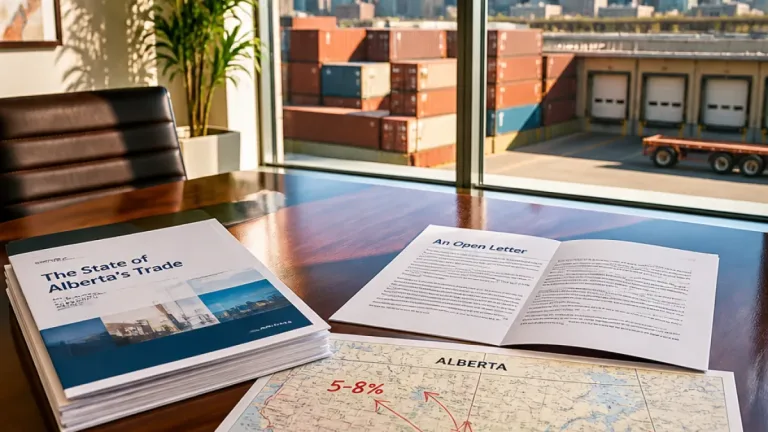
Questions about separation strike at the heart of Alberta’s economic conversation. The province’s energy sector — oil and natural gas — figures prominently in arguments both for and against separation. Supporters of secession point to perceived federal policies they say have reduced investment and constrained development. Opponents warn that political upheaval and prolonged uncertainty would impose economic risks, including potential impacts on investment, trade and fiscal arrangements.
Whatever the outcome, businesses and investors will be watching closely. A campaign that advances the legal process toward a referendum would likely increase political and market uncertainty in the near term.
What voters should know
- The October vote asks whether to start the legal process toward a binding referendum on separation; it is not itself a decision to secede.
- Premier Danielle Smith has expressed support for a united Canada but authorised the referendum question.
- Any move toward separation would involve protracted legal and constitutional activity, and would not be immediate.
The coming months will feature campaigning from both sides, legal analysis and public debate. For now, Albertans have a clear, time-bound decision to make on Oct. 19 about whether the province should formally begin exploring separation as a legal option.