Local designer’s song Passie Vuur shortlisted in national Afrikaans songwriting contest
Standerton — Rudolph “Rudi” Viljoen, a 48-year-old roof truss designer and estimator who lives in Standerton, has secured a place in the top 10 of the Federasie van Afrikaanse Kultuurvereniging (FAK) SKRYF’it songwriting competition. His entry, the ballad Passie Vuur, was submitted in the competition’s AI-assisted category.
Viljoen said he discovered the competition via a friend and followed the online entry link. He submitted five songs in the AI category: Dwiellie, Katryn Se Opkom Son, Passie Vuur, Hoor Jy and Lieflyf. Of those, Passie Vuur has reached the top 10.
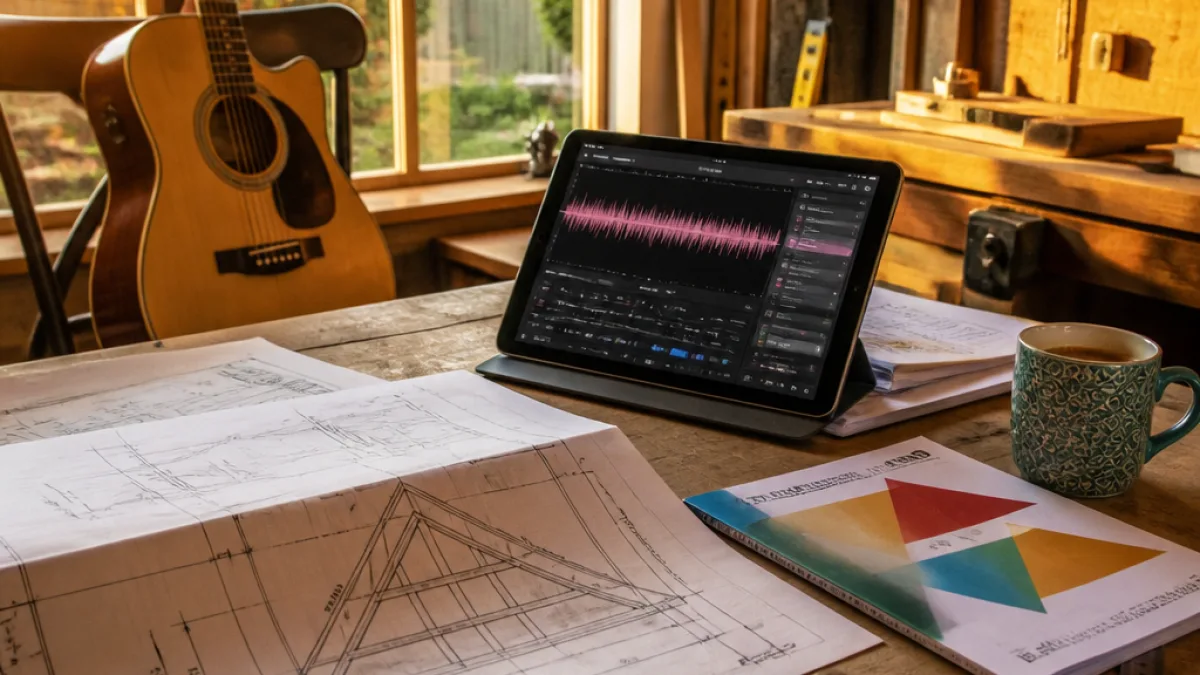
“Recording contracts, musicians and studio time are expensive. I found an AI app, and it became an interesting tool where I can use my songs as a starting point and experiment with them,” said Viljoen.
Viljoen’s use of AI tools reflects a growing trend among emerging musicians who seek cost-effective ways to develop and record material. He entered the AI category rather than the regional category, which is reserved for artists performing their own songs.
Roots, style and ambitions
Originally from Ladybrand in the Free State, Viljoen grew up in a musical family on both sides. He describes music as “a language we use and a thread that ties us together,” and attributes his musical ability to an innate ear rather than formal schooling: he is self-taught on guitar and has never had formal musical training.
Viljoen characterises his songwriting as ballad-driven and says he is deliberately seeking a voice distinct from older, traditional boere music. He told reporters the FAK competition is an important platform that can expose new artists to broader opportunities.
What this means locally
For Standerton, Viljoen’s achievement underscores the town’s creative potential beyond its industrial and agricultural profile. His background — working full-time in construction-related design while pursuing songwriting — mirrors many local residents who balance livelihoods with cultural pursuits. The use of AI to bridge resource gaps could be particularly relevant to musicians in smaller towns who lack ready access to studios and professional networks.
- Exposure: Placement in the FAK top 10 can attract attention from publishers, radio and festival organisers who follow Afrikaans songwriting platforms.
- Accessibility: AI-assisted production provides an alternative route for artists who cannot afford studio time or session musicians.
- Local inspiration: Viljoen’s success may encourage other Standerton residents to submit work to national competitions or explore digital tools for music-making.
Competition details
The FAK SKRYF’it competition supports Afrikaans songwriting with separate categories for regional (artists performing their own songs) and AI-generated entries. Viljoen chose the AI track to experiment with his compositions and extend his reach.
| Song | Category entered | Result |
|---|---|---|
| Passie Vuur | AI-assisted | Top 10 |
| Dwiellie | AI-assisted | Entered |
| Katryn Se Opkom Son | AI-assisted | Entered |
| Hoor Jy | AI-assisted | Entered |
| Lieflyf | AI-assisted | Entered |
Viljoen believes the FAK platform can act as a springboard for artists to be noticed and to find opportunities in the Afrikaans music industry. He said he is searching for his own voice and hopes participation in the competition will lead to further exposure and collaboration.
As the competition progresses, Standerton will be watching a local creative making headway on a national stage — a small but tangible reminder that cultural production and new technologies are reshaping how rural and regional artists are discovered and supported.