
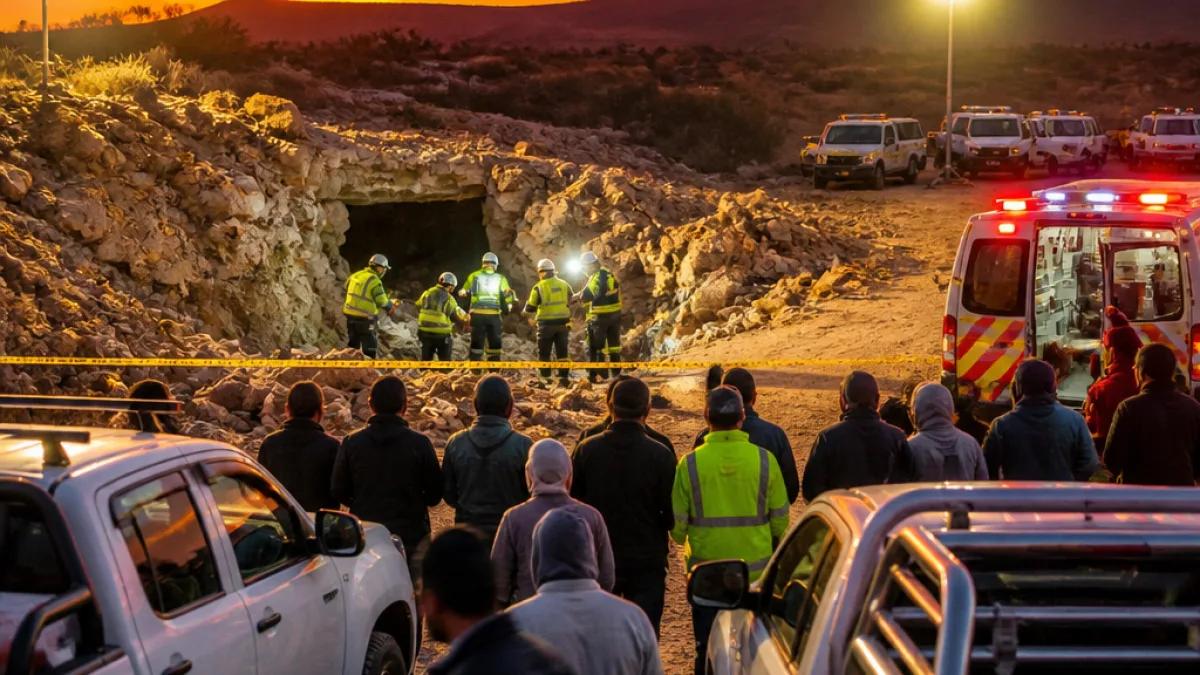
A rockfall at a disused mine in Nkaneng, near Rustenburg in the North West province, has killed 14 clandestine miners, police said on Tuesday. Authorities reported that most of the deceased were from Lesotho, eight people were hospitalised and an unknown number of illegal miners remain possibly trapped underground.
Police, emergency services on scene
Police spokeswoman Colonel Adele Myburgh said the collapse was reported late on Monday and that a police response was active at the scene. She confirmed that the 14 who died were “mostly Basothos” and that several others had been injured.
“Fourteen illegal miners, mostly Basothos, died during a rockfall,” Colonel Adele Myburgh said. “Eight others were hospitalised and an unknown number of illegal miners are currently possibly stuck under the ground. Police are on the scene, and the scene is still active.”
The incident occurred in an area known to host several established platinum operations but also frequented by unregistered mineworkers, commonly called zama zamas, who scavenge abandoned shafts for ore. The collapse underscores the hazards that illegal miners face when working in dilapidated and unsupported workings.
Context: why illegal mining persists
Illegal mining in South Africa is driven by poverty and unemployment. Many who take the risk come from neighbouring countries, seeking income in the absence of formal work. Their activities are often linked to theft of material, and in some instances criminal networks that profit from tunnels and stolen ore.
Safety is rarely possible in these environments. There is no formal infrastructure, no engineered support and no emergency systems. The sections of abandoned or closed shafts are frequently unstable, making rockfalls and suffocation real and recurring threats.
- 14 people confirmed dead, most from Lesotho
- Eight people hospitalised
- Unknown number potentially still trapped underground
Police said investigations are under way and an inquest case was opened in connection with the incident. Rescue teams and police remained at the site as operations continued to account for any missing people and to secure the area.
Past incidents and official responses
The latest tragedy follows a string of deadly events associated with illegal mining. The broader law-enforcement response has included intensified operations: President Cyril Ramaphosa previously announced deployment of the army to assist police in crackdowns on illegal mining, citing the damage illicit activity can do to infrastructure and livelihoods.
Nearly two years ago, a prolonged policing operation at a disused gold mine west of Johannesburg saw nearly 2,000 people emerge after authorities blocked a shaft for weeks. That episode was followed by a separate tragedy near Stilfontein in which around 90 clandestine miners lost their lives, a reminder of how deadly these sites can be.
Local impact and what this means for communities
For communities around Rustenburg and other mining towns in the North West, incidents like this have immediate human costs and longer-term effects. Families lose breadwinners, cross-border communities are strained, and local hospitals and emergency services face sudden pressure. Mining companies and community leaders have in the past called for coordinated responses that address poverty, create lawful employment and secure abandoned infrastructure.
Police emphasised the active nature of the scene and the ongoing need for a cautious rescue approach where collapse risk remains. Further details on the identities of the deceased, the condition of those hospitalised and the number still unaccounted for are expected as rescue and investigative operations proceed.
The case will be processed under the inquest provisions as authorities work to establish the sequence of events and any criminal elements connected to the illegal mining activities at the site.













