
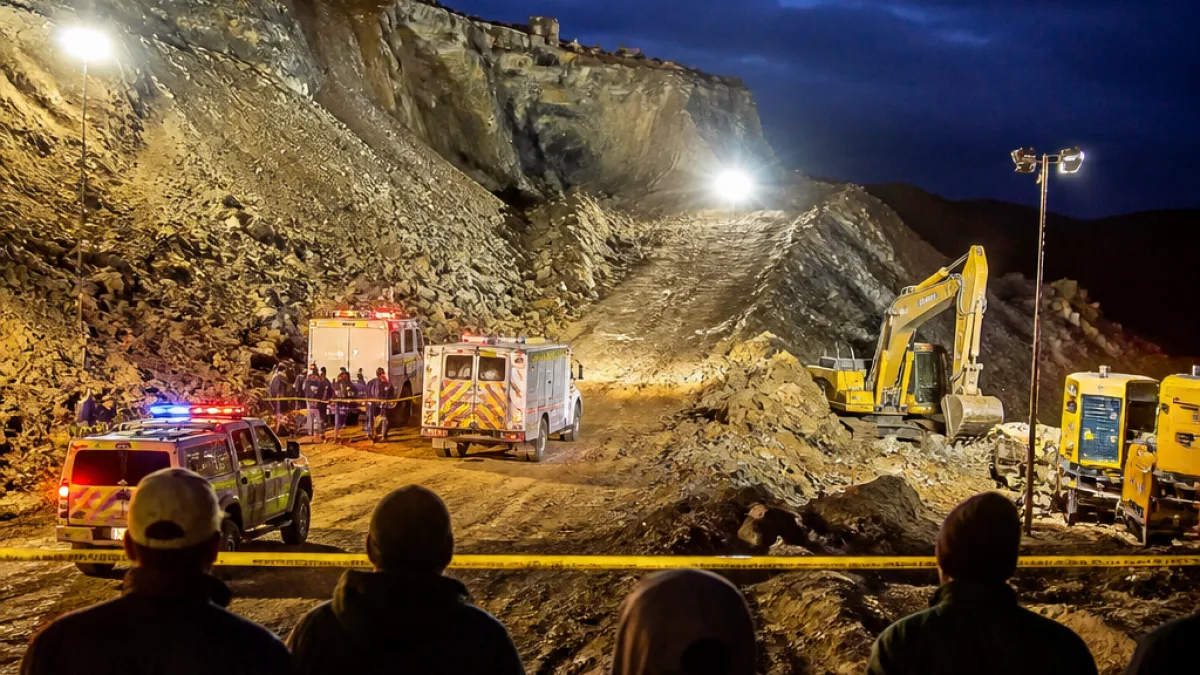
Search-and-rescue operations at the Nkaneng mine-dump near Rustenburg were suspended after further instability was detected at the site, following a collapse that killed 14 people on Monday night. The suspension, announced by police, came after rescuers encountered additional ground movement in the area where teams had been working.
Rescue work halted for safety
North West SAPS provincial structures confirmed the operation was called off when the dump was judged too dangerous for emergency personnel to continue. The collapse happened at about 21:00, police reported, and left a number of people trapped under rubble. Eight injured people were taken to hospital with serious injuries, according to reporting on the incident.
“Police were alerted to the incident at about 21h00,” said North West SAPS Provincial Commissioner Lieutenant General Arthur Adams, according to reporting.
Who was affected
Authorities said most of the dead were Basotho nationals, while those treated at hospital were reported to be from Lesotho. The fatalities occurred while the group was allegedly digging manually for platinum group metals (PGMs) at a disused portion of the dump on privately owned land.
| Outcome | Reported number |
|---|---|
| Dead | 14 |
| Injured (hospitalised) | 8 |
| Search-and-rescue | Suspended — unsafe conditions |
Site ownership and the illegal-mining context
Reporting identified the dump as being on property where a company held permission to recover PGMs; the site is owned by Sibanye, according to one account. The tragedy underlines long-standing concerns about abandoned and derelict mining infrastructure in South Africa, which has allowed large numbers of informal miners to operate in dangerous conditions.
- Abandoned mine dumps and workings create unstable working conditions when people excavate manually.
- Illegal mining around Rustenburg is intertwined with social and economic pressures in mining communities.
- Emergency response can be constrained when sites are unstable, delaying recovery and forensic work.
The South African Federation of Trade Unions has previously warned that many derelict mining sites are effectively “death traps”, posing environmental hazards and opportunities for organised criminal groups to exploit vulnerable workers. Reports note that there are thousands of abandoned or ownerless mines across the country.
Police investigation and local consequences
Police said they were investigating how suspected illegal miners gained access to the privately owned dump and whether more people remain trapped. The decision to suspend rescue efforts was taken after another collapse in the area where rescue teams had been working, officials reported.
For Rustenburg communities, the incident raises urgent questions about security at derelict mining properties, the policing of disused sites and measures to protect impoverished people who turn to illicit extraction. It also places pressure on employers and regulators to address ownerless or neglected mining infrastructure that can become lethal when excavated.
As the probe continues, local unions and civil-society organisations are likely to press for clearer accountability for site security and better systems to prevent informal mining deaths. Meanwhile, families of the deceased and injured face the immediate reality of loss and medical need.
Authorities have not ruled out further recoveries and the search may resume if safety conditions improve and stabilisation measures are put in place, police emphasised in their statements reported by local media.













